WW/OCEANFREIG
Container Ship Sinks Near Hormuz After Projectile Strike
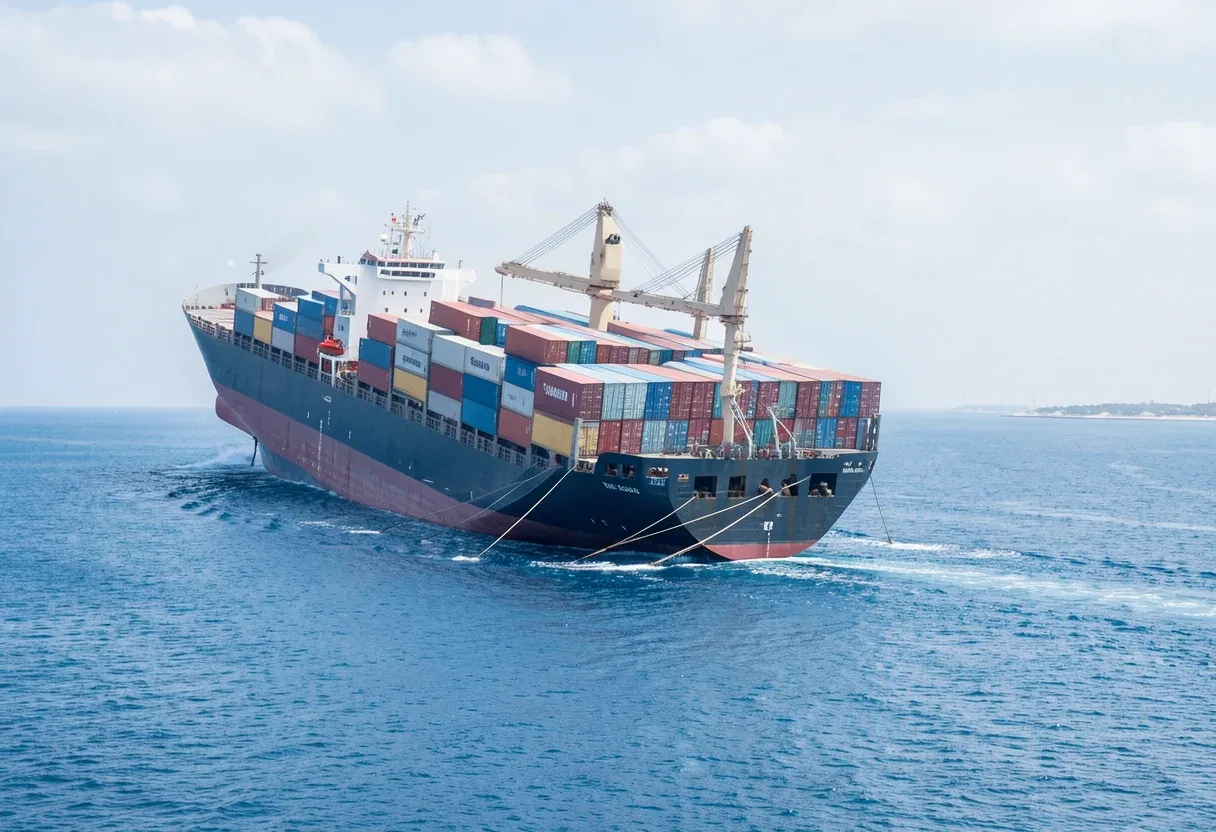
Boxship sunk near Strait of Hormuz following projectile strike, per shipping sources via gCaptain. Operator, flag state, and crew status undisclosed as war-risk underwriters prepare to respond.
- Desk
- Ocean Freight
- By
- Amara Osei
- Filed
- Length
- 628 words
- Read
- 3 min
Key points05
- Container ship sank near Strait of Hormuz after projectile strike, per shipping sources via gCaptain
- Operator, flag state, and crew status not disclosed in initial dispatch
- Strait of Hormuz channels roughly a fifth of global seaborne oil and a meaningful share of east-west container traffic
- Cape of Good Hope rerouting adds 10 to 14 days to a typical Asia-Europe loop
- Lloyd's Joint War Committee historically moves listed areas within 72 hours of a confirmed attack
A container ship sank in waters near the Strait of Hormuz after being struck by a projectile, shipping sources told maritime outlet gCaptain.
The vessel went down following the impact, the sources said, without naming the operator, flag state, or fate of crew. gCaptain's brief dispatch carried no casualty figures and no cargo loss estimate.
Why Hormuz keeps freight desks twitchy
The strait channels roughly a fifth of global seaborne oil and a meaningful share of east-west container traffic. The corridor narrows to about two nautical miles in each direction. Every boxship bound for Jebel Ali, Dammam, or the upper Gulf threads a narrow needle. There is no shoulder to pull over and no detour lane.
A hull at the bottom of that waterway is never just a salvage problem. It is a routing problem for the next ten carriers in line. It is an insurance problem for Lloyd's underwriters reading the wire before breakfast. And it is, depending on the hour, a geopolitical problem for ministries from Muscat to Manila.
What changes for shippers, carriers and forwarders
War-risk underwriters do not wait for press conferences. A confirmed sinking on a commercial hull typically lifts premiums for Gulf-port calls within hours, and that surcharge climbs the bill of lading until it lands on whoever booked the box.
For carriers on Asia-Middle East rotations, the immediate question is whether the Cape of Good Hope detour becomes the rational answer. That reroute adds ten to fourteen days to a typical Asia-Europe loop. It burns bunker, trashes schedule reliability, and strands boxes in the wrong hemisphere. The arithmetic is rarely kind.
For forwarders with reefer or project cargo booked through the Gulf, insurance brokers revisit war-risk declarations within a day. Reefer operators carry the most exposure — perishables do not enjoy extended transit times, and underwriters do not price Gulf risk gently. Expect a war-risk surcharge per FEU that did not appear on last week's tender.
For shippers in Jafza, Khorfakkan, and the broader GCC hinterland, the practical answer is short. Confirm ETA windows before signing fresh bookings. Ask forwarders, in writing, what the contingency routing looks like. And check whether the carrier's hull policy covers acts of war, because most do not.
What's at stake
The loss is more than a hull. It is the cargo, the schedule recovery, and any forward bookings already on the carrier's strings. Even a single boxship sunk in a chokepoint tightens effective capacity on the lane, and tighter capacity tends to mean higher spot rates by the next tender window.
What to watch next
The next 48 hours will tell most of the story. If the operator surfaces and the flag state sits in the major registries — Liberia, Panama, the Marshall Islands — expect underwriters to issue a market advisory within a day. If the hull rests in the active shipping lane, expect UAE or Omani coast guard to issue a navigational warning that reroutes traffic regardless of insurance posture.
Lloyd's Joint War Committee has historically moved listed areas in and out of high-risk zones within 72 hours of a confirmed attack. Shippers with forward bookings should ask their brokers today — not Monday — whether the booking sits inside or outside that boundary.
The verdict
A boxship at the bottom of Hormuz moves markets the same day. Watch the war-risk premium, watch the rerouting chatter, and wait for the operator's name. Until then, every Asia-Middle East booking carries the same fog.
What does this change for shippers with Gulf-bound cargo? Expect a war-risk line item absent from last week's quote, and prepare for ten to fourteen extra days on the water if rerouting returns at scale.
Source: Google News: container shipping
More from Amara Osei
Show full bio
Staff writer covering regulation, policy and their impact on Ocean and air freight, container shipping at Waybill Wire.
495 articles
Related05
Iran Claims Containership Struck Mine and Sank in Strait of Hormuz
Container ship sinks after mine strike in Strait of Hormuz
Container ship sinks near Hormuz after projectile strike
Container ship sinks in Strait of Hormuz, Iran says
Container ship sinks in Hormuz after projectile strike, Singapore says