WW/OCEANFREIG
Container ship sinks near Hormuz after projectile strike
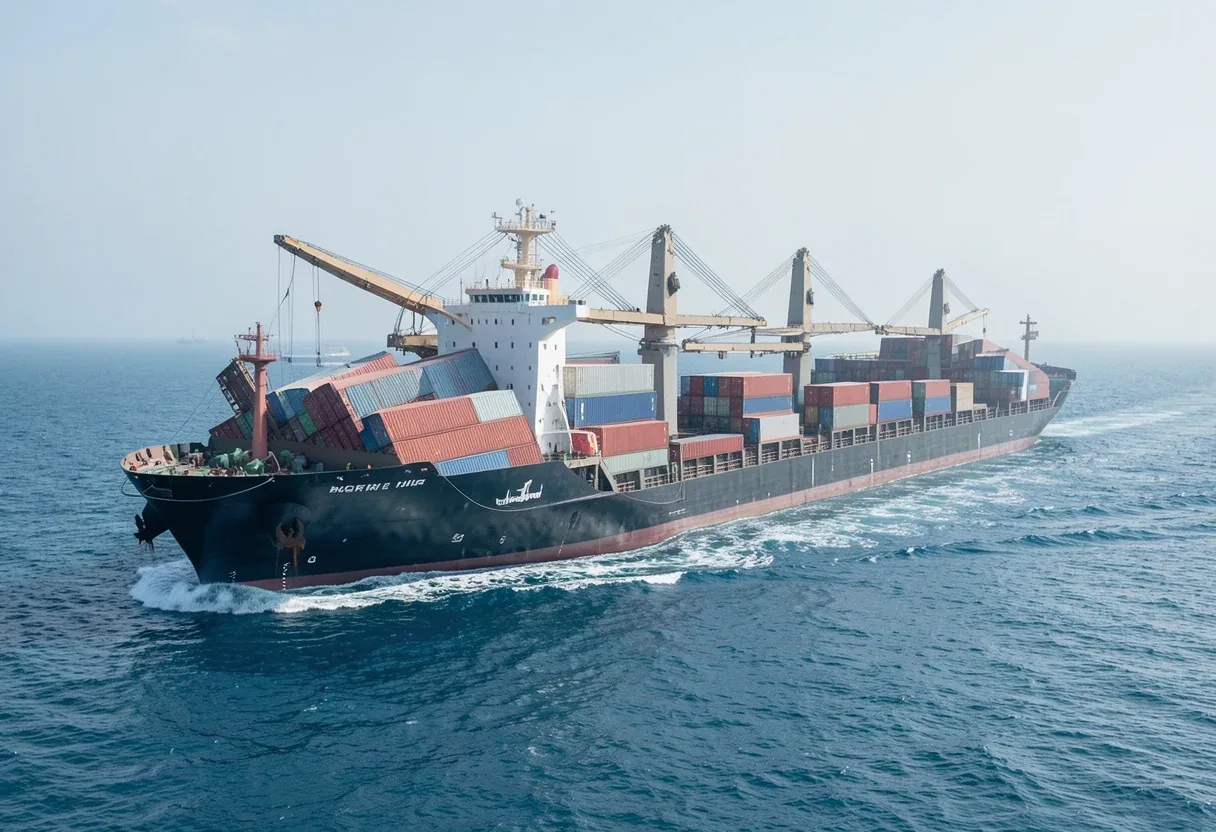
A container ship sank near the Strait of Hormuz after a projectile strike, per Al Arabiya English, dragging the world's most-watched chokepoint back onto freight risk desks.
- Desk
- Ocean Freight
- By
- Amara Osei
- Filed
- Length
- 618 words
- Read
- 3 min
Key points05
- Container ship sank near the Strait of Hormuz after a projectile strike, per Al Arabiya English
- Initial report did not name operator, flag state, deadweight or box count
- War-risk premia and P&I club bulletins typically reset within hours of confirmed strikes on commercial tonnage
- Strait carries an outsized share of Gulf container and energy flows relative to global TEU
- War-risk cost increases typically reach shippers as BAF and security surcharges within days
A container ship went down near the Strait of Hormuz after a projectile strike, Al Arabiya English reported — a single sinking that drags the world's most-watched choke point back onto carrier and forwarder risk registers. The incident will land on underwriters' next briefing call before the owner issues a formal statement.
A projectile struck the hull and the vessel sank; Al Arabiya's dispatch did not name the operator, the flag state, the deadweight, or the box count. That thin reporting is itself part of the freight-market story, because the lane handles an outsized share of Gulf-origin containerised and energy flows, and any confirmed strike resets war-risk underwriters within hours.
What does this change for shippers?
Two practical things, in order:
- War-risk premia on hull and cargo cover typically step up after a confirmed attack on commercial tonnage in these waters, even on vessels that were nowhere near the strike. Those costs travel downstream fast — bunker adjustment factors, security surcharges, and revised bills of lading can land on shippers' inboxes within days, not weeks.
- Routings on Gulf-to-South Asia and Gulf-to-Europe loops may stretch as operators re-evaluate transit windows, insurance terms, and crewing rotations.
Forwarders running fixed-day Gulf services should expect charterers to push for longer port-stay buffers at loading terminals and transhipment hubs. Carriers with tonnage already mid-transit have less room to maneuver; expect a few to slow-steam or hold at safe anchorages until the P&I clubs publish fresh bulletins and underwriters issue updated terms. NVOCC desks will take the first wave of calls, because contractual force-majeure clauses only kick in once owners or flag states confirm a warlike act — and that paperwork trail is rarely quick.
Why does Hormuz matter to the freight market?
The strait carries a disproportionate share of regional and transhipment container flows relative to its share of global TEU. That asymmetry is the point: a single hull loss here doesn't move headline ocean indexes on its own, but it tightens Gulf-outbound spot rates almost immediately, because insurance, not tonnage, is the binding constraint. Regional hubs with feeder reach tend to absorb re-routings faster than long-haul loops do, which is why shippers with Gulf exposure usually feel the ripple through transhipment costs rather than headline ocean rates.
It also matters because this lane has been the bellwether for underwriter appetite for years. Each new confirmed strike nudges reinsurance treaties toward broader named-area warranties, and exclusions travel into commercial cover as war-risk clauses that brokers quietly add to bills of lading. Shippers notice it as a small surcharge line; underwriters notice it as the market resetting itself.
Where does this leave carriers and forwarders?
For carriers, the calculus is binary: transit and absorb the premium, or divert around the Cape and accept the extra days. The Cape diversion adds bunker burn and a longer schedule that, on most Gulf-to-North Europe rotations, wipes out most of the rate differential on a single sailing. That is why most operators transit and let insurance do the talking — until premiums climb past the point where the math no longer works.
For forwarders, the next 48 hours matter more than the next 48 days. Watch owner statements, flag-state advisories, and the P&I clubs' circulars; that is where spot rates and contingency surcharges will take their cue, not from the headline.
For shippers, the read is simple: expect Gulf-outbound spot rates and security surcharges to absorb a risk premium across the next few sailings, regardless of how thin the initial report stays. The margin for surprise at Hormuz remains, as ever, very thin.
Source: Google News: container shipping
More from Amara Osei
Show full bio
Staff writer covering regulation, policy and their impact on Ocean and air freight, container shipping at Waybill Wire.
495 articles
Related05
Container ship sinks after mine strike in Strait of Hormuz
Container Ship Sinks Near Hormuz After Projectile Strike
Iran Claims Containership Struck Mine and Sank in Strait of Hormuz
Hormuz Strikes Test Ocean Carriers as Container Rates Slide
Container ship sinks in Hormuz after projectile strike, Singapore says