WW/OCEANFREIG
Iran Claims Containership Struck Mine and Sank in Strait of Hormuz
Iranian sources claim a containership struck a mine and sank in the Strait of Hormuz. Details remain unconfirmed, but war-risk cover and Gulf routings are watching.
- Desk
- Ocean Freight
- By
- Amara Osei
- Filed
- Length
- 470 words
- Read
- 2 min
Key points05
- Iranian sources claim a containership struck a mine and sank in the Strait of Hormuz
- Vessel identity, operator and crew status remain unconfirmed in initial reporting
- Roughly a fifth of globally traded oil transits the Strait of Hormuz
- The strait narrows to about 21 nautical miles at its tightest point
- Past Gulf incidents, including 2019 limpet-mine attacks near Fujairah, triggered war-risk premium spikes
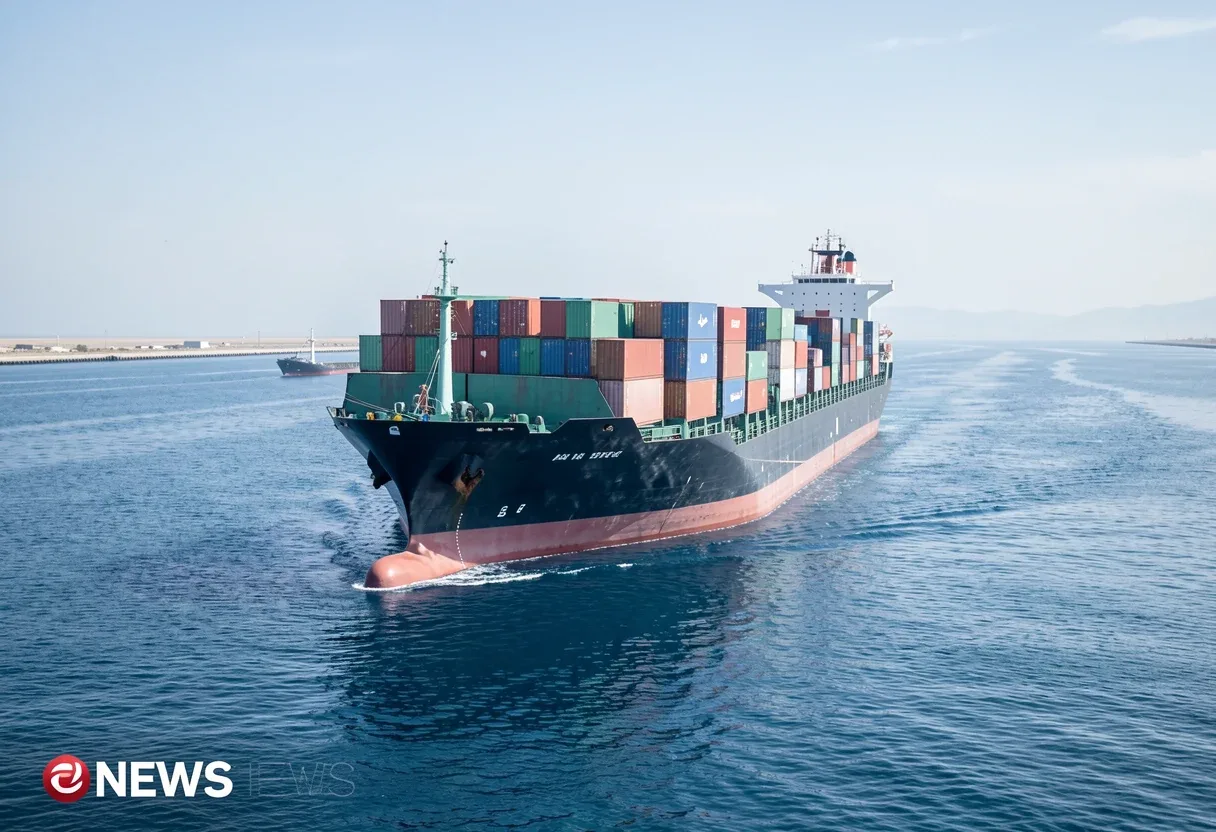
A containership has sunk in the Strait of Hormuz after striking a mine, according to claims from Iranian sources reported by The Maritime Executive. Details on the vessel's identity, crew status and cargo remain unconfirmed at time of writing.
The claim alone is enough to make box-ship operators nervous. The Strait of Hormuz is the world's most consequential maritime chokepoint, and any suggestion of mines in its waters changes the risk calculus for every carrier routing between Gulf ports and the open Indian Ocean.
What does this change for shipping?
For container lines, the immediate question is insurance and routing. War-risk premiums for Gulf calls tend to reprice fast after mining claims, even before incidents are verified. Owners of tonnage already in the region face the awkward choice between waiting out confirmation or repositioning via longer routings.
For shippers with cargo bound to or from Jebel Ali, Dammam and the smaller Gulf terminals, the practical exposure is delay. A sunk vessel in or near the strait can restrict traffic schemes, prompt naval escorts, and slow transits — none of which help schedule reliability, which is already fragile enough.
Forwarders should expect two things: queries from clients about alternative routings, and carriers invoking risk-related surcharges or suspension clauses if tensions escalate. The second tends to follow the first by about a week.
Verification matters here
Iranian claims about shipping incidents in the strait don't always survive contact with independent verification. The Maritime Executive report attributes the mine-strike-and-sinking account to Iranian sources, and precise facts — vessel name, flag, operator, tonnage, crew — have not been confirmed in the initial reporting.
That gap cuts both ways. If the sinking is real and mine-related, it marks a serious escalation in a waterway that has seen tanker seizures, drone attacks and limpet-mine incidents in recent years. If it isn't, the claim itself still moves markets, because underwriters price uncertainty, not truth.
The backdrop
Hormuz has long been the leverage point in Gulf security politics. Roughly a fifth of globally traded oil passes through the strait, and container traffic serving Gulf economies funnels through the same 21-nautical-mile-wide corridor at its narrowest point.
Past incidents — including the 2019 limpet-mine attacks on tankers near Fujairah — triggered immediate spikes in war-risk cover and re-routing decisions that took weeks to unwind. Mining claims carry particular weight because mines are indiscriminate and slow to clear.
Expect the next confirmed data points to come from naval forces in the region, insurers' notice boards, and any carrier statements on schedule changes. Until then, the smart move for shippers and operators is to treat this as live risk, verify before reacting, and watch the war-risk market as the fastest tell on how seriously the industry takes it.
Source: Google News: container shipping
More from Amara Osei
Show full bio
Staff writer covering regulation, policy and their impact on Ocean and air freight, container shipping at Waybill Wire.
495 articles