WW/OCEANFREIG
Maersk lifts 2026 profit outlook as container rates surge
Maersk raised 2026 EBITDA guidance to $14 billion-$14.5 billion as freight rates more than doubled year on year, but an 11% share fall reflected a $4.7 billion quarterly EBITDA miss.
- Desk
- Ocean Freight
- By
- Amara Osei
- Filed
- Length
- 771 words
- Read
- 4 min
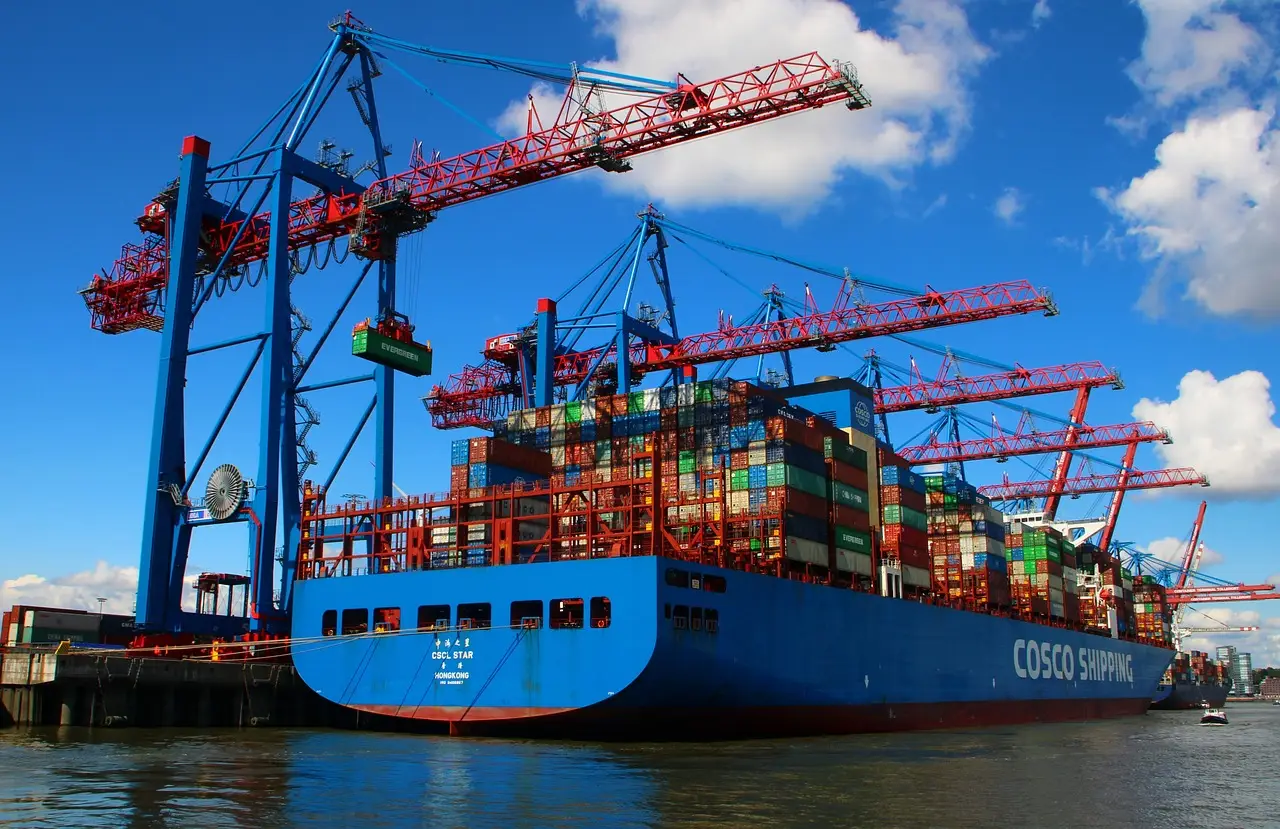
Maersk lifted its 2026 underlying EBITDA guidance to $14 billion-$14.5 billion on Thursday, its third increase this year, even as shares fell 11% after a $4.7 billion quarterly EBITDA miss.
The upgrade did not surprise the street, which limited its share-price appeal. An LSEG poll put full-year EBITDA consensus at $14.02 billion. Third-quarter EBITDA rose 75% to $4.7 billion, below the $5.04 billion mean forecast. Analysts said investors had expected the upgrade and the quarterly miss drove the decline.
The upgrade came from higher prices, not more cargo, as AI-driven demand and port congestion kept container freight rates high. Maersk, the Danish group and the world’s second-largest container line, often serves as a bellwether for global trade.
CEO Vincent Clerc said: “Despite continued geopolitical uncertainty and disruptions, global trade has remained remarkably resilient.” He added: “Demand is being driven not only by consumer spending, but increasingly by major investments in electrification, energy and the rapid expansion of AI infrastructure.” Those investments are generating “significant flows of industrial cargo around the world.”
Last month, the World Trade Organization said a surge in spending on semiconductors and AI data centres had boosted global trade. That spending also helped offset disruption from the US-Israeli war with Iran, the WTO said.
In the United States, Maersk said economic activity held strong, supported by consumer spending and business investment tied to the AI buildout. Growth in China remained constrained by sluggish domestic demand, while recent fiscal measures delivered only a modest boost.
Maersk also reported that Asian exports slowed in July and August because of weather-related disruption.
The rate engine: congestion plus AI demand
Maersk’s Ocean volumes were largely flat from a year earlier, even as freight rates rose 46% from the previous quarter and more than doubled year on year. Port congestion persisted as Maersk continued its gradual return to the Suez Canal.
- 2026 underlying EBITDA: $14 billion to $14.5 billion, up from $10.5 billion to $12.5 billion.
- 2026 underlying operating profit (EBIT): $8 billion to $8.5 billion, up from $4.5 billion to $6.5 billion.
- Third-quarter EBITDA: $4.7 billion, 75% higher year on year but below the $5.04 billion analyst mean.
- Global container-volume forecast: About 4% growth for 2026.
The EBITDA midpoint rose by $2.75 billion, or roughly 24%, from the prior range. Analysts attributed the operating-profit miss to weaker-than-expected volumes and higher costs in the Ocean division.
For carriers, the distinction matters. Higher freight prices, not another cargo surge, drove the guidance increase; for shippers and forwarders, that means a markedly tougher pricing environment while congestion lasts.
The arithmetic is awkward: Maersk sharply raised its outlook after warning at the start of the year that new ships and a return to Suez would push rates down. Some analysts expect congestion and disruption to fade as vessels return to the canal and new capacity arrives. That makes earnings unusually exposed to a reversal.
Suez return and the coming supply
Most shippers abandoned the Suez Canal in late 2023 after Houthi attacks in the Red Sea. This week, Maersk said its ME1 service linking India and Europe would resume sailing through the canal, extending its gradual return.
That shift can bring network capacity and routing options back to a market already reopening the route. It also clarifies the downside: returning services and new vessels increase supply, even while congestion holds freight rates high.
What does this change for shippers and forwarders?
For shippers, the immediate change is a higher freight bill. For forwarders, it is a wider gap between today’s market pricing and potential pricing as supply normalizes. Maersk’s 46% quarterly rate rise and largely flat volumes show that congestion and pricing, rather than shipment growth, supplied the lift.
Carriers currently capture the stronger pricing. Yet Maersk’s own year-start warning and the analyst view leave that uplift exposed to Suez normalization and new ships. Shippers could welcome a reversal; forwarders need to plan for rates that remain high now but may soften as supply returns.
Maersk still expects global container volumes to grow around 4% this year. For planning purposes, AI infrastructure, electrification and energy cargo must sustain demand as Suez routing and additional vessels restore capacity. If they do, the rate surge may prove firmer; if not, the congestion premium can drain quickly.
The next leg of the cycle will turn on whether roughly 4% container-volume growth and AI-linked cargo can offset the capacity returning through Suez and new ships.
Source: shippingherald.com
More from Amara Osei
Show full bio
Staff writer covering regulation, policy and their impact on Ocean and air freight, container shipping at Waybill Wire.
796 articles
Related05
Maersk lifts 2026 guidance to $14bn EBITDA as rivals outpace it
Maersk lifts 2026 EBITDA guidance to US$14–14.5 billion
Maersk revenue jumps 27% to $18.1bn as freight rates offset volume dip
Maersk hikes full-year EBITDA outlook to $14bn-plus, shares still slide 11.6%
Maersk lifts 2026 EBITDA guidance to $14bn after congestion squeeze