WW/OCEANFREIG
Maersk completes first US 100% bioethanol bunkering at Port of Houston
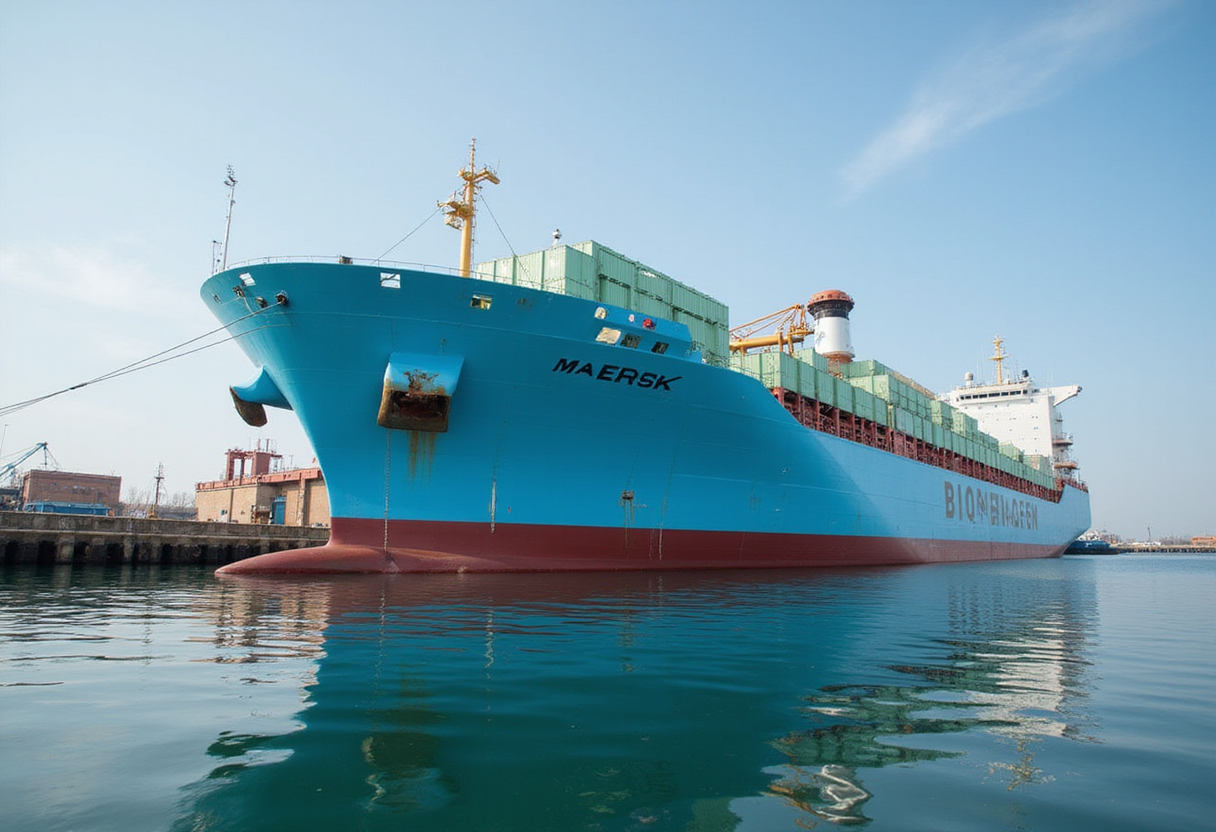
Maersk has completed the first 100% bioethanol bunkering of a container vessel in the United States, taking on plant-based fuel from POET at the Port of Houston with regulatory clearance from the US Coast Guard.
- Desk
- Ocean Freight
- By
- James Calloway
- Filed
- Length
- 554 words
- Read
- 3 min
Key points04
- Maersk completed the first 100% bioethanol container-vessel bunkering in the US at the Port of Houston
- POET supplied the fuel; the producer runs more than 3bn gallons of capacity a year across 35 bioprocessing facilities
- Kirby Corporation handled marine bunkering and fuel transportation while the US Coast Guard cleared regulatory requirements
- Maersk's Emma Mazhari said bioethanol can be 'another scalable, lower-emission fuel option' for shipping
Maersk has completed the first bunkering of a container vessel on 100% bioethanol in the United States, taking on plant-based fuel supplied by POET during a trial at the Port of Houston.
The Houston operation is the US milestone in Maersk's running programme of bioethanol tests on its dual-fuel fleet. It positions bioethanol within a broader carrier search for scalable lower-emission alternatives and adds a US supply line to trials Maersk has already run in other bunker hubs.
Who supplied what
POET — which describes itself as the world's largest bioethanol producer — supplied the fuel. Kirby Corporation handled marine bunkering and fuel transportation. The Port of Houston provided port coordination and infrastructure, and the US Coast Guard cleared the regulatory pathway for handling a 100% bioethanol blend at scale.
POET's commercial weight anchors the supply case. The company produces more than 3 billion gallons of bioethanol a year across 35 bioprocessing facilities and argues that existing production, transport and distribution assets can already support marine uptake.
"Bioethanol has the potential to contribute meaningfully to the future energy mix for shipping," said Emma Mazhari, Maersk's vice president for energy markets. She called the fuel "another scalable, lower-emission fuel option" that gives carriers flexibility as the industry moves toward lower-carbon alternatives.
What the trial changes for the bunker market
Three commercial layers matter. First, it documents a containership operating on 100% bioethanol in a US port — a first the Coast Guard was prepared to sign off on. Second, it confirms a US-to-bunker pipeline running through POET's existing agricultural infrastructure rather than new refining capacity. Third, it signals to carriers and forwarders that ethanol — long treated as a road-fuel niche — can move into large-scale maritime use.
Shippers and forwarders will not see a commercial bioethanol service as an immediate result. Maersk has not allocated bioethanol bunkering capacity to a regular sailing, and the trial involved a single call. But a clean regulatory pathway in Houston opens the door for repeat trials at other Gulf and East Coast ports.
Why a road-fuel giant now wants ship buyers
For POET, the trial is a positioning move. The company has long moved ethanol into road transport, where blending mandates and renewable-fuel standards anchor demand. Marine buyers represent a far larger volume pool, and POET wants in before methanol locks the segment.
Jeff Broin, POET's founder and CEO, said the Houston test demonstrated the potential to connect US agriculture directly with marine fuel demand. "Seeing American-made bioethanol move from the farm to a container ship in one of the nation's largest ports is an exciting moment for our industry," Broin said.
POET's pitch to shipowners: producers do not have to wait for green-methanol capacity to come online, because ethanol supply chains already move millions of gallons a day through ports, rail and pipeline.
What to watch next
The next data point is whether Maersk pairs the Houston fuel batch with a specific east-west trade lane and publishes lifecycle-emissions performance against its parallel methanol trials. A repeat call at a second US port — or a multi-month bioethanol deployment on a single string — would be the clearest signal that the carrier intends to blend bioethanol into its commercial bunker mix.
Source: Splash247
More from James Calloway
Show full bio
Correspondent covering consumer brands and retail at Waybill Wire.
229 articles
Related05
Maersk Completes First U.S. Ship-to-Ship Ethanol Bunkering in Houston
Maersk Completes First US Ship-to-Ship Ethanol Bunkering of Deep-Sea Boxship
Maersk Completes First U.S. Ethanol Bunkering of Deep-Sea Boxship
Maersk Completes First U.S. Ethanol Bunkering of Deep-Sea Boxship
Maersk Completes First US Ethanol Bunkering of Deep-Sea Boxship