WW/OCEANFREIG
Maersk Completes First US Ship-to-Ship Ethanol Bunkering of Deep-Sea Boxship
Maersk has carried out the first US ship-to-ship ethanol bunkering of a deep-sea container ship, moving alternative-fuel operations from trial stage toward routine commercial delivery.
- Desk
- Ocean Freight
- By
- James Calloway
- Filed
- Length
- 513 words
- Read
- 3 min
Key points03
- Maersk completed the first ship-to-ship ethanol bunkering of a deep-sea container ship in the United States.
- The operation signals a shift from shore-side biofuel trials to commercial-scale fuel delivery at a US berth.
- The milestone expands Maersk's portfolio of emissions-reduced ocean products available to shippers on US-linked trade lanes.
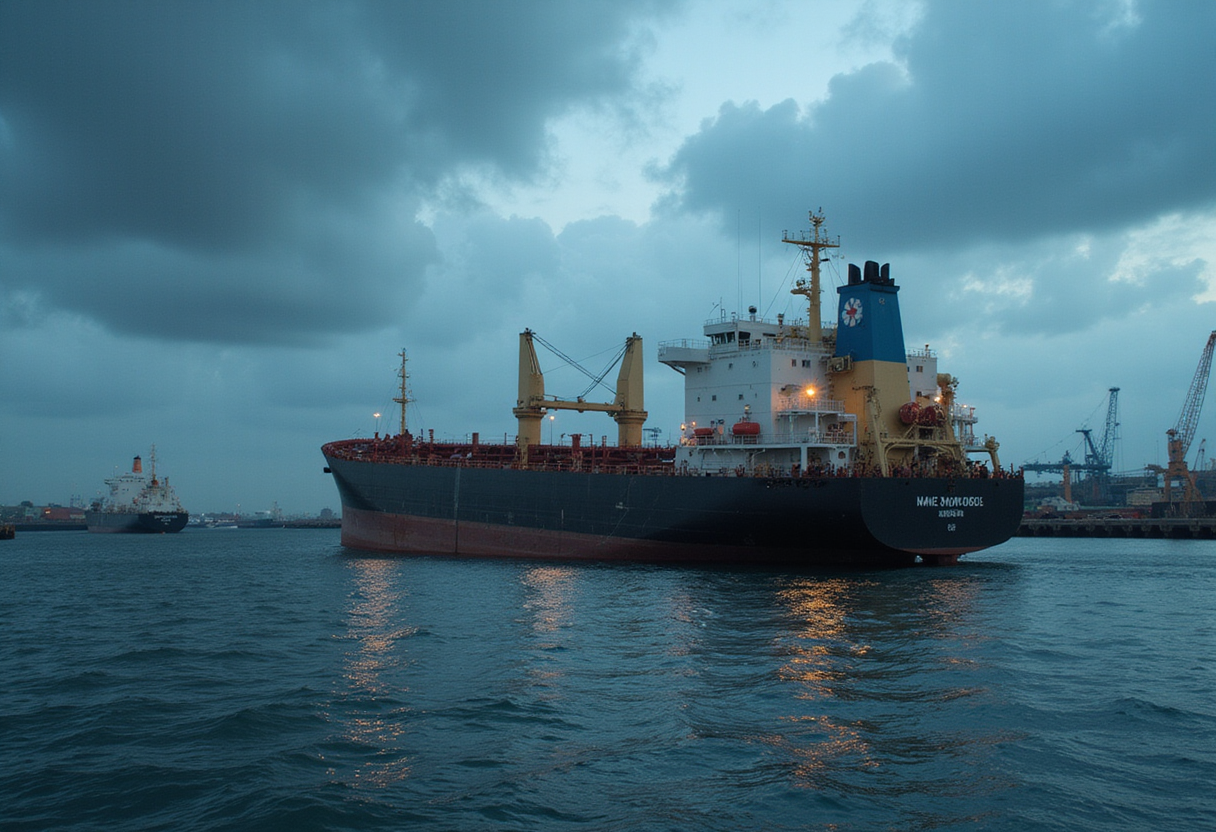
Maersk has completed the first ship-to-ship ethanol bunkering of a deep-sea container vessel in the United States, a first for the American market and a concrete step in the carrier's search for scalable low-emission fuels beyond methanol and green fuels still in short supply.
The operation, reported by Marine Insight, paired a bunkering vessel with one of Maersk's ocean-going container ships — a class of tonnage that normally burns conventional very low sulphur fuel oil in US ports. Ship-to-ship delivery, rather than truck-based tankering, allows larger volumes to be transferred in a single call and signals that ethanol has moved beyond experimental shore-side trials toward routine commercial bunkering at a US berth.
For Maersk, the milestone fits a wider pattern. The Danish carrier has already staked its decarbonisation strategy on methanol dual-fuel tonnage and has run biofuel bunkering programs for customers buying carbon-inset ocean products. Ethanol, chemically a cousin of methanol, can serve as a transition fuel and as a feedstock pathway, and a successful deep-sea ship-to-ship transfer demonstrates the handling protocols, safety case and supplier coordination needed to make it repeatable.
The commercial read-through matters more than the ceremony. Bunkering infrastructure in US ports has lagged the fuel ambitions of the major container lines: methanol barges remain scarce, and each new fuel class requires port authority approvals, revised transfer procedures and trained crews before it can scale. A completed ship-to-ship ethanol operation in a US harbour proves at least one port can now service this fuel mode, which strengthens the hand of carriers weighing multi-fuel fleet strategies and of shippers under pressure to report lower well-to-wake emissions on trans-Pacific and trans-Atlantic strings.
For forwarders and beneficial cargo owners, the practical significance is narrow but real. Maersk markets emissions-reduced ocean products tied to specific fuels; each verified bunkering operation expands the inventory of claims the carrier can offer on US-linked trade lanes. Expect competitors to scrutinise the cost per tonne of the ethanol delivered and the emissions accounting applied, since biofuel claims are only as credible as their chain of custody.
The operation also lands as US ports position themselves for the next fuel cycle. Gulf and East Coast terminals have chased methanol and ammonia-ready investments; a first ethanol ship-to-ship transfer adds another option to the slate and could ease bottlenecks if methanol supply stays tight — ethanol has an established production and logistics base in the US market, which shortens the road to volume.
Maersk has not said how large the transfer was or whether follow-up operations are scheduled, and those details will determine whether this stays a demonstration or becomes a bunkering product. What is certain is the direction: the carrier continues to convert fuel pilots into working operations at berth, and the first US ship-to-ship ethanol delivery to a deep-sea boxship will inform how quickly American ports build out the multi-fuel capacity that large container lines increasingly demand.
Source: Google News: container shipping
More from James Calloway
Show full bio
Correspondent covering consumer brands and retail at Waybill Wire.
130 articles
Related05
Maersk Completes First U.S. Ethanol Bunkering of Deep-Sea Boxship
Maersk Completes First U.S. Ethanol Bunkering of Deep-Sea Boxship
Maersk Completes First U.S. Ship-to-Ship Ethanol Bunkering in Houston
Maersk Completes First US Ethanol Bunkering of Deep-Sea Boxship
Maersk and Anemoi Claim World First: Rotor Sails Head to Container Shipping