WW/OCEANFREIG
Maersk Completes First U.S. Ethanol Bunkering of Deep-Sea Boxship
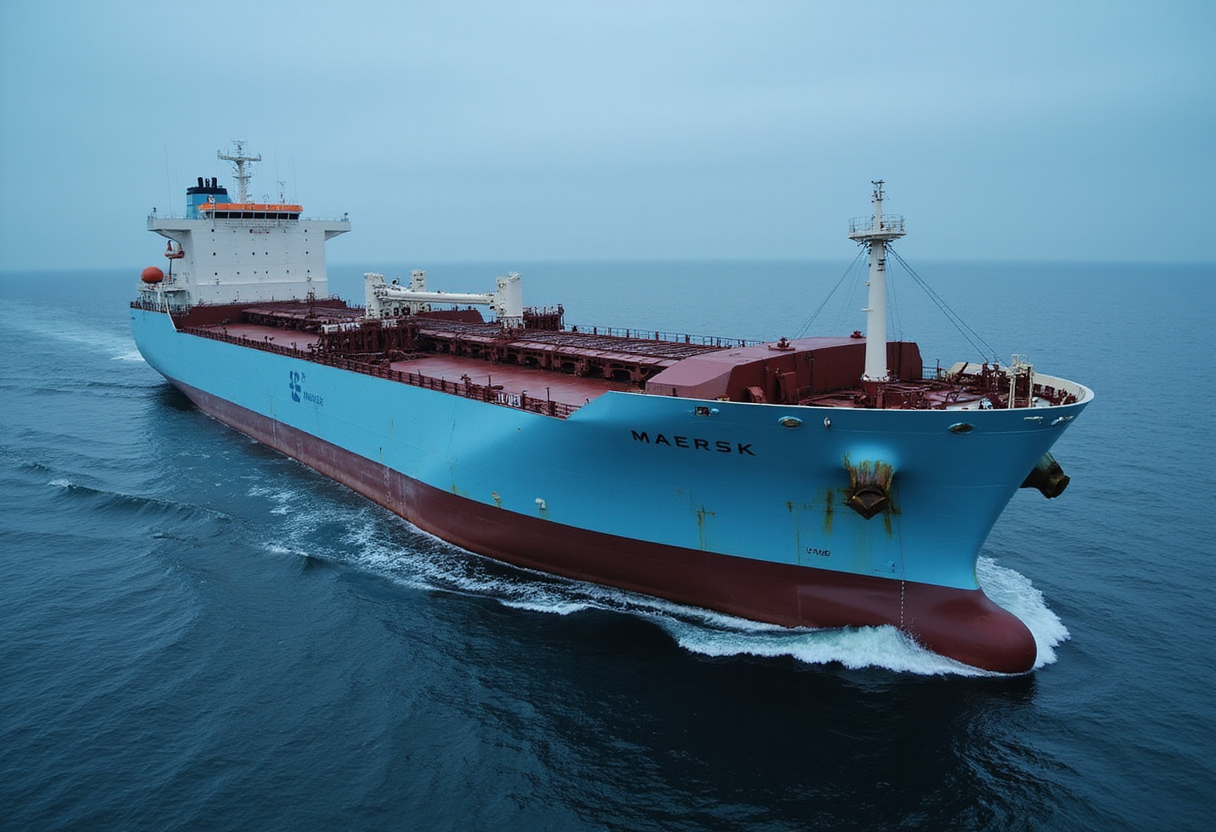
Tangier Maersk received 100% U.S. corn ethanol in the first ship-to-ship commercial ethanol bunkering of a deep-sea container vessel in the United States.
- Desk
- Ocean Freight
- By
- Tom Whitfield
- Filed
- Length
- 448 words
- Read
- 2 min
Key points03
- Tangier Maersk, a dual-fuel alcohol-enabled container vessel, was bunkered with 100% U.S.-produced corn ethanol.
- The operation was the first ship-to-ship commercial ethanol bunkering of a deep-sea container vessel in the United States.
- The bunkering follows earlier ethanol trials aboard Laura Maersk and Antonia Maersk.
A.P. Moller – Maersk has completed the first ship-to-ship commercial ethanol bunkering of a deep-sea container vessel in the United States, fueling the dual-fuel alcohol-enabled vessel Tangier Maersk with 100% U.S.-produced corn ethanol.
The operation, announced by the carrier, marks a concrete step in Maersk's effort to test multiple fuel pathways for decarbonized ocean shipping — and it puts U.S. biofuel infrastructure to work for deep-sea container operations for the first time in a commercial setting.
For shippers with carbon-intensity targets embedded in their contracts, the significance is straightforward: another credible lower-emission option moves closer to commercial availability. Ethanol benefits from an established U.S. production base, existing supply infrastructure and direct compatibility with alcohol-enabled vessel technology — a combination that methanol and ammonia cannot yet claim at equal scale in the American market.
"Achieving lower-emission logistics requires turning new technologies into practical, scalable solutions," said Ditlev Blicher, Maersk's Regional President for North America. "This bunkering operation aboard Tangier Maersk provides valuable real-world experience with alternative fuels in commercial shipping. The insights gained will help drive the development of more sustainable supply chains."
Third vessel in the ethanol trial series
The Tangier Maersk bunkering builds on earlier ethanol trials aboard Laura Maersk and Antonia Maersk, Maersk's first two dual-fuel alcohol-enabled vessels. Together, the three operations have given the carrier hands-on data across operational, infrastructure, sourcing and supply chain dimensions of ethanol as a marine fuel — from procurement of U.S. corn ethanol to the practicalities of ship-to-ship transfer alongside a working container schedule.
Maersk cautions that scalability is not yet settled. The company said future fuel pathways will depend on fuel availability, regulation and operational readiness across the maritime value chain — a nod to the policy and supply questions that continue to shape the economics of biofuels versus methanol, LNG and other alternatives.
What it means for carriers and forwarders
For Maersk, the U.S. ethanol bunkering validates a fuel pathway that leverages domestic American production rather than imported fuel supply chains, potentially reducing exposure to sourcing bottlenecks. For competitors watching the alcohol-fuel space, the operation demonstrates that commercial-scale ethanol bunkering is technically feasible in a U.S. port environment.
Forwarders and BCOs booking with Maersk can expect the carrier to keep positioning ethanol alongside methanol in its multi-fuel strategy as it works toward its stated commitment to advancing credible pathways in the industry's energy transition.
Maersk has not disclosed the volume of ethanol bunkered, the specific port where the ship-to-ship transfer took place, or the commercial terms of the fuel procurement.
Source: Hellenic Shipping News
More from Tom Whitfield
Show full bio
Market editor covering consumer brands and retail at Waybill Wire.
129 articles
Related05
Maersk Completes First U.S. Ethanol Bunkering of Deep-Sea Boxship
Maersk Completes First US Ship-to-Ship Ethanol Bunkering of Deep-Sea Boxship
Maersk Completes First U.S. Ship-to-Ship Ethanol Bunkering in Houston
Maersk Completes First US Ethanol Bunkering of Deep-Sea Boxship
Pink Corridor Project Targets Nuclear-Powered Transatlantic Box Route