WW/OCEANFREIG
Yang Ming LNG ship calls at Cai Mep on EC2 trans-Pacific route
Yang Ming’s 15,500-TEU YM Wayfinder called at Tan Cang-Cai Mep on October 27, 2026, anchoring a five-ship LNG programme and seven 16,000-TEU newbuild orders for 2028-29.
- Desk
- Ocean Freight
- By
- Marcus Bennett
- Filed
- Length
- 737 words
- Read
- 4 min
Key points05
- YM Wayfinder called at Tan Cang-Cai Mep International Terminal on October 27, 2026.
- The vessel measures nearly 365 metres and carries approximately 15,500 TEUs.
- YM Wayfinder is one of five LNG dual-fuel ships Yang Ming began receiving in 2026.
- Seven additional ships of about 16,000 TEUs each are ordered for delivery in 2028 and 2029.
- The seven newbuilds include provisions for future ammonia operation.
By Marcus Bennett
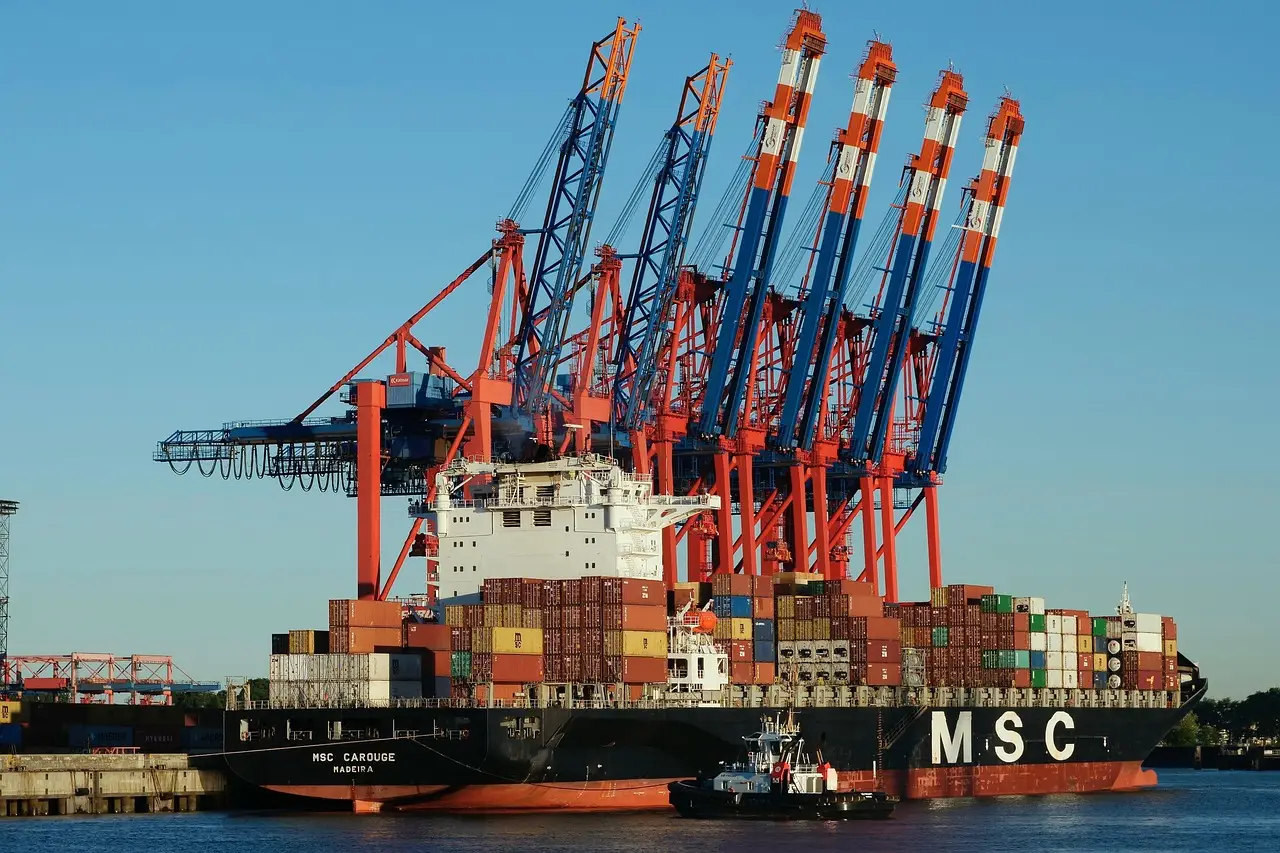
Yang Ming’s 15,500-TEU LNG dual-fuel vessel YM Wayfinder called at Tan Cang-Cai Mep International Terminal in Vietnam on October 27, 2026, while operating on the carrier’s EC2 trans-Pacific service.
The report, citing Sagar Sandesh, states: “YM Wayfinder serves the EC2 route linking Southeast Asia and North America.” The Premier Alliance itinerary links Vietnam and North America through ports in Asia, Mexico, the United States and Canada.
That gives the call a specific commercial function. It places a dual-fuel ship on a named service instead of leaving the announcement at a general fleet-renewal milestone, although the report provides no sailing schedule or cargo-volume figures for the vessel.
What does the YM Wayfinder add to the EC2 service?
The nearly 365-metre YM Wayfinder carries about 15,500 TEUs and can run on liquefied natural gas or low-sulphur fuel oil. Onboard monitoring and energy-saving systems are intended to improve operating efficiency and reduce emissions.
Those intentions do not establish a quantified saving. The source gives no measured fuel consumption, emissions reduction or vessel operating-cost comparison. Shippers gain access to a lower-emission propulsion option, but no evidence of a lower freight rate; carriers gain propulsion choice and a 15,500-TEU platform, not a demonstrated earnings advantage.
How large is the fleet-renewal programme?
YM Wayfinder is one of five LNG dual-fuel ships Yang Ming began receiving in 2026. The carrier has also ordered seven additional container ships of about 16,000 TEUs each for delivery in 2028 and 2029.
At full delivery, those seven newbuilds represent 112,000 TEUs of nominal capacity. The source does not state whether they replace older tonnage or add slots, and it gives no total fleet size, leaving net route capacity unquantified.
The newbuilds include provisions for future ammonia operation. Yang Ming also plans further LNG-capable vessels and future ammonia-ready designs. Design provisions are not the same as confirmed ammonia operation: the source describes neither an installed ammonia fuel system nor a conversion timetable.
What changes for shippers, carriers and forwarders?
- Shippers: The EC2 service offers a route from Vietnam to North America through Asia, Mexico, the United States and Canada. The YM Wayfinder adds a vessel of about 15,500 TEUs with LNG dual-fuel propulsion. However, the report offers no rate, transit-time, schedule-reliability or volume comparison against competing services.
- Carriers: The five LNG deliveries and seven additional orders give Yang Ming a two-stage renewal programme, with the larger 112,000-TEU increment scheduled for 2028-29. The source presents this as support for lower-emission container shipping and service expansion. It does not disclose vessel allocation, slot counts or load factors, so the programme does not translate into a firm forecast of available cargo capacity.
- Forwarders: A lower-emission vessel on the EC2 route provides another commercial specification to present on bookings across the named geography. Whether it changes a customer’s decision remains uncertain without freight rates, cargo commitments, fuel-cost data or confirmed fuel availability at the relevant ports.
Where does Yang Ming stand against larger carriers?
Yang Ming is a Taiwan-based container shipping company serving international liner routes and logistics customers. Its fleet combines conventional and lower-emission vessels, with current investment focused on trans-Pacific and other major trade lanes.
The company competes with Taiwan-based Evergreen Marine and Wan Hai Lines, while larger global carriers such as Maersk operate in the same international container market. Yang Ming remains a specialised regional carrier within that broader field, according to the report.
That competitive description remains broad. No carrier executive, shipmaster or terminal official is quoted, and the source supplies no EC2 market-share, rate or capacity comparison. It therefore cannot show whether the LNG deployment changes Yang Ming’s position against Evergreen Marine, Wan Hai Lines or Maersk.
What will decide whether fleet renewal pays off?\n
The source’s closing assessment is appropriately measured: “Freight rates, cargo volumes, delivery timing and the cost of LNG-capable ships remain important factors for future earnings.” None of those financial variables is quantified.
The next test is the remaining LNG delivery programme in 2026 and the 2028-29 newbuild timetable, alongside actual freight rates, cargo volumes and vessel costs; those data, rather than propulsion labels alone, will determine whether the investment adds usable capacity and earnings.
Source: Google News: container shipping
More from Marcus Bennett
Show full bio
Senior reporter covering regulation, policy and their impact on Ocean and air freight, container shipping at Waybill Wire.
744 articles
Related05
Hai An Puts $70m Into Electric Container Ship Newbuildings
Methane Slip Becomes a Cost Line as EU Pricing Hits LNG Fleet
Containership orderbook nears 16m TEU as Asia trades expand
Carrier Emissions Intensity Gap Hits 35% on Major Trade Lanes
Google, Microsoft, DSV join ZEMBA green shipping buyers alliance