WW/OCEANFREIG
Containership orderbook nears 16m TEU as Asia trades expand
The containership orderbook has passed 15m TEU and could near 16m by year-end as new ships join Asia-Latin America and Asia-Mexico services amid trade growth.
- Desk
- Ocean Freight
- By
- Marcus Bennett
- Filed
- Length
- 908 words
- Read
- 5 min
Key points05
- The global containership orderbook passed 15m TEU and could near 16m TEU by year-end.
- Imabari delivered the 13,932-TEU ONE Symphony, the 14th of at least 15 vessels for ONE's AX3 service.
- MSC's 10,300-TEU MSC Licia X is the sixth of 10 ships; the August 2023 series cost about $130m per unit and delivery came 11 months early.
- ZIM's 7,900-TEU Garnet is the second of four 2024 vessels costing $108m each; ZFS plans 11 ships on a 77-day rotation.
- China-South America trade grew 4% year on year to 563,407 TEU in August, according to Container Trade Statistics.
By Marcus Bennett
The global containership newbuilding orderbook has passed 15 million TEU and could approach 16 million TEU by year-end, according to Alphaliner, as recent deliveries concentrate on Far East-Latin America services.
Alphaliner said vessels delivered during the previous week were primarily assigned to services linking the Far East with Latin America. That concentration makes the near-term capacity question specific: how much new tonnage will enter these trades, on which operators and loops, and against what cargo base.
The available data do not provide an orderbook split by owner, shipyard or service, so the 15 million TEU figure describes the global pipeline rather than guaranteed Asia capacity. Nor did Alphaliner quantify total deliveries in TEU for the week.
Which ships are entering the lanes?
-
Imabari Shipbuilding completed the 13,932-TEU ONE Symphony, the 14th vessel in a program of at least 15 ships that Imabari Group yards are building for ONE. The Japanese carrier will deploy it on the Asia-West Coast South America AX3 service, run with MSC and Hapag-Lloyd, after the ship sails to Qingdao to begin operations.
-
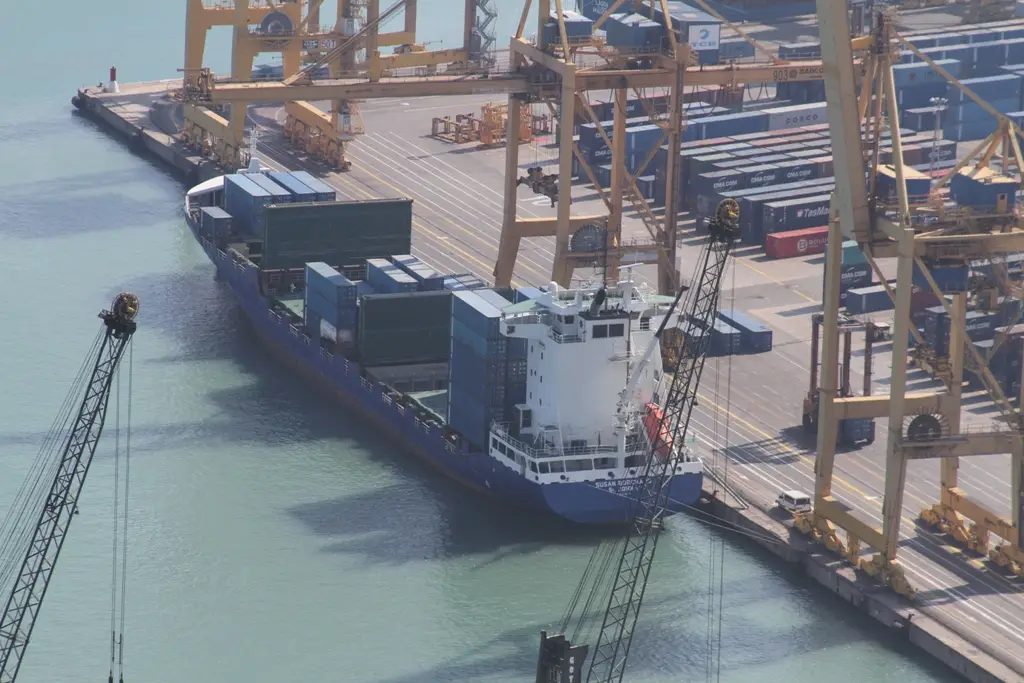
MSC took delivery of the 10,300-TEU dual-fuel MSC Licia X from Zhoushan Changhong International Shipyard. The vessel joins MSC’s solo Far East-East Coast of South America “Carioca” loop, which deploys 15 ships of 8,000-12,000 TEU capacity.
-
MSC’s Licia X is the sixth of 10 vessels Zhoushan Changhong is scheduled to deliver this year and next. MSC ordered the series in August 2023 for around $130 million per unit, and the yard handed over Licia X 11 months ahead of schedule. Alphaliner linked the result to improving Chinese shipbuilding techniques.
-
New Times Shipbuilding delivered the 8,454-TEU CMA CGM Austral to Singapore-based, non-operating owner Eastern Pacific Shipping. The vessel completes a four-ship sister series, all committed to long-term CMA CGM charters, and will serve the French carrier’s Far East-Mexico M2X service.
-
TMS Group, controlled by George Economou, took delivery of the 7,900-TEU Garnet from South Korea’s HJ Shipbuilding & Construction. The ship is the second of four sisters commissioned in 2024 for $108 million each, with all four placed on long-term charter to ZIM.
How is the ZIM-Hapag service changing?
The Garnet will join the newly launched Far East-East Coast South America ZFS service, operated by ZIM with Hapag-Lloyd. Alphaliner placed the launch within a sustained shake-up of vessel-sharing agreements on Asia-South America trades.
The ZFS rotation is Shanghai-Ningbo-Xiamen-Hong Kong-Yantian-Rio Grande-Paranagua-Itajai-Santos-Rio de Janeiro. The service has a 77-day round trip and is planned eventually to deploy 11 ships; current vessels range from 5,500 to 9,000 TEU, with both ZIM and Hapag-Lloyd acting as vessel providers.
What does the capacity mean for shippers and forwarders?
For shippers, the four additions expand the pool of announced large-ship capacity on Asia-Latin America and Asia-Mexico services. For carriers, the programs add deployment scale, while long-term CMA CGM and ZIM charters place those ships under extended service commitments. For forwarders, the 77-day ZFS rotation and 11-ship target provide a concrete network to monitor, although no booking calendars or sailing dates were released.
None of the announcements disclosed freight rates, sailing frequencies or charter durations. The new tonnage therefore does not establish lower rates, tighter equipment availability or an improvement in carrier yields. Without service-level capacity schedules, it is also impossible to determine whether the named additions will be absorbed by demand or contribute to underutilization.
Is cargo demand keeping pace?
Container Trade Statistics registered 4% year-on-year growth in China-South America trade to 563,407 TEU in August, after trade had grown over the previous three years. That figure is a monthly volume, not an annual total.
China exports machinery, electrical equipment, telecoms infrastructure and electronics to South America, while importing agricultural and mining products. The two-way cargo mix gives the new vessels a broader commercial rationale than a one-way repositioning, although the data do not show how much of the August volume moved on any of the four affected services.
The 4% increase provides some demand support for additional capacity, but it does not establish that the four announced deliveries will match cargo growth. Nor does it reveal whether carriers face pressure on equipment utilization, port slots or sailing schedules.
What can the delivery record prove?\n
The clearest schedule signal is MSC’s Licia X, delivered 11 months early for a series ordered in August 2023 at about $130 million per unit. Alphaliner said the result illustrates improving Chinese shipbuilding techniques. That is one delivery against one series, not proof of an industry-wide schedule advantage; no yard-by-yard comparison was provided.
The ZIM program carries a stated $108 million price for each of four sisters, while the MSC series carries a figure of around $130 million per unit. Those values indicate the scale of capital committed, but neither announcement disclosed charter hire, fuel costs or revenue per TEU, so returns cannot be assessed.
Through year-end, the key test will be whether an orderbook approaching 16 million TEU turns into scheduled Asia-Latin America capacity faster than cargo grows; without rates or utilization data, the direction of the market remains more certain than its magnitude.
Source: The Loadstar
More from Marcus Bennett
Show full bio
Senior reporter covering regulation, policy and their impact on Ocean and air freight, container shipping at Waybill Wire.
731 articles
Related05
MSC smashes through 10m teu as fleet and orderbook hit historic scale
China United Lines Books Two 14,000 TEU Newbuilds at $150m Each
MSC books 20 more 24,000 teu megamaxes at Hengli
Zhonggu, Tsakos and Elbdeich Add Six Boxships to Chinese Orderbooks
Containership orderbook hits 46.5% as giant-vessel race expands