WW/OCEANFREIG
Guinea becomes world’s third-largest seaborne iron ore exporter
Guinea shipped more than 5 million tonnes of iron ore in October 2026, passing Canada and South Africa while China-bound cargoes reshaped bulk-carrier demand.
- Desk
- Ocean Freight
- By
- Elena Vasquez
- Filed
- Length
- 643 words
- Read
- 3 min
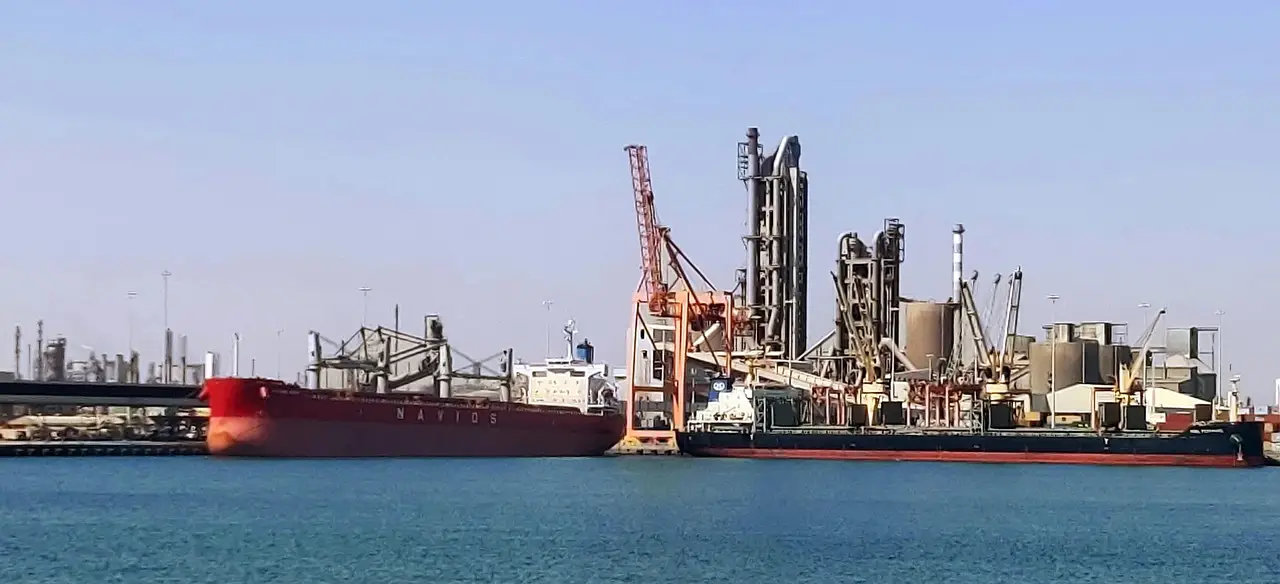
Guinea exported more than 5 million tonnes of iron ore in October 2026, accounting for 3% of global seaborne shipments and making it the world’s third-largest exporter that month. Only Australia and Brazil ranked ahead of the West African country, whose rising China-bound volumes displaced Canada and South Africa from their established positions.
BRS Shipbrokers’ November 2026 report recorded 4.62 million tonnes for Canada and 3.34 million tonnes for South Africa during the same period. Guinea’s shipments have exceeded 22 million tonnes so far this year, already above industry expectations of roughly 20 million tonnes for all of 2026.
What has changed in Guinea’s iron ore trade?
Guinea’s rise followed the launch of Simandou operations in late 2025, after years of delays involving financing, infrastructure and development agreements. Rio Tinto and China’s Baowu Steel are among the project’s principal partners, which include a railway connecting the deposits with a deep-water export terminal.
At full capacity, Simandou is expected to produce 120 million tonnes annually. That volume could strengthen Guinea’s position among the world’s leading exporters and increase its role in supplying China’s steel industry.
How does the China route affect vessel demand?
“Guinean iron ore travels an average of 88% farther than a typical seaborne shipment,” BIMCO shipping analysis manager Filipe Gouveia said. Exports head almost exclusively to China, the largest importer of the steelmaking material.
Guinea accounted for 6% of global iron ore tonne-mile demand in October, twice its share of cargo volumes. Longer journeys increase demand for large bulk carriers even when overall global iron ore shipments remain relatively stable, according to BIMCO.
For carriers, each Guinea tonne consumes more vessel time than cargo moving a shorter distance. For shippers and forwarders, the near-exclusive China routing makes long-haul vessel allocation and voyage duration central to commercial planning.
Why are gold exporters facing disruption?
Regulations introduced in July 2026 require mining companies to refine gold in Guinea before export. A 90-day transition period ended on October 6, and the rules apply to unrefined gold rather than iron ore.
The requirements have disrupted operations at international mining companies including AngloGold Ashanti, Russia-backed Nordgold and Australia’s PDI Gold. Reuters reported that administrative delays and limited refining capacity have left miners holding gold worth tens of millions of dollars.
Guinea inaugurated its Nimba Gold Refinery on November 1, and Mines Minister Bouna Sylla confirmed that operations had begun. The government also appointed an unnamed UAE-based company to operate the facility as part of its strategy to retain more value from locally processed minerals.
Why is Washington seeking a larger role?
US policymakers want greater involvement in Guinea’s mineral sector as they counter China’s dominant position and diversify supply chains. “Guinea is seeking financing for a proposed $1.9 billion deep-water port,” Sylla said on November 16.
Potential financing partners include the US International Development Finance Corporation, Chinese investors and multilateral lenders. Unlike Simandou’s dedicated export facilities, the proposed port would handle mineral shipments and broader commercial activity.
Washington also has a longstanding interest in Guinea’s bauxite industry. In 2016, it supported a financing package exceeding $795 million to expand production at Compagnie des Bauxites de Guinée.
China retains the stronger position at Simandou through companies including Baowu Steel and Chinalco, which have secured access to high-grade iron ore. That position could further reduce Chinese reliance on suppliers in Australia and Brazil.
What should freight planners watch?
With Simandou designed for 120 million tonnes annually, Guinea’s export trajectory points toward more China-bound tonne-miles and sustained demand for large bulk carriers. The proposed $1.9 billion port and compulsory domestic gold refining will separately test the country’s infrastructure and policy capacity as its mining trade expands.
Source: africa.businessinsider.com
More from Elena Vasquez
Show full bio
News editor covering people, launches and day-to-day practice in Ocean and air freight, container shipping at Waybill Wire.
996 articles
Related05
Guinea Overtakes South Africa to Become No. 3 Seaborne Iron Ore Exporter
Dry bulk tonne-mile demand hits decade high as Guinea trade reshapes routes
Guinea’s Simandou targets 120m tonnes as China centralizes ore buying
Guinea iron ore hits record as Brazil exports slide 11%
Guinea courts US and Chinese money for $1.9bn deep-water port