WW/PORTSTERMI
Global Port Congestion Hits Four-Year High, Eroding Effective Capacity
Global port congestion is at a four-year high, Transport Intelligence reports, cutting effective container capacity and tightening the market for shippers and forwarders.
- By
- James Calloway
- Filed
- Length
- 598 words
- Read
- 3 min
Key points04
- Global port congestion has reached a four-year high, per Transport Intelligence.
- Effective container capacity has taken a hit as vessel queues lengthen.
- Congestion-driven delays remove usable slots even without blanked sailings.
- Tight effective capacity is rate-supportive and pressures schedule reliability.
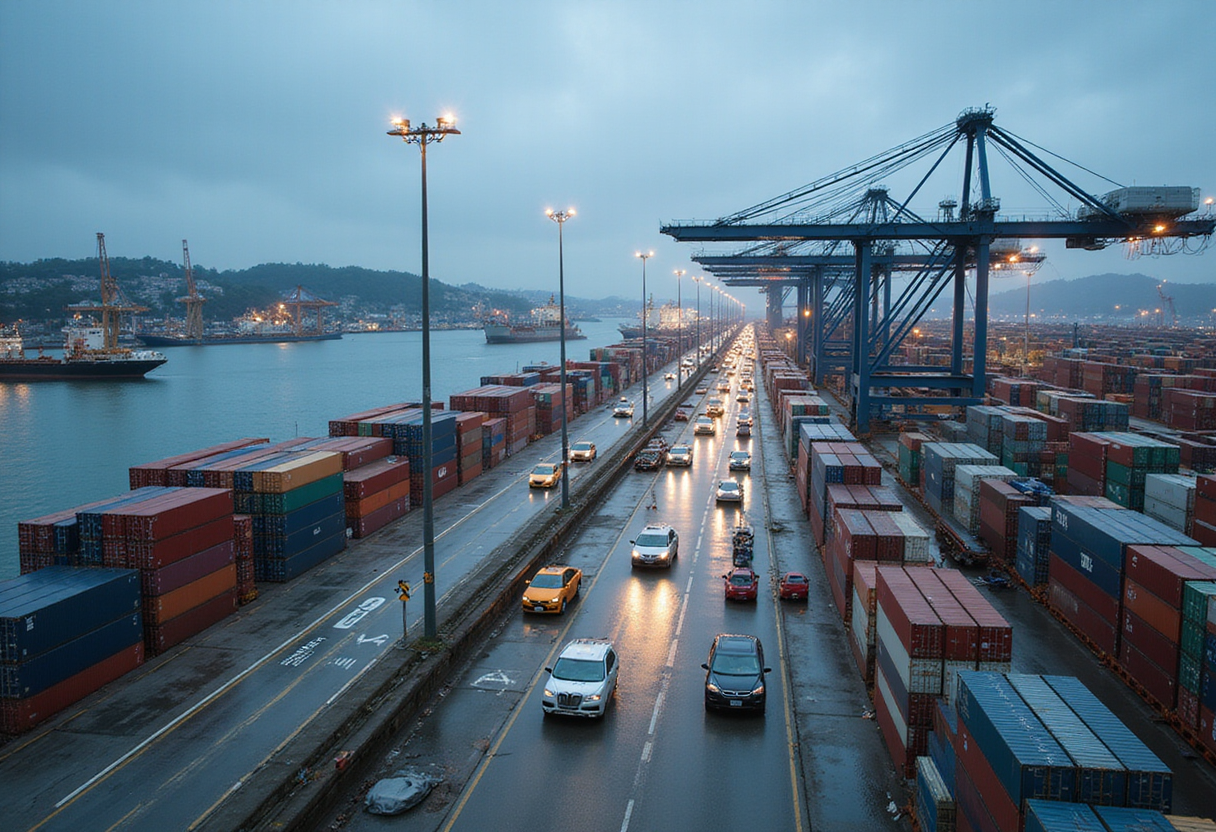
Global port congestion has reached its highest level in four years, Transport Intelligence reports, and the build-up is stripping effective capacity out of the container network even where nominal fleet numbers look healthy.
That distinction matters. Carriers can sail record tonnage and still deliver less cargo capacity to shippers, because ships stuck at anchor off congested ports are not carrying boxes. Transport Intelligence frames the problem precisely in those terms: effective capacity — the tonnage actually available to move freight — has taken a hit as queues lengthen.
For shippers, the mechanism is brutal and familiar. A vessel burning days waiting for a berth completes fewer round trips per year. Fewer round trips mean fewer slots on offer per week on affected trade lanes, regardless of what the carrier's schedule says. Spot rates tend to respond first, and contracted shippers face the knock-on effects: rolled cargo, longer transit times and schedule reliability that deteriorates just as capacity tightens.
Forwarders sit closest to that friction. Every rollover triggers a rebooking, and rebookings on a network already short of effective capacity get harder and more expensive to place.
Why four-year high is the number that counts
The four-year benchmark is significant. It puts current congestion above anything seen since the post-Covid crunch era, when anchorages off Los Angeles/Long Beach and Rotterdam held dozens of vessels and spot rates set records. Transport Intelligence's reading suggests the system is again absorbing a serious capacity shock through waiting time rather than through cancelled sailings.
Carriers have two levers when congestion bites. They can blank sailings outright, cutting advertised capacity. Or they can absorb the delay, letting congestion itself remove effective capacity while printed schedules stay intact. The second is what a congestion-driven squeeze looks like — and it is what the current data points to.
What does this mean for rates and reliability?
Tight effective capacity is rate-supportive. When usable slots shrink while demand holds, carriers regain pricing power without announcing a single blanking. Shippers renewing contracts or buying spot in the weeks ahead should assume carriers will price to the capacity that actually exists, not the capacity on paper.
Reliability is the second casualty. Congestion cascades: one late vessel delays the next rotation, and the knock-on effects compound across loops. Importers running lean inventories should watch port-level dwell and anchorage counts as leading indicators of missed delivery windows.
There is also an equipment angle. Vessels and boxes trapped in congestion queues are unavailable elsewhere, so regions dependent on repositioned containers tend to feel shortages first. Shippers in secondary ports often see the squeeze before headline tradelane data reflects it.
Who carries the cost
The commercial split is uneven. Carriers with the discipline to protect key loops can convert congestion into rate leverage. Shippers carry the delay cost — demurrage, detention, expedited freight to cover shortfalls. Forwarders carry the operational load, chasing space on a network with less of it to sell.
Bottom-tier ports suffer most. Congestion rarely spreads evenly; it concentrates where landside infrastructure, labour availability or draft limits already constrain throughput. Cargo diverting away from those gateways then loads adjacent ports, spreading the problem.
What to watch next
Transport Intelligence's four-year-high reading frames the trajectory: unless congestion unwinds, effective capacity stays suppressed and the rate environment stays firm. Shippers should treat anchorage levels and reported waiting times at major gateways as the tell — if they ease, the capacity squeeze eases with them. If they hold near these highs, carriers will keep the leverage well into the next contracting round.
Source: Google News: port congestion
More from James Calloway
Show full bio
Correspondent covering companies, deals and strategy in Ocean and air freight, container shipping at Waybill Wire.
413 articles