WW/PORTSTERMI
Global Port Congestion Passes Pandemic-Era Peak in "Perfect Storm"
Global port congestion has exceeded its pandemic-era peak, Splash 24/7 reports, calling it a perfect storm — with absorbed capacity set to squeeze shippers and lift rates.
- By
- James Calloway
- Filed
- Length
- 585 words
- Read
- 3 min
Key points03
- Global port congestion has surpassed its pandemic-era peak, per Splash 24/7
- The deterioration is described as a 'perfect storm' of simultaneous pressures
- Congestion absorbs effective capacity, historically driving spot rates up and reliability down
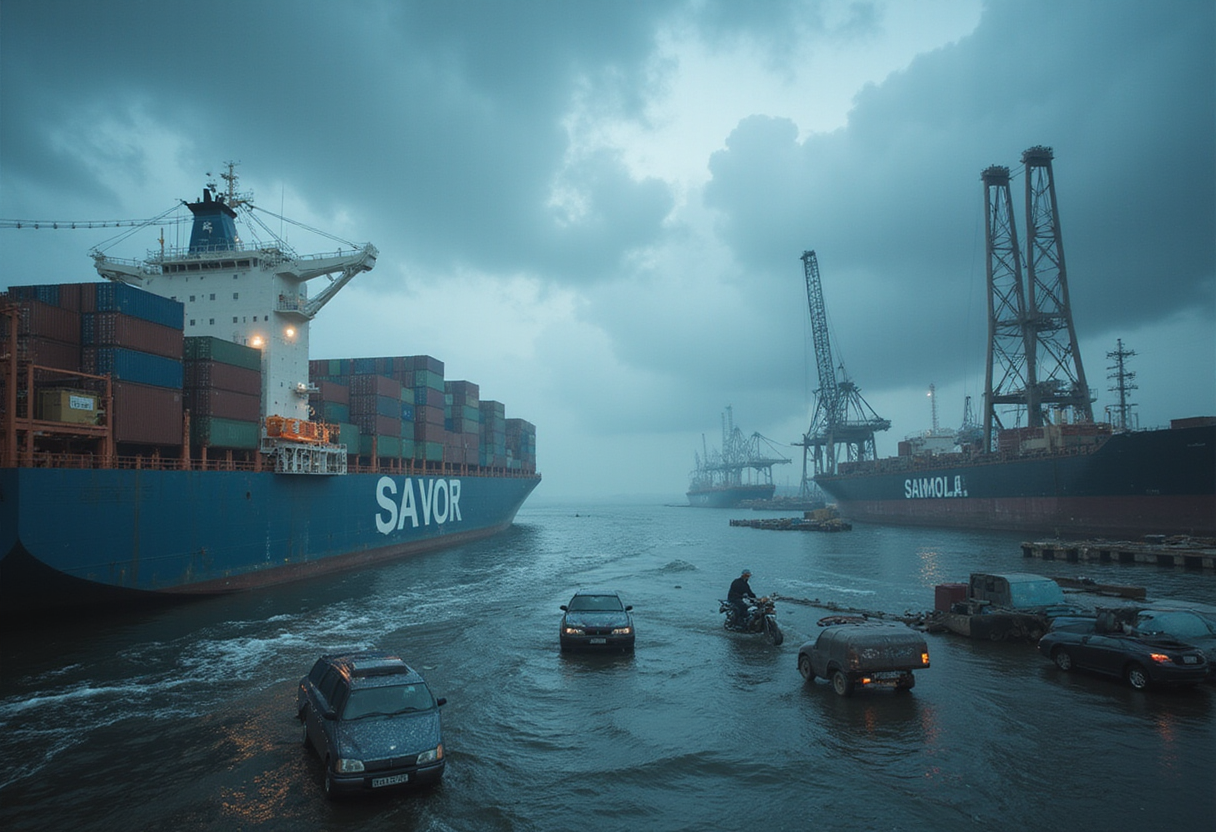
Global port congestion has pushed past its pandemic-era peak, according to a new assessment from Splash 24/7, which describes the deterioration as a "perfect storm" hitting container shipping networks simultaneously across multiple fronts.
The headline finding is stark: the share of the world's container fleet stuck waiting outside ports — the metric that defined the 2020-2022 crisis — has now exceeded the worst readings recorded during that period. That matters because congestion, more than any other single variable, drives spot freight rates and schedule reliability. When ships queue rather than sail, effective capacity leaves the market, box equipment gets trapped in the wrong geographies, and carriers blank sailings to recover schedules.
For shippers, the practical consequences arrive quickly. The pandemic experience demonstrated the transmission mechanism: absorbed capacity tightens vessel availability, tight vessel availability lifts spot rates on the major east-west trade lanes, and elevated rates pull into contract negotiations. Shippers who locked multi-month fixed rates during the recent softer market may find carriers prioritising higher-paying cargo when berthing windows are scarce — a repeat of the allocation battles that characterised 2021.
For carriers, congestion cuts both ways. It removes tonnage from supply and supports rate levels, which flatters near-term earnings. But it also destroys schedule reliability, inflates bunker consumption on queue-and-rush sailing patterns, and raises the risk of contractual penalties and rolled cargo disputes with forwarders and beneficial cargo owners.
Forwarders sit closest to the operational pain. Booking uncertainty lengthens, transhipment connections at hub ports miss, and the paperwork burden around delayed arrivals — from customs windows to demurrage and detention exposure — grows. During the last congestion cycle, detention and demurrage disputes became one of the loudest flashpoints between logistics providers and shipping lines, and a fresh deterioration of this scale sets up a similar friction point.
The phrase Splash 24/7 uses — "perfect storm" — signals that no single cause explains the breakdown. Pandemic-era congestion was likewise a compounding event: surging demand, virus-restricted port labour, and inland transport bottlenecks feeding on each other. The current assessment implies a similar multi-vector dynamic, with pressure building across enough gateways at once to lift the global aggregate beyond the previous record rather than remaining contained in one region.
That geographic breadth is the critical distinction for supply chain planners. Congestion confined to one port or one coast can be routed around — cargo rebooks via alternative gateways, transhipments shift hubs. Congestion that is global in aggregate leaves no escape valve, because the alternative ports are absorbing their own queues. Importers lose the option of simply diverting, and exporters face equipment shortages at origin as empty boxes sit stuck in arrival queues instead of being repositioned.
The comparison with the pandemic peak also reframes the recovery question. The 2020-2022 congestion cycle took roughly two years to unwind fully, and it required both a softening of cargo demand and a restoration of normal port and inland productivity. If the current build-up shares that structure, shippers should plan for elevated transit-time variability and tighter capacity over a horizon of months rather than weeks — not a short seasonal spike.
Watch the usual indicators for confirmation of trajectory: the global idle-and-waiting fleet share, berth waiting times at the major northern European, Chinese and US gateways, and spot rate movements on the Asia-Europe and transpacific lanes, which typically respond first when absorbed capacity tightens. If congestion stays above pandemic-peak levels in the coming weeks, the rate consequences will follow.
Source: Google News: port congestion
More from James Calloway
Show full bio
Correspondent covering consumer brands and retail at Waybill Wire.
130 articles