WW/OCEANFREIG
Asian Port Congestion May Stretch Shipping Crunch Into 2027
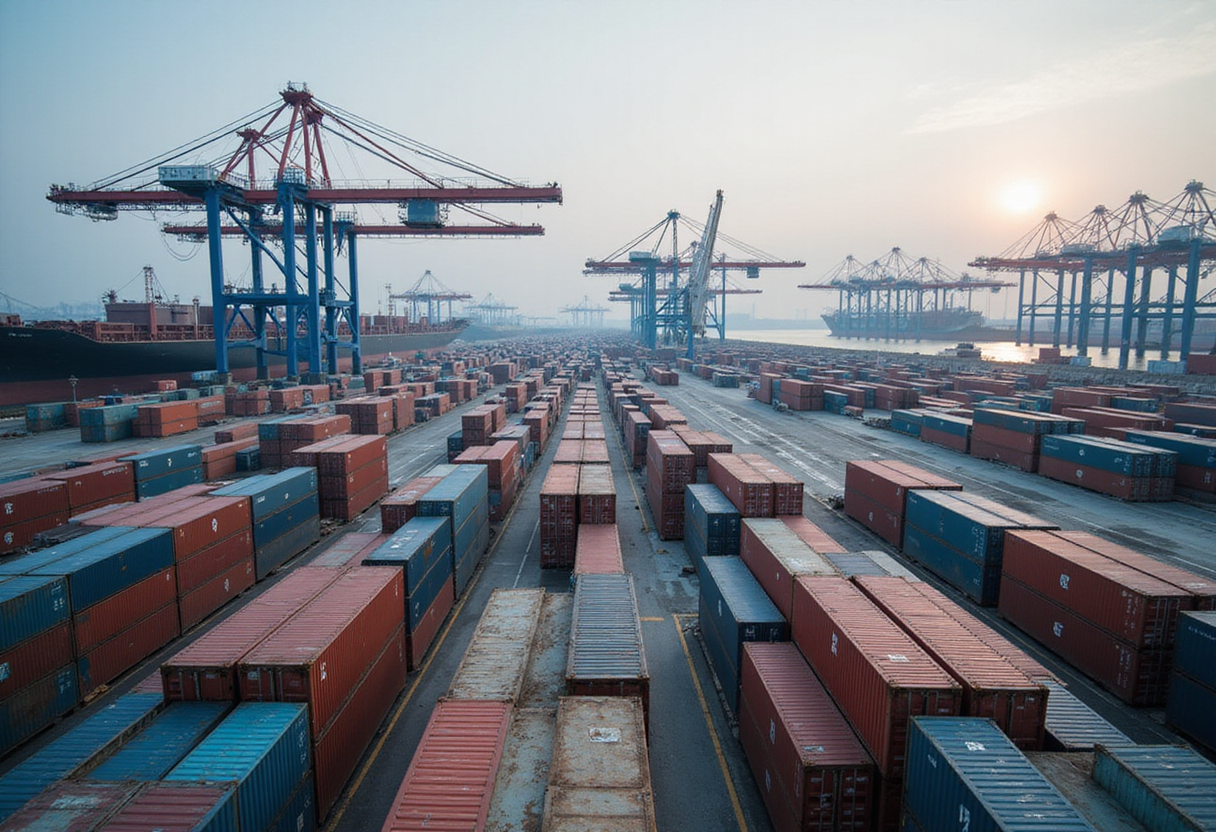
Congestion at Asian ports may keep the global shipping crunch running into 2027, stretching capacity tightness well past carriers' planning horizons.
- Desk
- Ocean Freight
- By
- Elena Vasquez
- Filed
- Length
- 316 words
- Read
- 2 min
Key points03
- Asian port congestion may prolong the shipping crunch into 2027
- Extended timeline points to structural rather than seasonal capacity tightness
- Prolonged bottlenecks affect shippers, carriers and forwarders on Asia-origin trades
Congestion at Asian ports could keep the global shipping crunch alive into 2027, extending far beyond the timelines most carriers and shippers have built into their planning.
The warning cuts against the prevailing assumption that vessel availability and berth productivity would normalize within the current scheduling cycle. Instead, the bottlenecks accumulating across Asian gateways point to a structural squeeze rather than a seasonal one.
Why does the timeline matter for shippers?
A crunch that runs into 2027 changes the arithmetic for cargo owners negotiating annual contracts. Rates driven by scarce effective capacity tend to stay elevated longer than those driven by transient disruptions, because the fix requires new tonnage, new port infrastructure or rerouted networks — none of which arrive quickly.
For shippers, that means:
- Longer and less reliable transit times on Asia-origin trade lanes
- Contract rates that stay under upward pressure beyond the usual peak-season window
- Greater incentive to diversify routings and ports of loading
What does prolonged congestion mean for carriers and forwarders?
Carriers stand to benefit from tight effective supply, as vessels queued outside congested hubs absorb capacity that would otherwise depress spot markets. But the same congestion erodes schedule reliability and raises the cost of maintaining published loops.
Forwarders face the harder commercial squeeze. Slower turnarounds compress the window to secure space at quoted rates, forcing them to reprice or rebook cargo mid-transit. Clients holding fixed-rate commitments will look to their logistics partners to absorb the slippage.
Is relief on the horizon?
Not soon. The projected extension of the crunch to 2027 implies that the industry's normal self-correcting mechanisms — idled tonnage returning to service, newbuild deliveries absorbing demand — will act more slowly than congestion builds. Shippers and carriers alike should plan for a tight capacity environment on Asian trades well beyond the next contract round, with normalization contingent on port throughput recovering faster than vessel queues grow.
Source: Google News: port congestion
More from Elena Vasquez
Show full bio
News editor covering industry trends and analytics at Waybill Wire.
293 articles