WW/OCEANFREIG
Container ship sinks after Strait of Hormuz attack; details unconfirmed
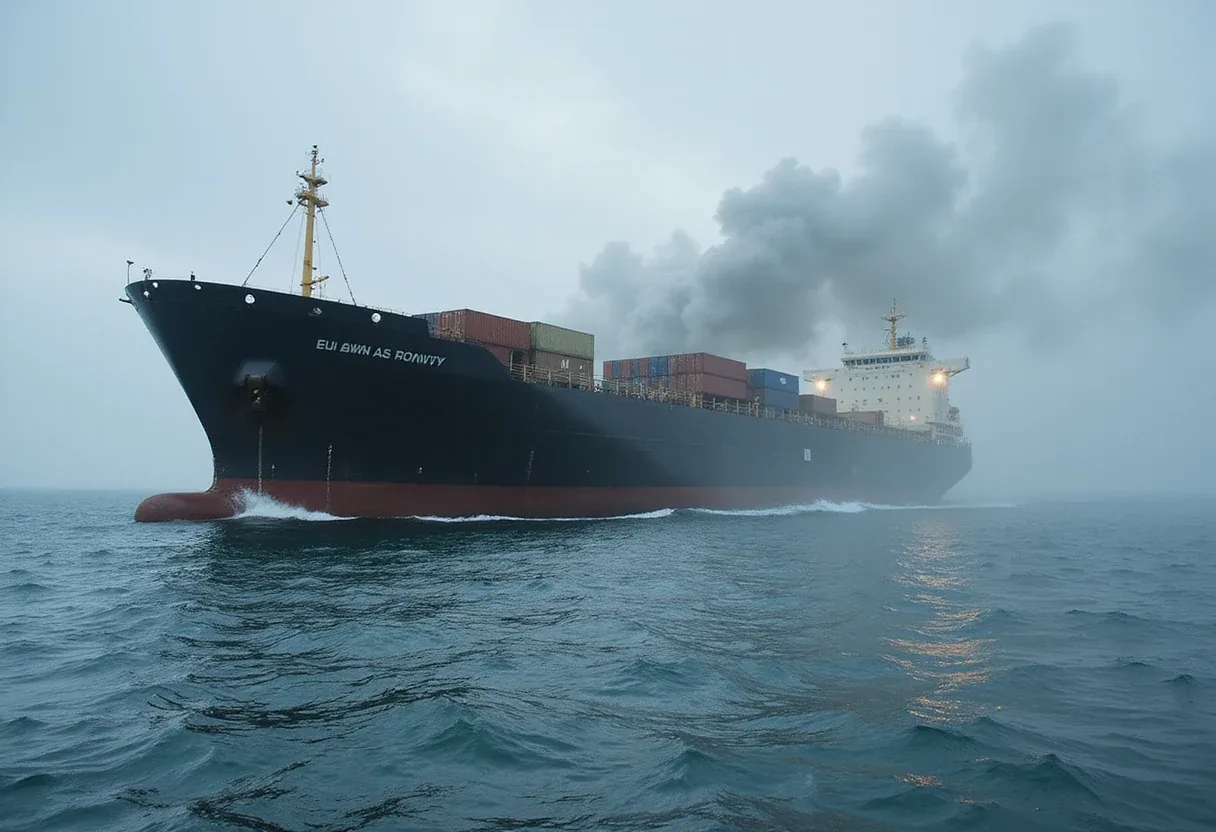
A container ship sank in the Strait of Hormuz after an attack, CNN reported, with no vessel name, operator, cargo or casualty details disclosed, leaving freight markets with a confirmed loss and a thin commercial read-through.
- Desk
- Ocean Freight
- By
- Marcus Bennett
- Filed
- Length
- 721 words
- Read
- 4 min
Key points05
- CNN reported a container ship sank after an attack in the Strait of Hormuz, with the vessel's name, operator, TEU capacity and crew status absent from the link reviewed
- The Strait of Hormuz carries an estimated one-fifth of global seaborne oil flows and a strategic share of Gulf containerised traffic, including Jebel Ali and Dammam
- The attacker, flag state, P&I club and cargo manifest were not identified in the CNN headline reviewed by Waybill Wire
- War-risk insurance premia and bunker adjustment factors are the most likely near-term cost vectors for any transiting operator
- UKMTO and US Fifth Fleet advisories have not been cited in the source reviewed; Lloyd's List Intelligence and Equasis feeds are the standard next-day identification channels
A container ship sank in the Strait of Hormuz following an attack, CNN reported, with the broadcaster's headline carrying the core fact and no accompanying detail on the vessel's name, operator, tonnage or crew.
The report, carried on CNN's news feed and cross-posted via Google News, does not specify the date of the incident, the attacker, casualty figures, or whether the vessel was laden or in ballast. As of the filing reviewed by Waybill Wire, no marine casualty database entry, flag-state advisory, or underwriter bulletin has been cited in the link itself.
For freight markets, the first questions are operational rather than geopolitical. Which operator controlled the ship? What was the TEU capacity? Which carrier alliance or independent slot charter covered the cargo? None of those answers appear in the CNN headline or its associated metadata. Until they do, the commercial read-through is limited to the chokepoint.
Why does the Strait of Hormuz matter to container shipping?
The Strait of Hormuz is the single maritime gateway between the Persian Gulf and the Arabian Sea, and by extension the Indian Ocean and the Suez Canal-Europe corridor. It is the principal export route for Gulf crude — industry estimates routinely place its share of seaborne oil flows at roughly one-fifth of global trade — and a growing lane for containerised traffic into and out of Jebel Ali (UAE), Dammam (Saudi Arabia) and feeder ports further east. Container volumes are a smaller but strategic share, anchored by transhipment hubs that re-feed Indian Subcontinent and East Africa services.
A vessel loss in the strait therefore lands on three audiences at once: tanker operators facing rerouting costs around the Cape of Good Hope; container lines serving Gulf ports weighing war-risk premia and schedule buffers; and shippers with inventory mid-transit who cannot plan around a loss they cannot yet quantify.
What is not yet on the record?
Several items a freight editor would expect in a first-day report are absent. The vessel name has not been published in the CNN link reviewed here. The operator and managing owner are unnamed. The container line or charterer that booked the slots has not been identified, which means any General Average or cargo claim trail remains unannounced. The cargo manifest is unknown. The flag state, classification society and P&I club have not been cited.
The attacker is also uncredited in the headline. The strait has previously seen seizures of tankers by Iranian forces and attacks attributed to Iran-aligned groups; Houthi strikes have largely targeted the Bab al-Mandab and Red Sea corridor to the south. Until the CNN report is expanded or a maritime authority issues a bulletin, the cause of the attack and any statement from the master remain unverified.
What is the commercial read-through, with caveats?
Two near-term effects are mechanically certain, even before the ship's identity is known. War-risk insurance premia for vessels transiting the strait will reprice on the news, as they have after every prior incident since 2019. Bunker and route-diversion modelling will run on the assumption of a temporary Cape reroute for at least a portion of the Gulf container fleet, a cost that lands on the carrier first and the shipper second via bunker adjustment factors.
One effect is less certain. Container freight rates on the Asia-Europe and Asia-Mediterranean trades have eased through 2025 as Red Sea diversions around the Cape normalised; a sustained Strait of Hormuz risk would reverse that easing only if a significant share of the container fleet rerouted. For now, with a single reported sinking and no fleet-wide advisory, the rate impact is a watch-item, not a market move.
What should freight markets watch next?
Lloyd's List Intelligence and Equasis vessel-tracking feeds will publish the IMO number and operator within hours of a confirmed incident. The United Kingdom Maritime Trade Operations centre and the US Navy's Fifth Fleet typically issue advisories flagging position and suspected actor. Until those notices land, the freight market has a headline but not a handle on capacity, tonnage or schedule exposure.
For now, the verifiable record is one vessel lost, one chokepoint, and a CNN link short on the specifics underwriters, forwarders and shippers will need by close of business.
Source: Google News: container shipping
More from Marcus Bennett
Show full bio
Senior reporter covering regulation, policy and their impact on Ocean and air freight, container shipping at Waybill Wire.
515 articles
Related05
Container ship sinks in Strait of Hormuz as Iran widens attacks
Container ship sinks near Hormuz after projectile hit, sources say
Container ship sinks after mine strike in Strait of Hormuz
Container ship sinks near Strait of Hormuz, details pending
2,500-TEU Boxship Sinks in Strait of Hormuz Mine Strike, IRGC Claims