WW/PORTSTERMI
Asia Port Congestion Could Stretch Ten Months, Forecast Warns
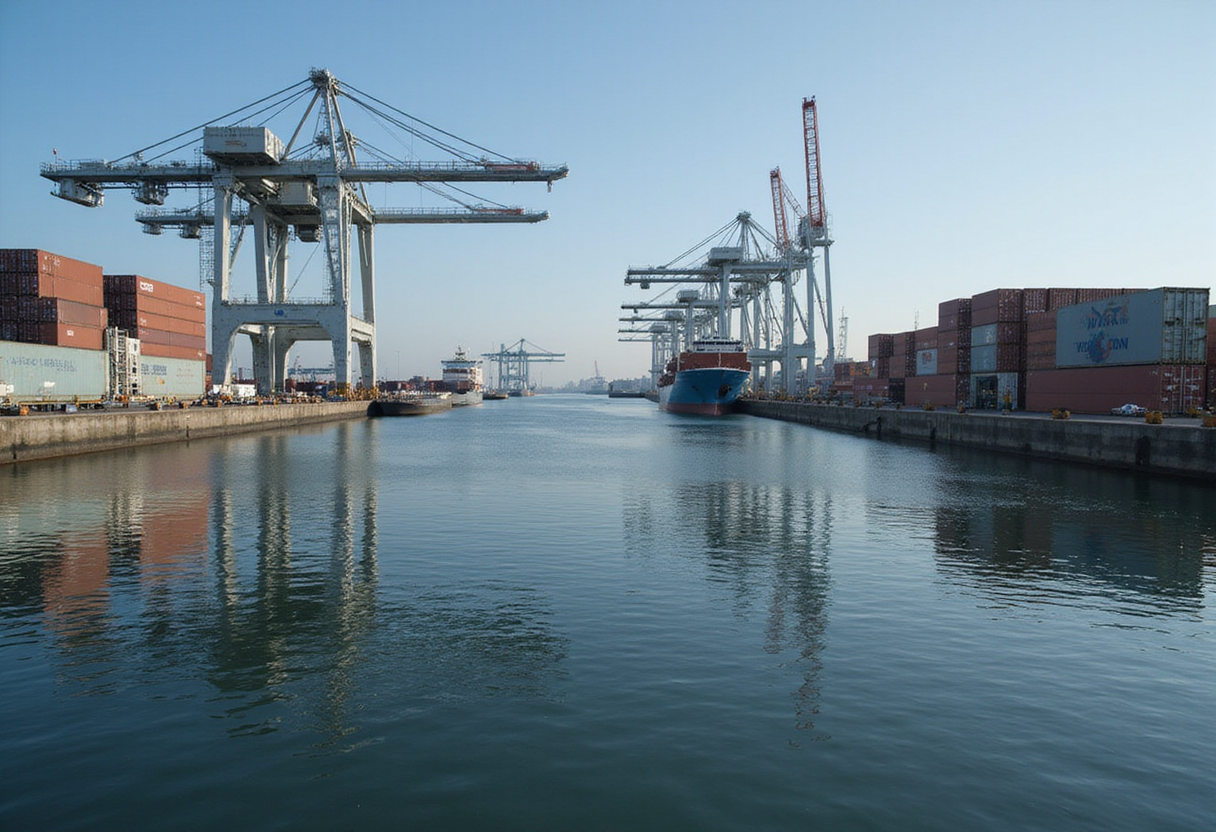
A forecast flagged by Yahoo Finance suggests Asia's port congestion could take roughly ten months to clear. The timeline reshapes how shippers, carriers, and forwarders should plan capacity through the next contract cycle.
- By
- Amara Osei
- Filed
- Length
- 416 words
- Read
- 2 min
Key points05
- Forecast calls for Asia's port congestion to take roughly ten months to fully clear
- Outlook flagged by Yahoo Finance
- Ten-month timeline implies backlog persists deep into next year's booking windows
- Backlog framed as network-wide pace problem, not single-terminal failure
- Pricing power expected to stay with carriers through the forecast horizon
Asia's Port Congestion Could Take Ten Months to Clear — Analysts Warn
Container shipping queues across Asia's busiest gateways could take roughly ten months to fully unwind, according to a forecast flagged this week by Yahoo Finance. That headline figure is the kind of number that resets a planning calendar.
A ten-month horizon is not a small claim. It implies that the backlogs now stacked at berth will still be visible in vessel schedules deep into next year's booking windows. For shippers penciling in a soft market by mid-cycle, the forecast is a quiet rebuke.
What does a ten-month timeline actually mean in practice?
It means anyone budgeting for capacity to normalize by the second half should probably redo the math. The forecast suggests the system has drifted past its natural reset cadence — the rough rhythm ports fall back into once queues thin out.
Forwarders reading this should ask themselves one practical question: does the current contingency plan assume normal returns in Q2, or does it model a longer stretch of constrained slots and rolled bookings? The honest answer for most desks is probably the second.
Why a backlog like this builds the way it does
Terminals lose rhythm when vessel calls bunch up rather than spread across a normal berth window. Asia's mega-hubs sit at the head of the east-west trades, which means they absorb shocks first and pass them downstream into feeder services, transshipment boxes, and inland rail moves.
A ten-month estimate is essentially a verdict that the queue has outgrown the network's ability to drain it call by call. This is not framed as a single-terminal failure, but as a network-wide pace problem.
What changes for shippers, carriers, and forwarders
The short verdict: pricing power stays with the carriers for longer than most had modeled.
- Carriers keep leverage on contract renewals and peak-lane surcharges.
- Shippers lose room to push back on rollover and equipment-repositioning fees.
- Forwarders face another stretch of juggling allocations across multiple services.
None of that surprises anyone who has watched capacity through the past year. What the ten-month line does is pin a calendar on the pain.
Looking ahead
Whether the estimate proves optimistic or pessimistic will hinge on how quickly the major hubs regain their normal berth cadence and how disciplined carriers remain on capacity. For now, the trade is operating under a forecast that says: don't count on relief soon.
— Amara Osei
Source: Google News: port congestion
More from Amara Osei
Show full bio
Staff writer covering regulation, policy and their impact on Ocean and air freight, container shipping at Waybill Wire.
415 articles