WW/PORTSTERMI
Tema Port Congestion Triggers Ghana Government Action
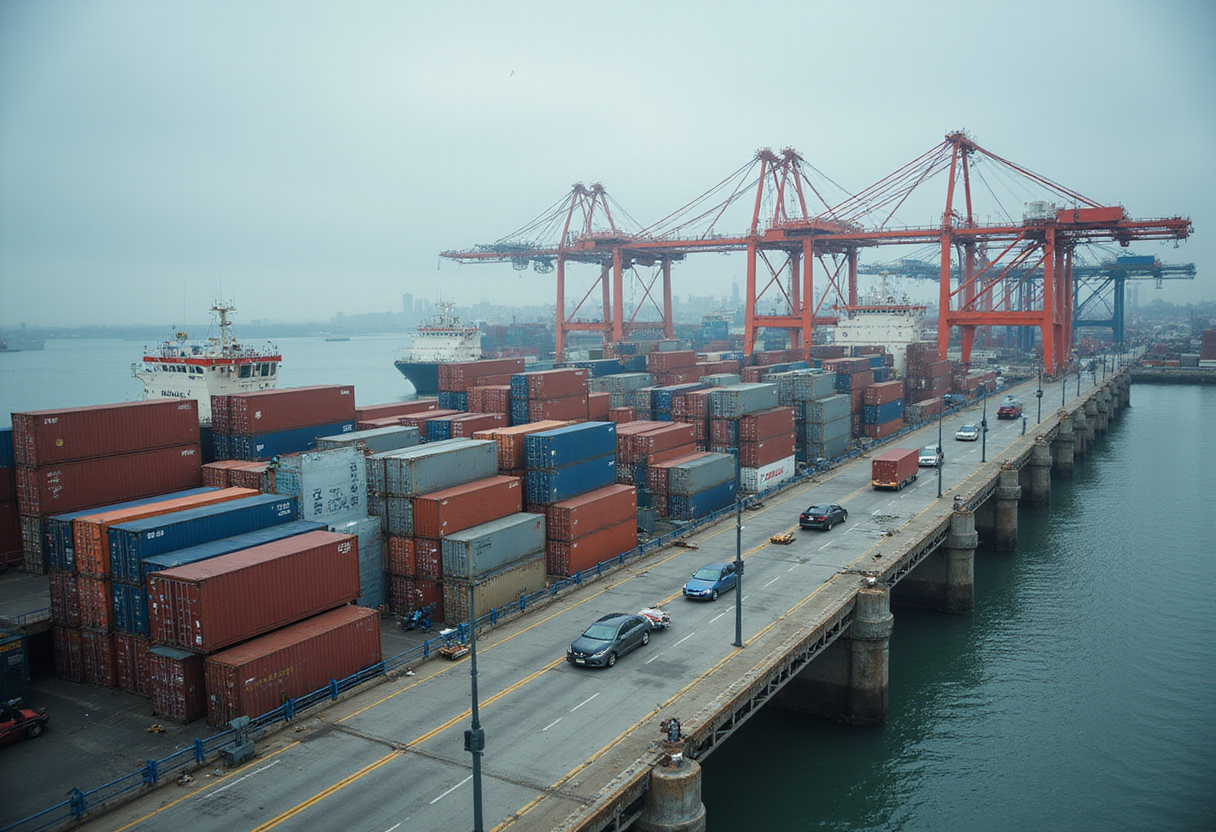
Ghanaian authorities have stepped in to ease congestion at Tema Port, the country's largest container terminal, after cargo backlogs disrupted movement at the facility. The agencies involved, operational measures and backlog volume are not detailed in the Modern Ghana report.
- By
- Marcus Bennett
- Filed
- Length
- 593 words
- Read
- 3 min
Key points04
- Tema Port, Ghana's largest container terminal, is the reported site of congestion that prompted government intervention, per Modern Ghana.
- The source report does not disclose backlog volume, average dwell time or the agencies involved in the response.
- Tema handles a share of containerised transit cargo for landlocked neighbours Burkina Faso, Mali and Niger alongside Ghana-bound imports.
- Tema operates alongside Abidjan (Côte d'Ivoire) and Lomé (Togo) for West African seaborne transit volumes to the Sahel.
Ghanaian authorities have stepped in to ease congestion at Tema Port, the country's largest container terminal and the principal seaborne gateway serving importers in Ghana and the West African hinterland, according to Modern Ghana.
The intervention targets backlogs that have disrupted cargo movement at the facility. The Modern Ghana headline does not detail the agencies involved, the operational measures deployed, or the scale of the backlog measured in containers, dwell time or yard occupancy — leaving shippers and forwarders to interpret the announcement without hard data.
What does the intervention mean commercially?
For cargo owners using Tema, congestion translates directly into demurrage charges that accrue on every container left at the terminal beyond the free-day allowance. Carriers typically apply tiered penalties by container size and number of days overdue, and forwarders serving Sahel-bound cargo face a secondary hit from delayed truck turn times at the gates — compounding inland transit on lanes that already run against tight contract service levels.
Tema's transit role makes the disruption more than a Ghanaian issue. The terminal handles a meaningful share of containerised imports bound for Burkina Faso, Mali and Niger, alongside volumes routed through Côte d'Ivoire's Abidjan and Togo's Lomé. A slowdown at Ghana's principal facility pushes some of that cargo into alternative corridors and stretches inland trucking capacity that runs close to its ceiling in the dry season.
Who operates Tema, and what levers are available?
The Tema container terminal is run by Meridian Port Services, the joint venture involving Ghana Ports and Harbours Authority, on a facility expanded through successive phases. Standard congestion-management levers include extended gate hours, dedicated truck lanes for laden and empty boxes, off-dock empty container parks, and customs-facilitated clearance windows — though the published report does not specify which tool is in play this time.
Authorities have not named shipping lines whose boxes contribute to the buildup. Major ocean carriers serving West Africa include Maersk, MSC, CMA CGM and Hapag-Lloyd, with regional feeders operated by PIL and other intra-Africa specialists. Congestion impact tends to surface first at the level of individual service strings rather than carrier-wide announcements.
What does the report leave unanswered?
Modern Ghana's release runs only to a headline and a brief framing, with no quotation from a named official and no quantitative anchor. That gap matters for readers who need to size the commercial hit: without container counts, average dwell figures or vessel-waiting reports, importers cannot convert the announcement into a planning input. Caveat follows: government statements of intent in Ghanaian port policy have historically preceded operational changes by weeks, with measurable yard clearance lagging the announcement.
What is the forward trajectory?
The signal to watch is the next set of weekly throughput and dwell-time bulletins from the port authority and from MPS. Past congestion episodes at Tema, including those running through the late 2010s, were resolved through a combination of customs enforcement against abandoned containers and operational concessions by terminal operators — with the time lag between intervention and yard clearance typically running into several weeks.
For shippers with active Tema bookings, the practical metric remains gate turn time and demurrage exposure per TEU, with the next data point likely arriving in any throughput advisory issued by the port authority or by the major shipping lines serving the call. The risk is that "government moves to ease cargo movement" reads as intent rather than an executable work plan, and importers should expect relief to come in increments rather than in a single swing.
Source: Google News: port congestion
More from Marcus Bennett
Show full bio
Senior reporter covering regulation, policy and their impact on Ocean and air freight, container shipping at Waybill Wire.
422 articles
Related05
Ghana transport minister: only continuous port investment will ease congestion
Ghana Trade Association Urges Presidential Action on Port Congestion
Durban container delays drag on as minister demands backlog clear-out
MSC adds $91/TEU piracy and Suez surcharge to Asia-Mediterranean trade
ICTSI projects Asian port congestion extending into 2027