WW/PORTSTERMI
ICTSI projects Asian port congestion extending into 2027
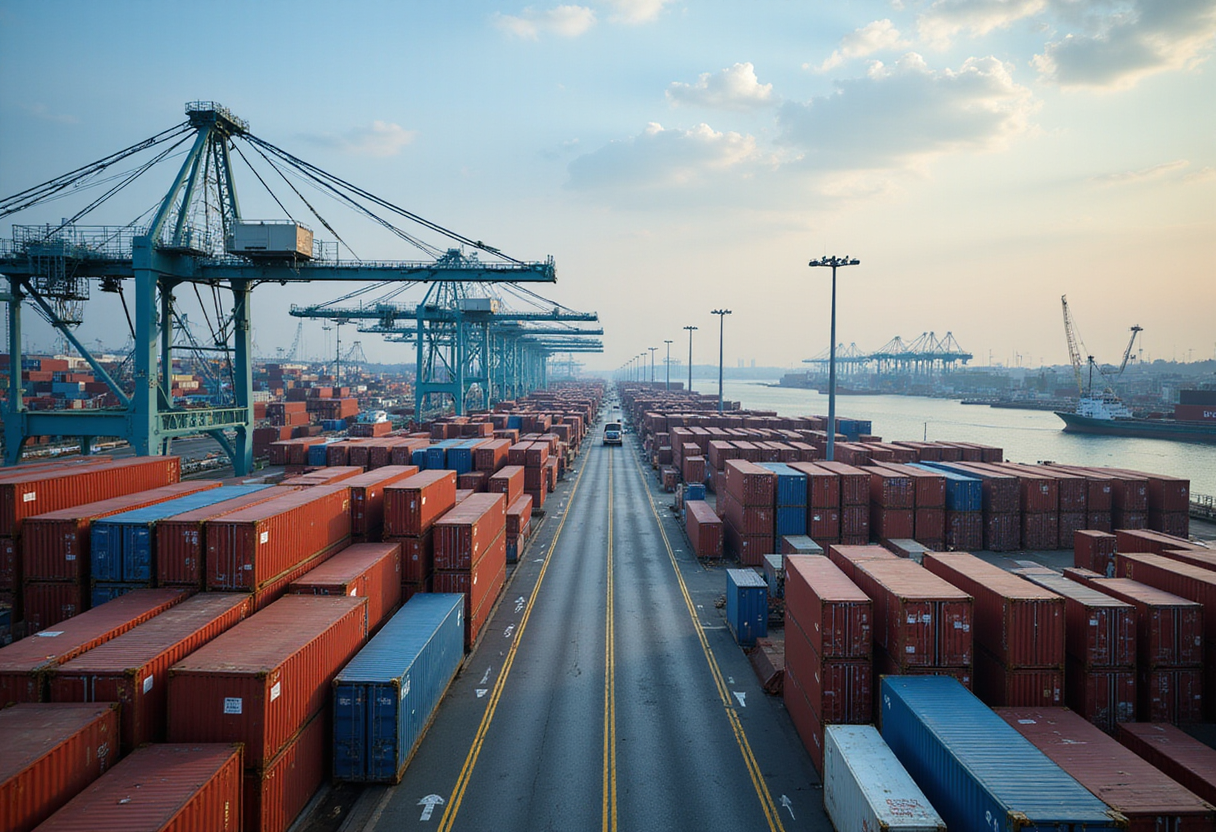
ICTSI, one of the world's largest independent container terminal operators, projects Asian port congestion will extend into 2027, signaling a multi-year capacity squeeze for shippers, carriers and forwarders.
- By
- Elena Vasquez
- Filed
- Length
- 657 words
- Read
- 3 min
Key points05
- ICTSI projects Asian port congestion will extend into 2027
- ICTSI is headquartered in Manila and operates terminals in Asia, the Americas, Africa and Europe
- The Port of Manila handled roughly 4.6 million TEU in 2023
- Idle vessel tonnage has crept back above 2% of the global fleet after bottoming out in 2024
- Over 2 million TEU of new container capacity is scheduled for delivery in 2025-2026
Asian port congestion will stretch into 2027, according to International Container Terminal Services Inc. (ICTSI), one of the world's largest independent container terminal operators headquartered in Manila. The projection, reported by the Philippine Star, signals that capacity tightness across the region's container hubs is no longer a post-pandemic anomaly but a multi-year operating condition for ocean carriers and shippers.
The warning lands as global container shipping grapples with Red Sea diversions, longer transit times, and uneven recovery at major transshipment hubs. For BCOs and forwarders, the practical consequence is straightforward: vessels will continue to wait, schedules will remain unreliable, and storage surcharges at congested terminals will keep pressure on landed costs through at least the next two contract cycles.
What is driving the congestion outlook?
ICTSI, which operates terminals across the Philippines, Indonesia, Pakistan, Honduras, Mexico, Brazil, and several African and European ports, has direct visibility into vessel queues, yard density, and gate turn-times across multiple trade lanes. The company's 2027 horizon suggests that operators across Asia do not see relief from the structural drivers — including longer routings around Africa, chassis shortages at inland points, and the slow ramp of new container capacity additions.
The Philippines itself has been a flashpoint. The Port of Manila handled roughly 4.6 million TEU in 2023, and ICTSI's Manila International Container Terminal (MICT) is the country's largest facility. Persistent yard dwell in Manila has historically pushed shippers to divert cargo to Subic or Batangas, adding 100 to 200 kilometers of trucking and roughly a day's transit.
What does it mean for shippers and forwarders?
A two-year congestion horizon changes how procurement teams should plan:
- Inventory buffers: companies sourcing from Asian manufacturing corridors will need to hold an extra two to four weeks of safety stock at origin, not just at destination.
- Mode shifts: expect more shippers to evaluate rail and multimodal alternatives where available, particularly on intra-Asia lanes where feeder reliability has been worst hit.
- Contract language: detention and demurrage clauses will face renewed scrutiny as carriers push for stricter free-time terms to manage yard density.
- Carrier selection: schedule reliability — tracked by carriers such as Sea-Intelligence at around 50-60% on transpacific returns during peak disruption — will outweigh marginal freight rate differences of $100-200 per FEU.
Forwarders, meanwhile, should expect continued NVOCC rate volatility on Asia-US West Coast and Asia-Europe lanes, where the absence of Suez Canal normality keeps effective capacity 10-15% below nominal fleet levels.
How are carriers positioned?
The major ocean carriers have already responded with a second wave of capacity discipline. Idle vessel tonnage has crept back above 2% of the global fleet after bottoming out in 2024, and several carriers have announced blank sailings on Asia-Europe loops to align capacity with extended transit times. The downside for shippers is that any rate softening tied to newbuild deliveries — over 2 million TEU is scheduled for delivery in 2025-2026 — will be partially absorbed by congestion-related costs.
ICTSI's forecast also has implications for terminal investment. If congestion persists into 2027, expect port operators across Southeast Asia to accelerate automation programs and yard expansion. ICTSI itself has committed capital expenditure at multiple facilities, including upgrades at MICT and its Subic terminal.
What to watch next
Two indicators will test whether the 2027 projection holds:
- Red Sea routing: a sustained return through the Suez Canal would shorten round-trips by roughly 10-14 days and free up effective capacity faster than any terminal expansion.
- Transshipment hub performance: Singapore, Tanjung Pelepas, and Port Klang will be the bellwethers. Yard utilization above 85% at any of these facilities typically signals that Asia-wide congestion is tightening again.
For now, the Manila-based operator's call is the clearest signal yet that shippers should plan for an Asian port network operating at or near capacity through at least the first half of 2027.
Source: Google News: port congestion
More from Elena Vasquez
Show full bio
News editor covering people, launches and day-to-day practice in Ocean and air freight, container shipping at Waybill Wire.
404 articles