WW/WAREHOUSIN
Witron acquires SOLWR Robotics in warehouse automation deal
Witron’s purchase of Norway-based SOLWR Robotics adds autonomous case picking, 30kg handling and empty-pallet sorting rated at 300 pallets per hour, scalable to 600 or more.
- By
- Marcus Bennett
- Filed
- Length
- 671 words
- Read
- 3 min
Key points04
- Founded in 2016, SOLWR Robotics is headquartered in Ålesund, Norway, and employs about 50 people.
- Witron acquired SOLWR Robotics; the announcement disclosed no transaction value.
- Sort handles 300 empty pallets per hour, with capacity scalable to 600 or more.
- Grab handles grocery cases up to 30kg in ambient and fresh-food environments.
By Marcus Bennett
Witron has acquired Norwegian robotics specialist SOLWR Robotics, adding a Sort empty-pallet sorter rated at 300 pallets per hour and scalable to 600 or more. The announcement disclosed no transaction value, leaving the financial scale of the purchase unquantified.
SOLWR develops robotic systems for retail and wholesale grocery distribution centres. The acquisition brings two products into the Witron Group’s automation portfolio: Grab, an autonomous order-picking robot, and Sort, an empty-pallet sorter.
What does the acquisition add?
Witron describes the purchase as an expansion of autonomous case picking and pallet handling for grocery distribution centres. In practical terms, Grab addresses the movement of merchandise cases, while Sort addresses the segregation of reusable empty pallets.
The products cover distinct stages and offer two deployment models:
- Grab can be physically integrated with Witron’s existing systems or deployed independently using other warehouse management systems.
- Sort classifies empty pallets by type and quality. Its standard throughput is 300 pallets per hour, with capacity scalable to 600 or more, twice the disclosed baseline.
The independent deployment route gives customers an option that does not depend on a Witron installation, according to the announcement. It does not, however, provide a price, an expected payback period or evidence that the two systems will be sold as a combined package.
How much can Grab handle?
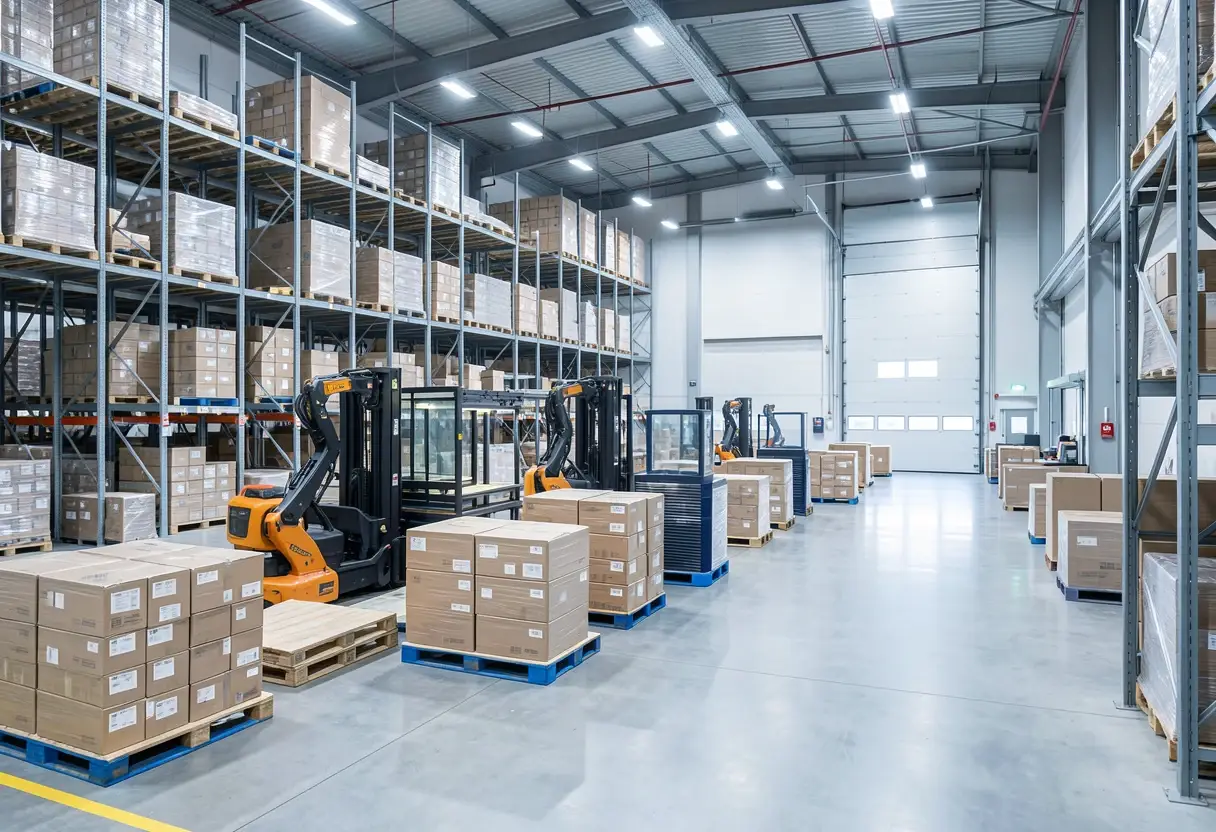
Grab is designed to automate case picking and palletising in ambient and fresh-food environments, with expansion to frozen-food applications planned. The robots navigate warehouse aisles autonomously and operate alongside employees while handling cases weighing up to 30kg.
The 30kg figure establishes the disclosed case-handling limit, but the announcement gives no hourly case rate, pallet-load ceiling, order-line capacity or shift total. Without those measures, a grocery shipper cannot calculate from the announcement how many Grab units a site needs or what labour hours the system might remove.
Sort offers a clearer throughput benchmark, yet the source does not state what configuration changes would be required to reach 600 pallets per hour or more. It also provides no site-level deployment figures for ASKO, COOP or James Hall & Co.
Who is joining Witron?
Founded in 2016 and headquartered in Ålesund, Norway, SOLWR Robotics employs about 50 people. Its existing customers include Scandinavian retailers ASKO and COOP, alongside UK wholesaler James Hall & Co.
SOLWR will retain its existing management team and locations in Ålesund, Trondheim, Oslo and Gothenburg. The legal perimeter is narrower than the operating footprint: SOLWR Software AS is not included in the acquisition. The source does not explain how that exclusion affects software licensing, support obligations or customer contracts.
What does it mean for logistics buyers?
For grocery shippers and distribution operators, the immediate proposition is warehouse automation across case picking, palletising and empty-pallet sorting. The named customer base supplies relevant grocery references for the acquired business, although the announcement discloses no installation counts, contract values or productivity results.
For freight carriers and forwarders, the source identifies no change in vehicle demand, trailer utilisation, port throughput or freight rates. Any near-term transport-market effect therefore remains unproven; the disclosed capacity sits inside the warehouse, not in the transport network.
Can the expansion claim be tested?
Christian Mattes, innovation manager and new business at Witron, said the acquisition would strengthen the group’s technology capabilities. He also said the expanded service scope “will open doors to new industries and markets.”
That is a commercial promise, not a quantified forecast. The announcement names no target vertical beyond grocery and wholesale, gives no revenue contribution and sets no deadline for new-market entry. Grab’s frozen-food extension also remains a plan rather than a cited deployment.
Until Witron discloses installation numbers, Grab case rates, Sort deployments and a transaction value, the evidence supports a capability addition rather than a proven earnings step-up. The next measurable test is whether sites outside the named grocery customer base adopt the 600-plus-pallet Sort configuration or use Grab through third-party warehouse management systems.
Source: Logistics Manager
More from Marcus Bennett
Show full bio
Senior reporter covering regulation, policy and their impact on Ocean and air freight, container shipping at Waybill Wire.
956 articles
Related05
Yusen Logistics opens 1.2 million ft² automated DC in Northampton
Rhenus deploys smart picking trolleys for Merck at Strasbourg hub
Kesko bets on automation for Finnish foodservice distribution hub
Walmart’s 55% Automation Target Needs Packaging Rules
Symbotic Buys Cellumation to Replace Conveyors With Smart Cells