WW/TRUCKINGRA
Veteran Trucker Calls Tesla Semi Industry-Defining in Review
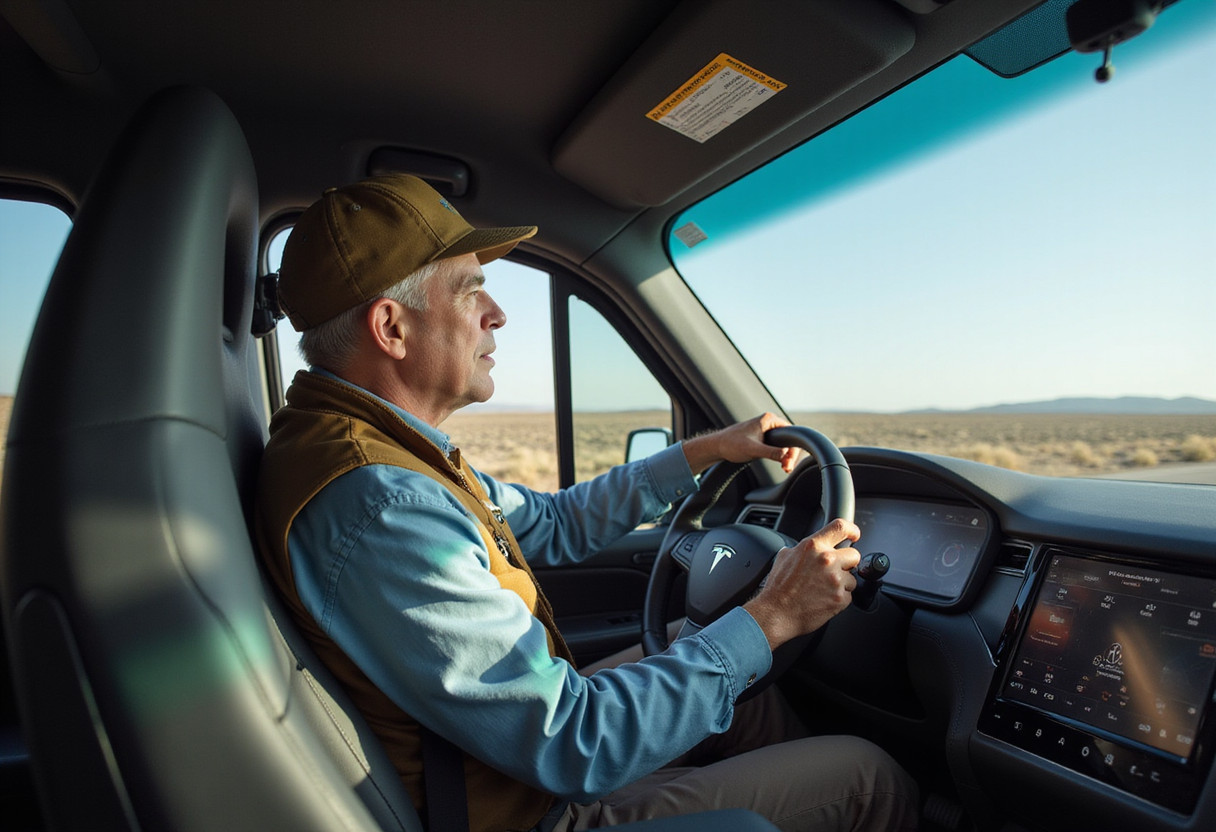
A veteran trucker has driven a Tesla Semi and told TeslaNorth.com the battery-electric Class 8 tractor "could change the industry," adding a driver-side voice to a slow freight EV rollout that still lacks published duty-cycle data.
- Desk
- Trucking & Rail
- By
- Amara Osei
- Filed
- Length
- 609 words
- Read
- 3 min
Key points05
- A veteran long-haul trucker told TeslaNorth.com that the Tesla Semi "could change the industry" after driving it
- Tesla unveiled the Class 8 Semi in 2017 and publicly targeted 500-mile range at full gross combination weight
- PepsiCo's Frito-Lay operation took the first production Tesla Semis in late 2022 and has run them on California routes between Modesto and its snack plants
- Competing Class 8 BEV tractors in the market include the Freightliner eCascadia, Volvo VNR Electric and Kenworth T680E
- Tesla Semi production at the Nevada Gigafactory has been measured in dozens of trucks, not the thousands once projected
A veteran long-haul trucker has driven a Tesla Semi and concluded the battery-electric Class 8 tractor "could change the industry," according to a TeslaNorth.com report circulating through freight media this week.
The review lands at a moment when Tesla's Semi program is still ramping. Production volumes remain a small fraction of the order book the company once projected, and public duty-cycle data from named fleets has lagged. A driver-side endorsement, even one without published efficiency figures, carries weight because Class 8 operators are the toughest audience for any linehaul powertrain shift.
What did the driver actually say?
TeslaNorth.com's coverage carries the veteran trucker's view that the Tesla Semi "could change the industry." The article does not name the driver, identify a carrier, or disclose the test route, trailer weight, distance covered, energy consumption, or charging pattern.
Fleet procurement teams evaluating the truck against diesel incumbents and against rival battery-electric tractors from Daimler Truck North America (Freightliner eCascadia), Volvo Trucks North America (VNR Electric) and Paccar (Kenworth T680E) therefore have driver sentiment to weigh — but not yet the telematics that close a capital case.
Why does driver endorsement matter for shippers and carriers?
The Class 8 driver pool ranks among the most resistant constituencies to electrification. Cab ergonomics, noise, vibration, harshness, regen-brake behavior and torque delivery all feed into retention at a moment when U.S. carriers report driver shortfalls in the tens of thousands. PepsiCo's Frito-Lay operation took the first production Tesla Semis in late 2022 and has run them on dedicated California routes between Modesto and its snack-food plants. Reports from those drivers have shaped broader industry perception more than any Tesla press release.
What's missing from the public record?
The TeslaNorth.com report omits the operational details that procurement officers at Walmart, UPS, Sysco, US Foods and Albertsons — all named Tesla Semi reservation holders — would want to see:
- Date and location of the test drive
- Driver's name and carrier affiliation
- Trailer weight and route distance
- Energy use in kWh per mile
- Charging dwell time and infrastructure used
- Side-by-side comparison with a diesel tractor on the same lane
Until those data points appear in published telematics or in filings tied to California Air Resources Board (CARB) reporting or the Hybrid and Zero-Emission Truck and Bus Voucher Incentive Project (HVIP), anecdotal reviews remain a directional signal rather than a procurement-grade input.
How does the Tesla Semi program fit the broader Class 8 EV market?
Tesla unveiled the Class 8 Semi in 2017 and publicly targeted 500-mile range at full gross combination weight with Megacharger fast charging. The program has slipped repeatedly against that original timeline. Production at the Nevada Gigafactory has been measured in dozens of trucks, not the thousands the market once anticipated, and the Megacharger network remains thin outside Western U.S. pilot corridors. Rival OEMs have pushed competing Class 8 BEV programs closer to serial production over the same window, narrowing Tesla's first-mover lead.
What to watch next?
The veteran's review adds to a small but growing catalogue of driver impressions that procurement teams and trade press can cite as the rollout continues. Watch for named-fleet telematics releases from PepsiCo, Walmart, UPS and Costco, CARB and HVIP duty-cycle filings, and any expansion of Megacharger infrastructure beyond California's Central Valley. The first peer-reviewed kWh-per-mile numbers from a Class 8 BEV fleet will do more to convert shipper curiosity into firm orders than another driver's thumbs-up — but the two signal streams are now running in parallel.
Source: Google News: trucking industry
More from Amara Osei
Show full bio
Staff writer covering marketplaces and e-commerce at Waybill Wire.
306 articles
Related05
Tesla Moves to Electrify Trucking After a Decade of Delays
Diesel Costs Climb as Tesla Begins Semi Deliveries to Freight Fleets
Veteran Trucker Reverses on Tesla Semi After Loaded Hill-Climb Test
IMC Logistics orders 50 Tesla Semis for California drayage
Driving the Tesla Semi Loaded: A Skeptic's Verdict on the Truck