WW/TRUCKINGRA
Tesla Moves to Electrify Trucking After a Decade of Delays
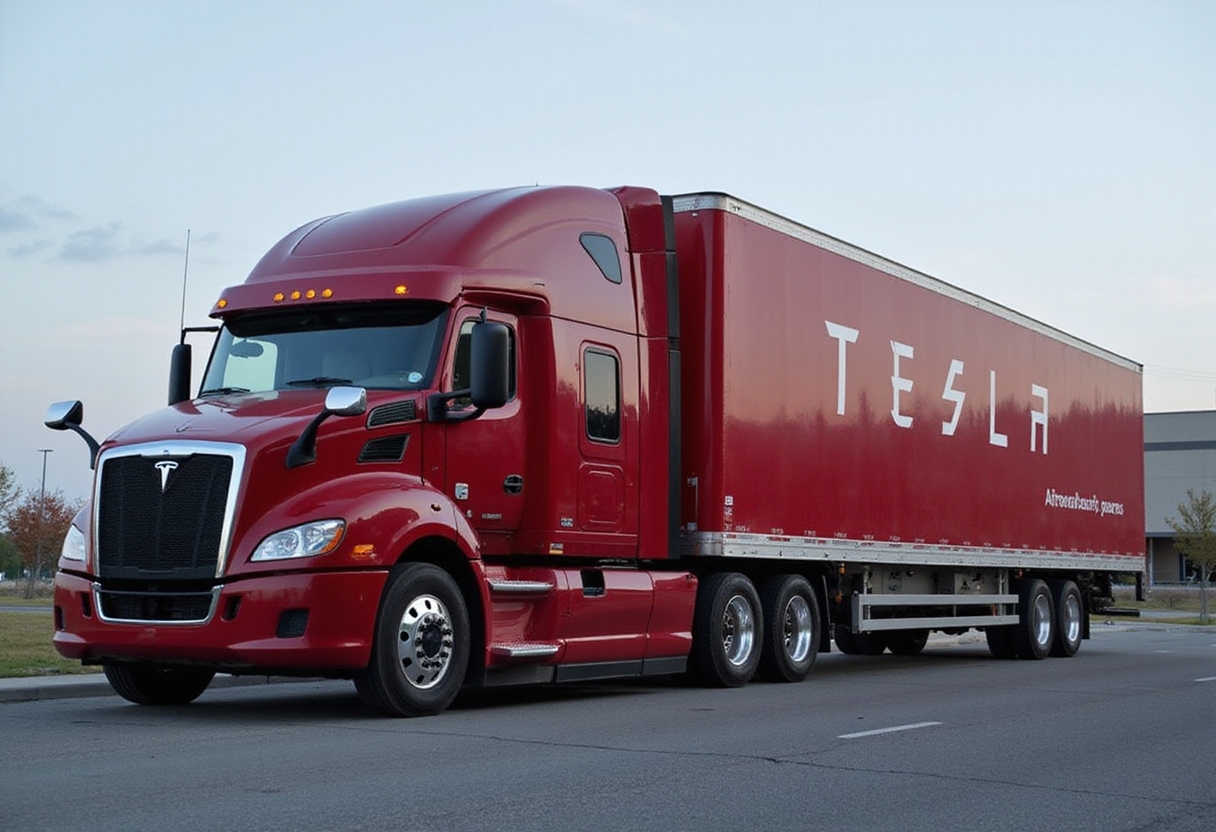
Tesla is finally moving to electrify trucking after a decade of delays, TechCrunch reports — a step that could reshape truck powertrain costs and zero-emission capacity.
- Desk
- Trucking & Rail
- By
- Tom Whitfield
- Filed
- Length
- 523 words
- Read
- 3 min
Key points03
- Tesla is moving to electrify trucking after roughly a decade of work and repeated delays, TechCrunch reports.
- A scaled Tesla electric truck program would compete with incumbent OEMs' battery-electric and hydrogen Class 8 offerings.
- Charging infrastructure and production volumes will determine whether the program shifts road-freight capacity and costs.
Tesla is finally moving to electrify trucking, TechCrunch reports, capping roughly ten years of work marked by repeated delays to its heavy-duty electrification program.
The development matters directly for freight. A credible electric Class 8 offering from Tesla would put one of the industry's most capital-rich manufacturers into direct competition with incumbent truck makers that have already placed battery-electric and hydrogen units with North American and European fleets. For carriers weighing powertrain decisions over the next replacement cycle, another credible supplier increases pressure on pricing, service networks and charging economics.
For shippers and forwarders, the stakes are operational rather than cosmetic. Fleet electrification, once it scales, reshapes cost structures around fuel — historically the largest single line item in long-haul trucking — and shifts it toward electricity procurement and charging infrastructure. Any move by Tesla to push its truck program from pilot-scale demonstrations toward broader deployment therefore signals a potential inflection in how road freight costs are calculated on lanes where electric trucks can run competitively.
The announcement also lands at a moment when regulators on both sides of the Atlantic are tightening emissions rules for heavy transport. California's Advanced Clean Fleets framework and the European Union's tightening CO2 standards for heavy-duty vehicles both push carriers toward zero-emission tractors on defined timelines. A Tesla truck program that finally reaches volume production would give fleets another compliance pathway — and give competitors a benchmark on range, total cost of ownership and uptime.
The decade-long gap between Tesla's original trucking ambitions and this latest step explains the industry's wary reaction to electric trucking announcements to date. Carriers have watched prototypes, preorder campaigns and revised timelines come and go, and many have hedged by ordering small electric batches from multiple manufacturers while deferring large fleet commitments. Forwarders and large shippers, in turn, have mostly treated electrification as a sustainability-reporting item rather than a capacity variable, precisely because volume production has repeatedly slipped.
That calculus changes if production scales. Charging infrastructure remains the gating factor: depots, highway corridors and dwell-time management all constrain where electric tractors can operate profitably. Regional and drayage movements — port-to-distribution-center runs among them — remain the most obvious early use cases, which is why port-adjacent electrification has drawn the earliest fleet orders industry-wide.
Tesla's entry into that race at scale would intensify competition in exactly those segments, compressing premiums on electric tractors and accelerating charger buildout along major freight corridors. For carriers, that means the total-cost-of-ownership math that currently favors diesel on most long-haul lanes could start shifting sooner on short, dense routes. For shippers, it opens a path to contracted zero-emission capacity without paying scarcity premiums.
The TechCrunch report frames the move as the culmination of ten years of work and delays. The freight sector has heard versions of that story before. What fleets, shippers and forwarders will watch now is whether production volumes, delivered units and uptime data back the latest timeline — the numbers that separate a genuine capacity shift from another chapter in a long-running prototype saga.
Source: Google News: trucking industry
More from Tom Whitfield
Show full bio
Market editor covering consumer brands and retail at Waybill Wire.
129 articles
Related05
Diesel Costs Climb as Tesla Begins Semi Deliveries to Freight Fleets
Morgan Stanley Sizes Tesla Trucking Software Play at $17B
FedEx Commits $300M-Plus to Harbinger for 2,000 Electric Trucks
RCG adds 70 electric-vehicle wagons to car-carrier fleet
Aurora tells Evercore forum driverless trucking is moving to scale