WW/OCEANFREIG
Vale locks in two more ethanol-capable ore carriers in 25-year MOL charter
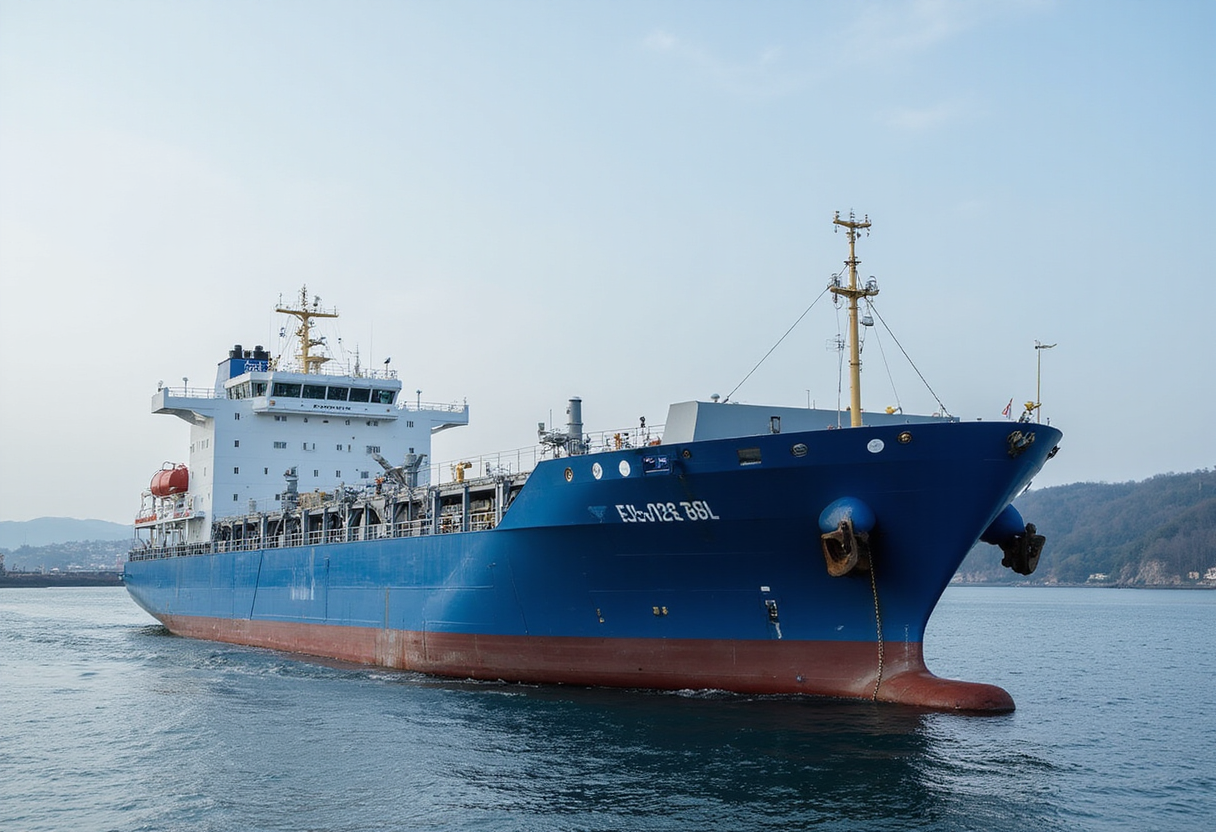
Vale has chartered two 210,000-DWT ethanol-capable ore carriers from MOL Ocean Bulk under a 25-year deal, doubling its ethanol-ready bulker tonnage ahead of 2030 deliveries to the Brazil-China iron ore lane.
- Desk
- Ocean Freight
- By
- Elena Vasquez
- Filed
- Length
- 545 words
- Read
- 3 min
Key points05
- Vale signed a 25-year charter for two 210,000-DWT ethanol-capable ore carriers with MOL Ocean Bulk, with deliveries in 2030.
- An earlier 25-year charter with China's Shandong Shipping covers two similar ethanol-ready vessels due in 2029.
- The MOL ships will run on ethanol, methanol and conventional fuels, with conversion options to LNG or ammonia.
- CMA CGM bunkered 500,000 litres (approximately 395 mt) of bioethanol on the CMA CGM Iron at the Port of Santos, supplied by Bunker One's barge Dona Isa.
- AP Moller-Maersk has bunkered 100% ethanol on three methanol dual-fuel container ships over the past year.
Brazilian miner Vale has added two 210,000-DWT ethanol-capable ore carriers to its long-term charter book through a 25-year agreement with MOL Ocean Bulk, the bulker unit of Japan's Mitsui O.S.K. Lines. Deliveries are scheduled for 2030.
The deal follows a separate 25-year charter Vale signed earlier this year with China's Shandong Shipping for two similar ethanol-ready vessels due in 2029. Together, the four charters double the ethanol-capable tonnage Vale has secured since the start of 2025.
What will the new bulkers run on?
The two MOL vessels will operate on ethanol, methanol and conventional fuels at delivery, with engineering provisions for future conversion to LNG or ammonia, according to MOL. The Japanese owner did not specify the readiness level of those conversion options.
Both Vale charters now target the iron-ore corridor from Brazil to China and other global markets, where shippers pay close attention to fuel-cost exposure under tightening IMO emissions rules.
Why ethanol over methanol alone?
Engine makers Everllence and Winterthur Gas & Diesel (WinGD) are developing triple-fuel engines capable of burning ethanol and methanol alongside conventional bunker fuel. The two alcohol fuels share characteristics that permit flexible fuel-system design.
Methanol engines, however, require specific calibration for ethanol because of differences in energy content and combustion behaviour. That overlap is letting shipowners hedge. A vessel designed for methanol can be adapted to ethanol with limited retrofitting, broadening the bunker fuel options available on long-haul bulk trades. Several shipping companies are also exploring ethanol as an alternative fuel for methanol-capable vessels.
Who else is testing ethanol at sea?
Container lines have already begun bunkering ethanol in commercial operations:
- AP Moller-Maersk has bunkered 100% ethanol on three of its methanol dual-fuel container ships over the past year.
- Singapore-based X-Press Feeders tested a 90% biomethanol, 10% ethanol (E10) blend on one methanol-capable containership in Rotterdam.
- CMA CGM bunkered 500,000 litres (approximately 395 mt) of bioethanol on the CMA CGM Iron at the Port of Santos, with Bunker One's bunker barge Dona Isa delivering the fuel.
These trials suggest supply chains for ethanol bunkering are forming at major hubs, though volumes remain small relative to conventional fuel flows.
What does it mean for charterers and forwarders?
For Vale, locking in four ethanol-capable bulkers on 25-year deals hedges against carbon-price exposure on the Brazil-China iron ore lane, the largest dry-bulk trade by tonnage globally. Shipowners such as MOL and Shandong Shipping gain long-term revenue visibility in a freight market where bulker earnings have remained volatile.
For dry-bulk forwarders, the Vale-MOL deal signals that dual-fuel ethanol capability is moving from container shipping into the capesize segment. That shift could reshape biofuel procurement strategies at Tubarão, Ponta da Madeira and Chinese discharge ports by the end of the decade.
MOL's confirmation of LNG and ammonia conversion options points to a layered decarbonisation path: carriers can start on alcohol fuels now, then shift as those supply chains mature. With Vale's 2030 MOL deliveries and 2029 Shandong Shipping hulls, ethanol bunkering demand from Brazilian iron ore exports looks set to climb in the second half of the decade.
Original: engine.online
More from Elena Vasquez
Show full bio
News editor covering industry trends and analytics at Waybill Wire.
262 articles
Related05
MOL signs 25-year Vale charter for two tri-fuel ore carriers
MOL Signs 25-Year Vale Iron Ore Contract for World's First Tri-Fuel Capesizes
Maersk Completes First U.S. Ethanol Bunkering of Deep-Sea Boxship
Maersk Completes First US Ethanol Bunkering of Deep-Sea Boxship
Maersk Completes First U.S. Ethanol Bunkering of Deep-Sea Boxship