WW/OCEANFREIG
Two more ships sink off Hormuz as strikes hit AD Ports feeders
GFS Pride sinks after a projectile strike and Cape Dao follows, as attacks hit three AD Ports-linked feeders and the IMO tally reaches 113 incidents since February.
- Desk
- Ocean Freight
- By
- Amara Osei
- Filed
- Length
- 633 words
- Read
- 3 min
Key points05
- 2,824-teu GFS Pride sank after a projectile strike on Tuesday; all 21 crew evacuated safely.
- 4,400-teu GFS Giselle and 1,730-teu Al Saadiyat, both AD Ports-linked, also struck; no crew injuries reported.
- 170,000-dwt capesize Cape Dao, hit September 23, is now recorded by the IMO as sunk; one seafarer died.
- IMO counts 113 confirmed maritime incidents in the region since late February, with 24 seafarers killed.
- US forces destroyed an Iranian-affiliated dhow in the Gulf of Oman on October 6.
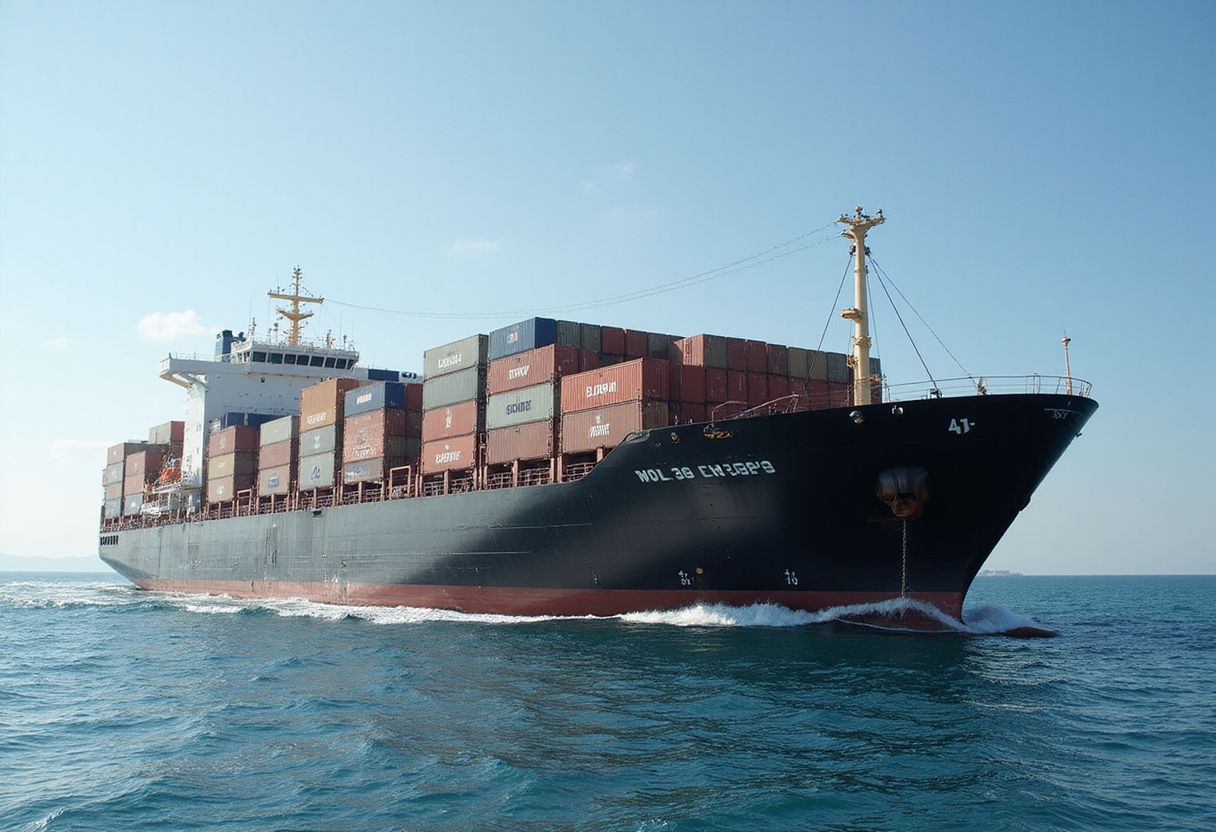
Two ships have sunk near the Strait of Hormuz after fresh strikes hit three containerships connected to Abu Dhabi's AD Ports Group, pushing the region's confirmed maritime incident tally to 113 since the conflict began in late February.
The Singapore-flagged GFS Pride, a 2,824-teu feeder built in 2008 and operated by Dubai-based Global Feeder Shipping, took an unidentified projectile on Tuesday, caught fire and sank. Singapore's Maritime and Port Authority confirmed all 21 crew were evacuated unharmed.
Pakistan's hydrographer issued a navigational warning on Wednesday after containers were spotted floating roughly four nautical miles northwest of Ras Shaykh Masud, off Oman, where the vessel went down. Floating boxes in a feeder lane are exactly the kind of hazard that keeps war-risk premiums honest.
A second GFS boxship, the 4,400-teu GFS Giselle, sustained hull damage in a separate strike on Wednesday, Singapore time. The 2015-built vessel reached a safe anchorage under its own power; all 22 crew are safe.
The third containership caught in the wave was the Marshall Islands-flagged, 1,730-teu Al Saadiyat, operated by Safeen Feeders — another AD Ports Group feeder brand. It was struck during an outbound transit but reportedly escaped serious damage.
Why AD Ports is the story here
The attacks land squarely on a core AD Ports asset. The Abu Dhabi company raised its stake in GFS to 81% in June, folding the feeder operator deeper into its regional network. Two of its ships struck in two days, one on the bottom, is not a rounding error for that fleet.
UK Maritime Trade Operations also logged an attack on a tanker, identified by maritime security group Vanguard Tech as the Barbados-flagged, 38,822-dwt Alfonso. Its condition remains unconfirmed.
What does this change for Gulf feeder trades?
Shippers moving transshipment cargo through UAE and Omani feeder hubs now face a corridor where vessels have been lost, not merely delayed. For carriers, the question is rerouting versus accepting the risk; for forwarders, it's rebooking cargo that may now be sitting on the seabed or in a damaged hull. War-risk underwriters will do the rest of the arithmetic.
The Cape Dao finally goes
Separately, the 170,000-dwt capesize Cape Dao has sunk, nearly three weeks after being struck by a projectile off Oman's Musandam peninsula. The 2002-built, Antigua and Barbuda-flagged bulker was hit on September 23 in an attack that sparked an engine room fire, killed an Indian seafarer and forced the evacuation of the remaining 27 crew. Vanguard reported that salvage attempts failed, and the IMO now lists the ship as sunk.
That's a full capesize load of iron ore or coal capacity gone — roughly 170,000 tonnes in a single hull, at a time when owners are already trimming Gulf calls.
Contested claims
Iran's Revolutionary Guards claimed an unnamed containership struck a naval mine while using an unauthorised route through the strait. The claim has not been independently verified. Singapore reports the two GFS vessels were hit by unidentified projectiles.
The deniable-mine framing is convenient. It's also unverifiable, which is precisely the point.
Meanwhile, US Central Command disclosed on Wednesday that American forces destroyed an Iranian-affiliated dhow in the Gulf of Oman on October 6. Washington alleged the boat was conducting surveillance and targeting US Navy warships. The crew was removed before destruction, with repatriation efforts under way.
The IMO's running count now stands at 113 confirmed incidents in the region since late February, with 24 seafarers killed. With feeder tonnage sunk, a capesize lost and mines or missiles claimed on both versions of events, the trajectory points to further exclusions, reroutings and rate pressure across Gulf-linked trades before year-end.
Source: Splash247
More from Amara Osei
Show full bio
Staff writer covering regulation, policy and their impact on Ocean and air freight, container shipping at Waybill Wire.
482 articles
Related05
Two Vessels Sink Near Hormuz as Iran Steps Up Attacks
2,824 TEU GFS Pride Sinks in Strait of Hormuz After Projectile Strike
Container Ship Sinks Near Hormuz After Projectile Strike
Containership GFS Pride Sinks in Strait of Hormuz After Projectile Strike
Missile strikes sink GFS Pride in Strait of Hormuz; GFS Giselle damaged