WW/OCEANFREIG
Sweden frees EU-sanctioned Sea Owl I after seven-month detention
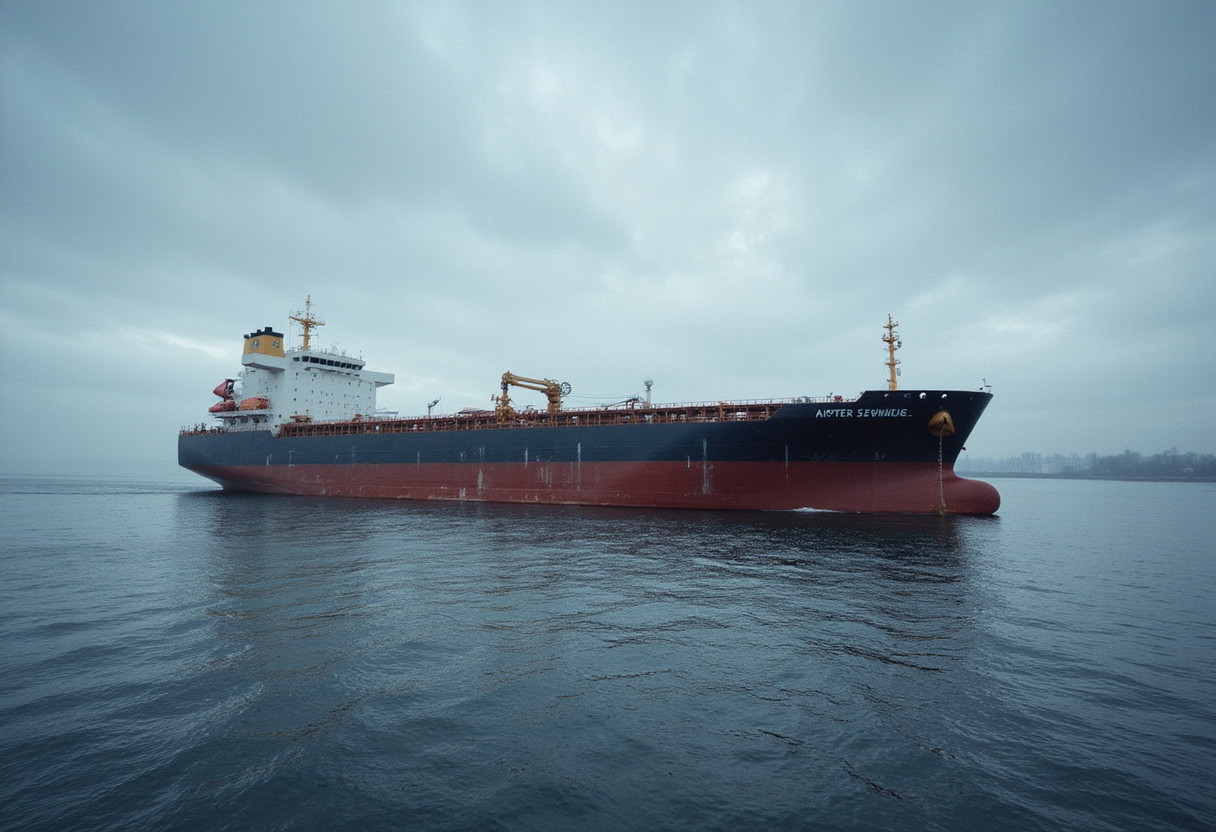
Sweden lifted its operating ban on the 75,000 dwt product tanker Sea Owl I after nearly seven months at anchor off Trelleborg, clearing Equatorial Guinea registration but leaving EU sanctions intact.
- Desk
- Ocean Freight
- By
- Tom Whitfield
- Filed
- Length
- 569 words
- Read
- 3 min
Key points05
- 75,000 dwt product tanker Sea Owl I detained off Trelleborg since March 12, freed after nearly seven months at anchor
- Swedish Transport Agency lifted the operating ban after Equatorial Guinea confirmed registration; Comoros and Cameroon flags both failed verification
- Sea Owl I remains subject to EU sanctions despite clearance; coastguard said vessel was not suspected of breaching sanctions
- Vessel had arrived from Santos, Brazil, and was heading to Russia's Primorsk; previously traded petroleum products between Russia and Brazil
- Two other vessels — Jin Hui (operating ban) and Caffa (seized over alleged Russian-occupied Ukrainian grain cargo) — remain under Swedish hold
Sweden has freed the 75,000 dwt product tanker Sea Owl I after nearly seven months at anchor off Trelleborg, lifting an operating ban that had kept the EU-sanctioned vessel immobilized since March 12.
The Swedish Transport Agency cleared the 2007-built ship to resume trading after confirming the tanker is now legitimately registered in Equatorial Guinea, ending an investigation that ran through two failed flag changes.
What does the lift actually change?
The decision removes Sweden's domestic operating prohibition. It does not lift the EU sanctions still attached to the vessel. Owners can technically move the ship again, but any port call, charter or bunkering that touches EU interests stays constrained by the underlying sanctions regime.
For shippers and charterers, the practical question is straightforward: can the tanker re-enter commercial service? The vessel's prior trades — petroleum products between Russia and Brazil, with a Santos-to-Primorsk run cut short by the boarding — now sit inside a regulatory maze. A ship free to leave Swedish waters but barred from most European ports has limited options.
Why was the Sea Owl I stuck at Trelleborg?
The tanker ran into trouble on March 12, when the Swedish Transport Agency boarded it over concerns about flag status and paperwork. The sequence of registration attempts unfolded like this:
- First claim: Comoros — ruled invalid by authorities.
- Second attempt: Cameroon — also failed verification.
- Third, confirmed: Equatorial Guinea, verified directly with the registry.
The agency said it had received confirmation from Equatorial Guinea and reviewed the certificates and crew documents required for the vessel to resume operations. Sweden's coastguard stressed that the vessel was not suspected of breaching sanctions. Investigations into two former masters, including allegations concerning false documentation, have been discontinued.
That clearance closes the seaworthiness and registration file. The sanctions file stays open.
What's the broader Swedish crackdown picture?
The Sea Owl I release is not an isolated case. Sweden's coast has become a holding ground for vessels the authorities consider high-risk under a flag-state oversight campaign.
Two other ships remain in regulatory limbo:
- Jin Hui — still under an operating ban off Trelleborg.
- Caffa — general cargo vessel, still seized over allegations it transported grain from Russian-occupied Ukrainian territory.
Sweden's broader push targets operators running without verifiable flag-state backing, a category that has grown alongside shadow-fleet operations tied to Russian petroleum exports. Trelleborg has functioned as a de facto parking lot.
What does this signal for tanker owners?
The Sea Owl I case shows how a paperwork failure can paralyze a vessel for months even when sanctions aren't the proximate cause. Seven months at anchor represents a heavy operating-cost drag for any tanker, and an EU sanctions overlay caps recovery options on top of that.
For owners, the takeaway is mechanical: when a flag change fails verification, the ship doesn't sail and the clock keeps running. Equatorial Guinea's confirmation gave the Sea Owl I its way out. That doesn't restore its EU trading access. What it does is allow the vessel to exit the Baltic and resume voyages that avoid EU jurisdiction.
The tanker's next move — likely a non-EU port call or a longer voyage toward its historical Russia-Brazil orbit — will be the real test of how much commercial latitude the Swedish clearance actually buys. Watch the first AIS ping out of the Baltic.
Source: Splash247
More from Tom Whitfield
Show full bio
Market editor covering companies, deals and strategy in Ocean and air freight, container shipping at Waybill Wire.
414 articles
Related05
Sweden Releases Sanctioned Tanker Sea Owl 1 After Seven-Month Detention
Trafigura buys seven SFL tankers, books $175M gain as reroutings lift values
Norden shifts capital from tankers to dry cargo as cycle peaks
Russia ties diesel export lift to removal of Western sanctions
Sanctioned Non-Ice-Class Tanker Makes Rare Late-Season Arctic Run