WW/SUPPLYCHAI
Six Rotor Sails Make Spirit of Toulouse the Most Wind-Driven Ship Afloat
LD Armateurs has fitted six 35-metre rotor sails on Spirit of Toulouse, the largest wind-assisted RoRo afloat, targeting a halving of Airbus's transatlantic shipping emissions by 2030.
- By
- Tom Whitfield
- Filed
- Length
- 736 words
- Read
- 4 min
Key points05
- Six 35-metre rotor sails installed on the 168-metre RoRo Spirit of Toulouse in Shanghai — the most mechanical sails on any ship.
- Airbus targets cutting transatlantic shipping emissions from ~68,000 t CO2 (2023) to 33,000 t by 2030.
- Over 100 large commercial vessels carried wind propulsion as of June 2026, up from 21 in May 2022.
- Maersk Pelican trial: validated 8.2% annual fuel savings from two rotor sails; Pyxis Ocean saved ~3 t fuel/day over six months.
- Sister ships Spirit of Mobile and Spirit of Mirabel will each receive six rotor sails.
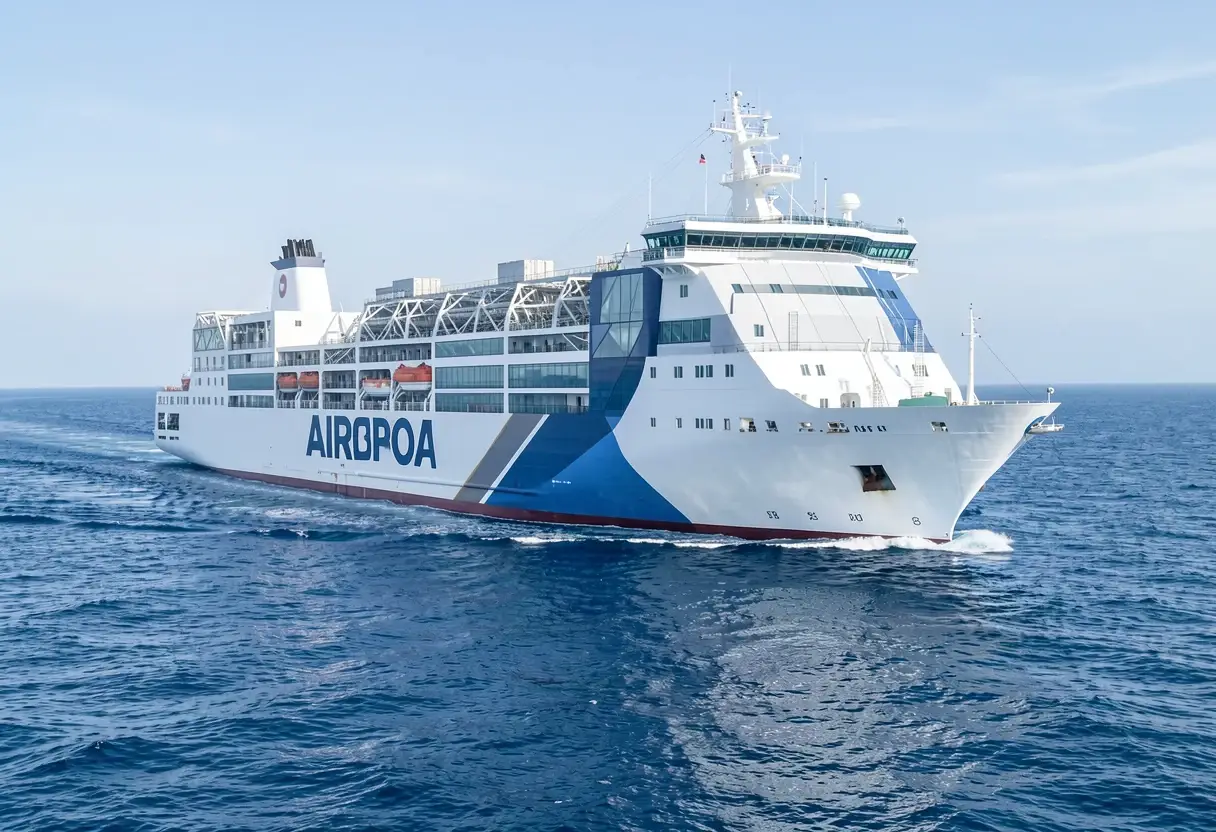
LD Armateurs has finished fitting six rotor sails, each 35 metres tall, aboard Spirit of Toulouse — making the 168-metre RoRo the largest wind-assisted ship of its type and the carrier with more mechanical sails than any other vessel afloat.
The installation wrapped up at an outfitting site in Shanghai. It hands Airbus a new tool for moving aircraft assemblies across the Atlantic, and it hands the wind-propulsion camp its highest-profile commercial proof point yet.
The French shipowner built the vessel with Finnish supplier Norsepower. Rotor sails work by spinning cylinders that catch the wind and generate extra thrust through the Magnus effect. That thrust takes load off the main engines. Less engine load means less fuel burned.
The ship doesn't run on wind alone. Two dual-fuel main engines and two generator sets can burn e-methanol, bio-methanol or marine diesel oil. Norsepower CEO Heikki Pöntynen called the fit-out "a significant milestone for wind propulsion in the RoRo segment."
What does this change for Airbus's transatlantic freight?
The numbers are concrete. Airbus expects the new fleet to cut emissions from its transatlantic shipping operations by more than half — from roughly 68,000 tonnes of CO2 in 2023 to 33,000 tonnes by 2030.
Spirit of Toulouse is the first of three sister ships under charter to Airbus. Spirit of Mobile and Spirit of Mirabel will each get six rotor sails too. Together they replace Airbus's existing transatlantic fleet, hauling large aircraft subassemblies between production sites in Europe and North America.
The cuts rest on three levers stacked together: better hull and engine efficiency, wind assistance, and access to lower-emission fuels. Miss one lever and the 2030 target gets harder.
The vessel launched in February and is now preparing for sea trials, where the sails face their first real testing. Engineers plan further adjustments during the maiden voyage from China to France.
Is wind propulsion still just a demo game?
No, and the fleet count proves it. According to the International Windship Association, more than 100 large commercial vessels carried wind propulsion systems as of June 2026, with over 230 individual installations. In May 2022 that figure was 21 vessels — a near-fivefold jump in four years.
Tankers and bulk carriers have led the charge. But RoRo ships, ferries and general cargo vessels are now joining.
Recent examples pile up quickly:
- Berge Bulk fitted four folding rotor sails on the 208,000-dwt Newcastlemax bulk carrier Berge Meru this year, after a similar project on the larger Berge Neblina in 2024.
- The Ultramax bulk carrier Maria Topic returned to service in August after a rigid wingsail retrofit at Tsuneichi's Tsuneishi Shipbuilding yard in Japan.
- In September, Marflet Marine installed four 22-metre suction sails on the 49,999-dwt chemical tanker Santiago I. Supplier bound4blue estimates annual energy savings of 10% to 15%.
The hardware differs by design. Rotor sails spin. Suction sails pull air. Rigid wings imitate aeroplane wings. Some systems fly kites. All of them do the same commercial job: trim fuel burn when the wind cooperates, while the main engines keep propelling the ship.
Do the savings actually show up in the fuel ledger?
They do, on the evidence so far. On the product tanker Maersk Pelican, two Norsepower rotor sails delivered an independently validated 8.2% fuel reduction over a full year.
Cargill went further with Pyxis Ocean, a bulk carrier fitted with two WindWings. Over a six-month trial, the ship averaged fuel savings of roughly three tonnes per day. Multiply that across a year of trading and the numbers start to justify retrofits on fuel cost alone, before any carbon regulation enters the maths.
For shippers, the message is straightforward. Wind assistance is moving from novelty to line item — a measurable slice of fuel spend that carriers can bank and, eventually, price into contracts. For carriers, it's a hedge: fuel savings today, compliance margin tomorrow.
For forwarders and cargo owners with hefty decarbonisation targets, Airbus-style charters offer a template: lock in wind-assisted tonnage, pair it with methanol-capable engines, and claim the reduction.
Two more Airbus vessels will follow Spirit of Toulouse, each with six sails of its own. Their performance in regular transatlantic service will be the clearest test yet of whether wind propulsion, methanol dual-fuel and hull efficiency can deliver compounding savings at once.
Original: wind-ship.org
More from Tom Whitfield
Show full bio
Market editor covering companies, deals and strategy in Ocean and air freight, container shipping at Waybill Wire.
524 articles
Related05
LD Armateurs completes six-sail install on Airbus-chartered roro
Maersk and Anemoi Claim World First: Rotor Sails Head to Container Shipping
Wind Is Back: 99 Ships Now Sail-Assisted as Maersk and MOL Join In
Anemoi and Maersk Take Rotor Sails Into Container Shipping
Gothenburg restarts rail freight for Fiskarheden forest exports