WW/OCEANFREIG
Anemoi and Maersk Take Rotor Sails Into Container Shipping
Maersk and Anemoi will bring rotor sails to container shipping, taking wind-assisted propulsion into the liner fleet. Ship counts, timelines and fuel-saving targets remain undisclosed.
- Desk
- Ocean Freight
- By
- Marcus Bennett
- Filed
- Length
- 518 words
- Read
- 3 min
Key points04
- Maersk and Anemoi have agreed to bring rotor sail technology to container ships
- Rotor sails generate thrust via the Magnus effect to reduce main-engine fuel load
- No vessel count, timeline, trade lanes or fuel-saving target have been disclosed
- Container ships are the hardest segment for wind assistance due to deck space and schedule constraints
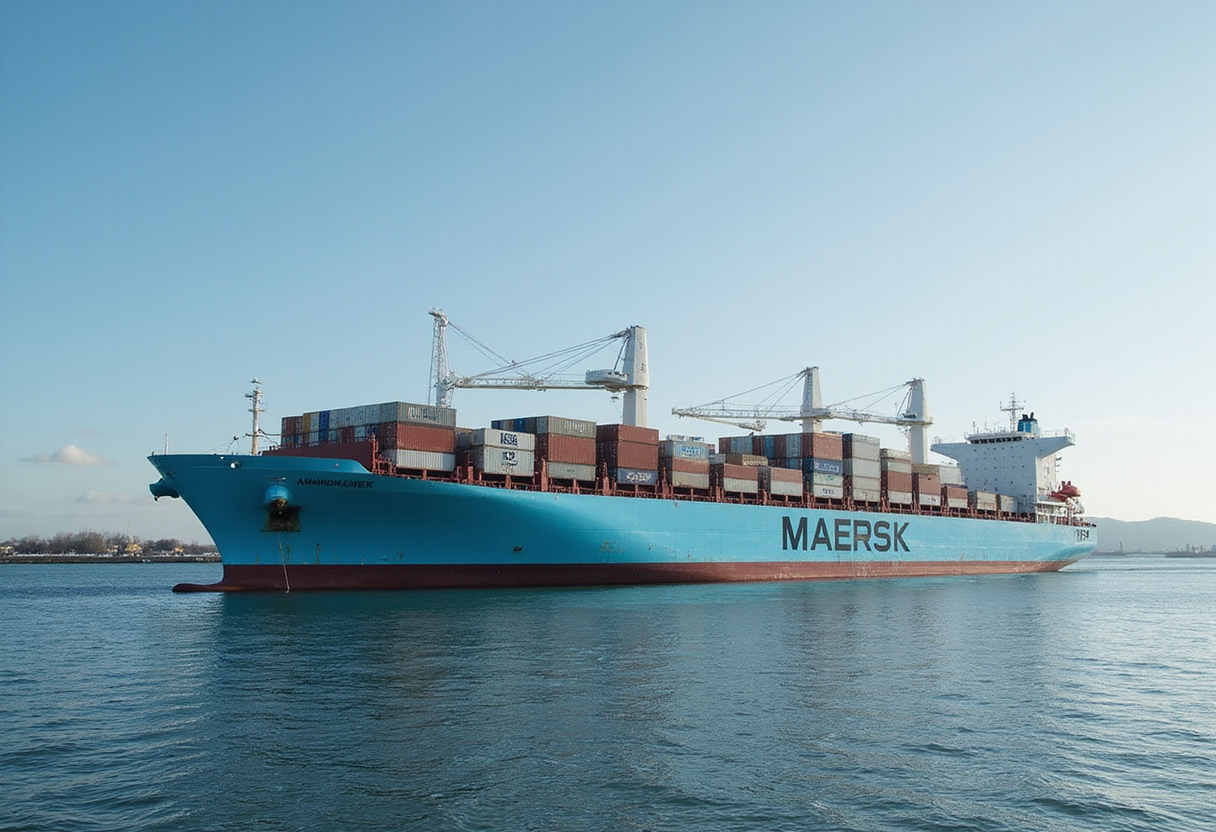
Maersk has paired with Anemoi to bring rotor sail technology to container shipping, a move that takes wind-assisted propulsion out of its conventional home on bulkers and tankers and onto the most schedule-sensitive segment of the merchant fleet.
The partnership, reported by Marine Log, is the headline fact — and at this stage, essentially all of it. Neither party has yet published the vessel classes, the number of ships, the trade lanes, or the deployment timeline. That silence matters. Until those numbers land, the deal is a direction of travel rather than a measurable capacity or emissions event.
What does rotor sail technology actually do?
Rotor sails are tall spinning cylinders mounted on deck. The rotation generates thrust via the Magnus effect — the same physics that curves a football in flight. When wind conditions cooperate, the sails cut main-engine load, and with it fuel burn and CO2 output.
The fuel-saving claim attached to these systems in shipping circles typically runs in the range of 5–10%, depending on wind, route, and ship speed. Maersi and Anemoi have not yet stated a target figure for this application, and container ships complicate the math: deck space is scarce, cargo-handling gear dominates the upper works, and strict arrival windows leave little room for speed flexibility.
Why container shipping is the hard case?
Bulk carriers and product tankers have hosted most rotor sail installations to date because their decks are open and their schedules are loose. Containerships are the opposite.
- Stacked boxes leave limited mounting points
- Port cranes require unobstructed access
- Liner schedules penalize any propulsion variability
An operator committing rotor sails to a boxship is therefore making a stronger engineering claim than the same move on a bulk carrier. It implies deck integration, likely retractable or tilting installations, and a commercial bet that schedule integrity survives.
What is in it for Maersk?
Maersk carries the industry's most aggressive decarbonization branding, built on its methanol-fuelled newbuilding program. Wind assistance offers something methanol cannot: a retrofit pathway for the existing fleet, which will still carry the overwhelming majority of the line's boxes through 2030.
For Anemoi, a Maersk reference is the most valuable credential in the segment. If the technology performs on a containership, the addressable market expands from a niche of dry and wet tonnage to the global liner fleet — a fleet measured in thousands of vessels.
What has not been said?
The confirmed fact is the collaboration itself. Missing so far:
- Ship count and vessel types
- Installation dates or yard appointments
- Expected fuel-saving percentage
- Trade lanes where the sails will operate
- Financial terms of the agreement
Each of those gaps will define whether this is a fleet-scale program or a demonstration unit. Experience across wind-assisted propulsion suggests the first installation answers little on its own; the second and third do.
What comes next?
Watch for a named vessel, a yard slot, and a stated CO2-reduction figure — the three data points that would convert this announcement from intent into measurable fleet economics. On the record so far, only the intent exists.
Source: Google News: container shipping
More from Marcus Bennett
Show full bio
Senior reporter covering regulation, policy and their impact on Ocean and air freight, container shipping at Waybill Wire.
422 articles
Related05
Maersk and Anemoi Claim World First: Rotor Sails Head to Container Shipping
Wind Is Back: 99 Ships Now Sail-Assisted as Maersk and MOL Join In
Port congestion is now structural, Maersk CEO warns
Maersk slaps $500 per box PSS on South America–Europe trades
Maersk raises UK and Ireland inland fuel surcharge