WW/OCEANFREIG
Maersk and Anemoi Claim World First: Rotor Sails Head to Container Shipping
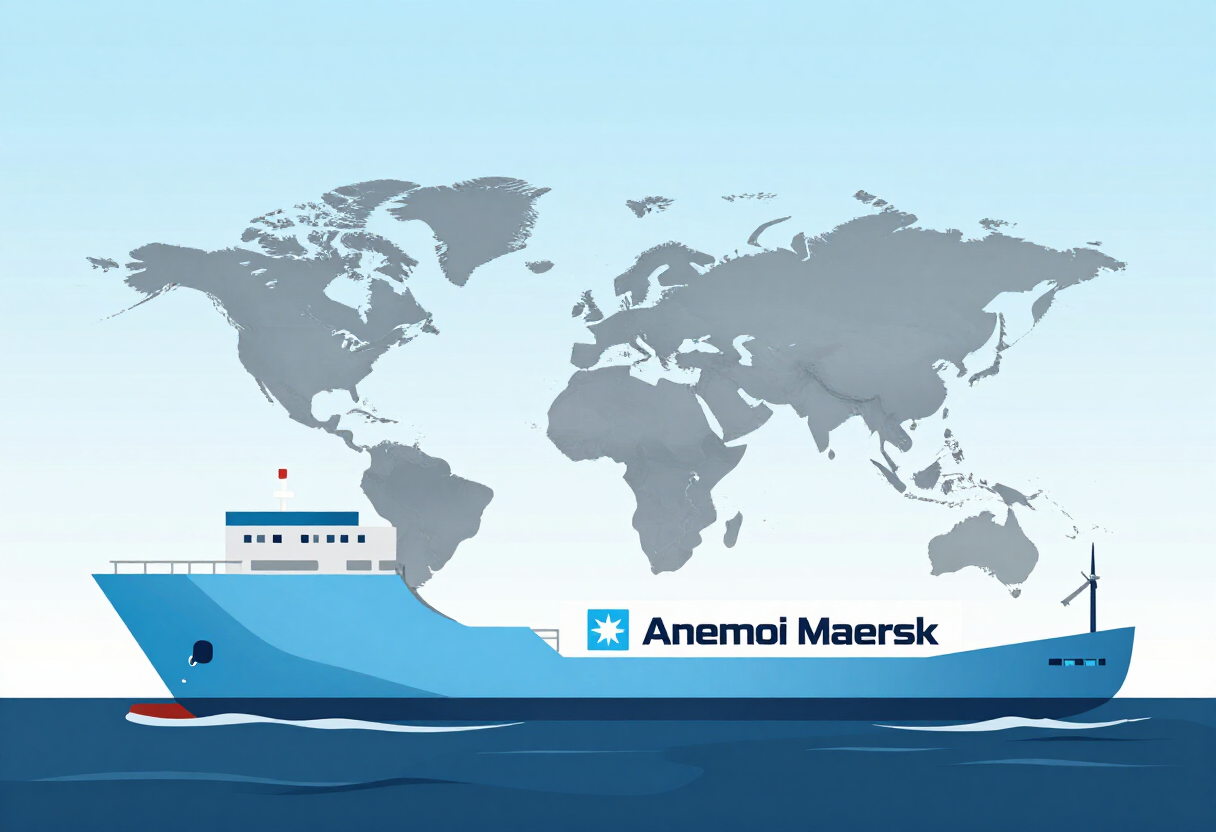
Maersk and Anemoi will deploy Rotor Sail technology on container shipping for the first time, moving wind-assisted propulsion into the box trades as carriers chase fuel savings and compliance.
- Desk
- Ocean Freight
- By
- Elena Vasquez
- Filed
- Length
- 729 words
- Read
- 4 min
Key points03
- Maersk and Anemoi describe the deployment of Rotor Sail technology on container shipping as a world first for the segment.
- Rotor sails use the Magnus effect to generate thrust from crosswinds, cutting fuel consumption on board.
- The announcement did not specify the vessel, trade lane or projected savings percentage.
Maersk has partnered with UK-based rotor sail developer Anemoi to bring Rotor Sail technology to container shipping for the first time, in what the two companies describe as a world first for the box segment.
The deal moves wind-assisted propulsion beyond its established foothold in bulk carriers, tankers and ro-ro vessels and into the container trades — a segment that has so far watched the technology from the sidelines. The announcement, reported by Safety4sea, gives container shipping its first concrete commitment to rotor sails, the spinning cylindrical masts that use the Magnus effect to generate forward thrust from crosswinds.
For Maersk, the deployment fits a broader decarbonisation playbook. The Danish carrier has already staked its fleet strategy on dual-fuel methanol vessels and has repeatedly told cargo owners that emissions reduction will require a portfolio of technologies rather than a single silver bullet. Rotor sails add a mechanical, fuel-agnostic lever: they cut consumption at the margin regardless of what fuels the engines burn, and they do so with no dependence on green fuel supply, which remains scarce and expensive.
The commercial logic for shippers is direct. Wind-assisted propulsion lowers fuel burn, and fuel remains the largest variable cost in ocean transport. Any consumption saving either protects carrier margins or feeds into the emissions accounting that increasingly shapes tenders from large beneficial cargo owners with Scope 3 targets of their own. Cargo owners paying premiums for greener services — as many now do under book-and-claim and insetting schemes — will watch whether rotor sail savings can be verified and allocated to specific shipments.
For forwarders and BCOs, the more immediate question is operational. Rotor sails are tall structures, and container shipping presents challenges that bulk and tanker trades do not: stacking heights, berth infrastructure, crane clearances and route profiles all matter. A rotor sail that must be lowered or stowed in port adds handling time; one that interferes with lashing or stowage complicates planning. How Anemoi and Maersk resolve those constraints on a container vessel will determine whether the technology scales across the segment or remains a demonstration project.
The move also signals where wind-assisted propulsion is heading commercially. Anemoi, one of a small group of rotor sail manufacturers competing with players such as Norsepower and Eco Flettner, now has a reference installation with the world's second-largest container line. In a segment where charterers and owners follow each other's technical bets closely, a credible first deployment for a carrier of Maersk's scale tends to pull the rest of the market with it — the same pattern that followed the early methanol-fuelled newbuild orders.
Regulatory pressure frames the timing. The International Maritime Organization's tightening carbon intensity requirements, and the entry into force of the EU Emissions Trading System for shipping, have converted fuel savings into a priced commodity rather than a cost footnote. Every tonne of fuel a rotor sail saves now carries a carbon value as well, sharpening the payback calculation for retrofits and newbuild specifications alike.
Much detail remains to be confirmed: the companies have not yet specified in the announcement which vessel will receive the technology, on which trade lane it will operate, or what percentage of fuel savings is projected. Those numbers will decide the story's real significance. Industry deployments on other vessel types have typically targeted consumption reductions in the single-digit to low-teens range depending on route and wind conditions, and container ships sailing schedule-driven routes at high service speeds present a harder test than slower, wind-favourable bulk trades.
Still, the direction is clear. Container lines have exhausted the cheap efficiency wins — slow steaming, hull coatings, weather routing — and now face a gap between today's fleet emissions and the targets their customers and regulators have set. Wind-assisted propulsion is one of the few options that can be retrofitted to existing tonnage at moderate capital cost, which matters for a segment where fleet turnover takes decades.
The Maersk-Anemoi deployment will be watched less as an engineering novelty than as a data point: whether rotor sails can deliver measurable, verifiable savings on a container vessel working a real schedule. If the numbers hold, expect further orders across the segment as carriers look for compliance tools that do not depend on waiting for green fuel supply to catch up with demand.
Source: Google News: container shipping
More from Elena Vasquez
Show full bio
News editor covering industry trends and analytics at Waybill Wire.
144 articles
Related05
Maersk Completes First US Ship-to-Ship Ethanol Bunkering of Deep-Sea Boxship
Maersk slaps $500 per box PSS on South America–Europe trades
Maersk Completes First U.S. Ethanol Bunkering of Deep-Sea Boxship
Maersk Completes First U.S. Ethanol Bunkering of Deep-Sea Boxship
Maersk Completes First US Ethanol Bunkering of Deep-Sea Boxship