WW/OCEANFREIG
Seoul Doubles Down on Arctic Box Route After 40-Day NSR Test
Panstar Acro's 40-day Busan–Europe NSR round-trip 'paved the way' for Arctic box shipping, President Lee says — but carriers remain lukewarm on the 2030 target.
- Desk
- Ocean Freight
- By
- Marcus Bennett
- Filed
- Length
- 632 words
- Read
- 3 min
Key points04
- The 2,758 teu Panstar Acro completed a 40-day round-trip from Busan to Felixstowe and Rotterdam via the Northern Sea Route.
- The vessel arrived back in Busan on Sunday.
- President Lee Jae-myung reaffirmed a target of container services between Busan and Europe via the NSR by 2030.
- South Korean carriers have shown lukewarm commercial interest in the Arctic route despite the government's endorsement.
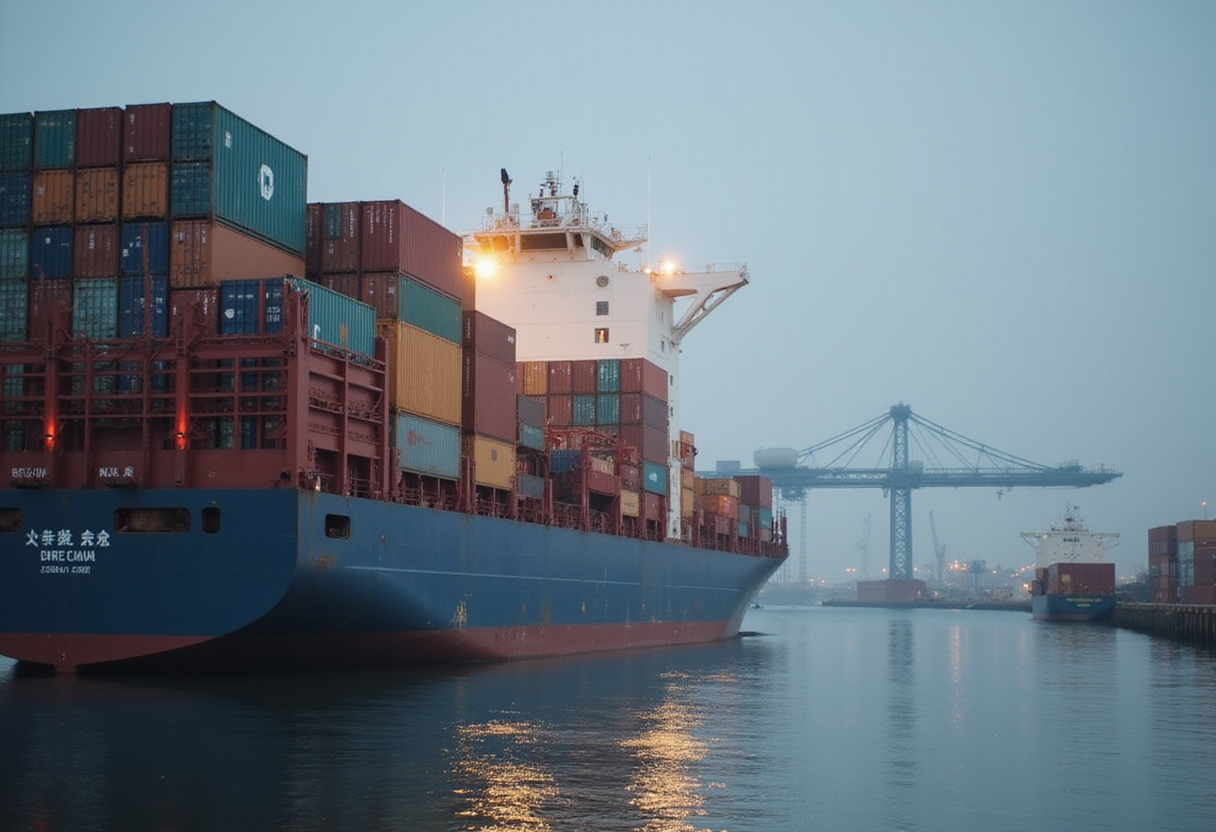
A 2,758 teu containership has completed a 40-day round-trip between Busan and Northern Europe via the Northern Sea Route, and Seoul is calling the result proof that Arctic box shipping can work. The commercial carriers who would actually have to run the service are not convinced.
The vessel, Panstar Line's Panstar Acro, docked back in Busan on Sunday after calling at Felixstowe and Rotterdam. South Korea's President Lee Jae-myung used the occasion to restate a specific commitment: container services linking Busan and Europe via the NSR by 2030.
That deadline now sits roughly five years out, and the president framed the test voyage as a milestone. Panstar Line's sailing, he said, helped pave the way toward establishing the commercial viability of Arctic shipping.
What does the test actually prove?
Here the record deserves a careful read. A single completed voyage by a 2,758 teu ferry operator's vessel demonstrates that the passage is physically navigable and operationally manageable for a mid-sized boxship. It does not, by itself, demonstrate year-round reliability, ice-class economics, insurance costs or schedule integrity across seasons — the variables that decide whether a trade lane survives contact with real shippers.
The scepticism, notably, comes from inside South Korea's own industry. Carriers have shown, in the source's words, lukewarm commercial interest in the route. That gap between political endorsement and operator appetite is the story's central tension, and it has not been resolved by one successful round-trip.
Why Seoul wants this lane
The strategic logic for the government is straightforward. A Busan–Europe NSR service would shorten the transit compared with the conventional Suez routing, and it would position Busan as a gateway port for a corridor that climate change is steadily opening. A 2030 target gives the policy a concrete anchor, and the Panstar Acro voyage gives it a proof point to cite.
For the president, the framing is deliberate: the test, he said, helped pave the way for the commercial viability of Arctic shipping. Note the wording — viability is being paved, not declared achieved.
What shippers and forwarders should watch
The commercial implications cut differently depending on the player:
- Shippers on Asia–Europe lanes gain nothing yet; no NSR service exists, and the 40-day round-trip of a single vessel sets no schedule. -- Carriers face the real test: whether ice-class tonnage, winter windows and insurance pricing can produce rates competitive with Suez routings. Their lukewarm interest is the market's current verdict.
- Forwarders should treat the 2030 target as a policy aspiration, not a capacity plan, until an operator commits vessels on a published loop.
The credibility gap
Every promise in this story carries a caveat, and they are worth stating plainly. The government promises services by 2030 — but the carriers that would run them have not signed on. The president calls the test a success — but one voyage by a 2,758 teu vessel in favourable conditions is not a seasonal service. Panstar Line has demonstrated capability — but it is a ferry operator, not a global liner, and scaling from a test to a loop is a different order of commitment.
None of this makes the NSR ambition wrong. It makes it unproven at commercial scale, which is precisely what the carriers' scepticism reflects.
What happens next
The 2030 deadline is now the measurable benchmark. If Seoul wants container services on the lane by then, the next signals to watch are concrete ones: an operator announcing dedicated ice-class tonnage, a published port rotation, or a government subsidy framework that shifts the economics carriers currently find unconvincing. Without at least one of those, the Panstar Acro's 40-day round-trip risks being remembered as a demonstration rather than a beginning.
Source: The Loadstar
More from Marcus Bennett
Show full bio
Senior reporter covering regulation, policy and their impact on Ocean and air freight, container shipping at Waybill Wire.
463 articles
Related05
PanStar Acro Completes Korea's First Commercial Arctic-Europe Round Trip
Arctic Trial Cuts Europe Transit to 20 Days, But Ship Sails Home Empty
PanStar Acro Back in Busan: Arctic Box Trial Ends With Empty Return
South Korea Trials Arctic Container Sailing as Regular Service Looms
South Korea Backs Arctic Container Trial, but Open Questions Linger