WW/OCEANFREIG
Arctic Trial Cuts Europe Transit to 20 Days, But Ship Sails Home Empty
PanStar Acro made Europe in 20 days via the Arctic, a third faster than Suez — but sailed home with 1,743 TEU of empties and zero imports, per lawmaker-cited data.
- Desk
- Ocean Freight
- By
- Amara Osei
- Filed
- Length
- 661 words
- Read
- 3 min
Key points05
- The 2,758-TEU PanStar Acro returned to Busan on Oct 11 after a 50-day round trip, Europe leg in about 20 days — a third faster than Suez.
- The ship carried 737 TEU of exports out (target: 1,300) and returned with 1,743 TEU of empty containers and no imports.
- Seoul plans more container and auto-carrier trials in 2027 and targets regular Arctic services by 2030; the oceans minister says viability may wait until ~2040.
- Northern Sea Route transits require Russian authorization; icebreaker escort can involve sanctioned Rosatomflot.
- Ship manager IOB operates four Arc4 LNG carriers and plans three to six Arc7 vessels next year, linked to Novatek.
South Korea's first commercial Arctic container voyage reached Europe in about 20 days — roughly a third faster than the Suez Canal route — and still came home without a single imported container.
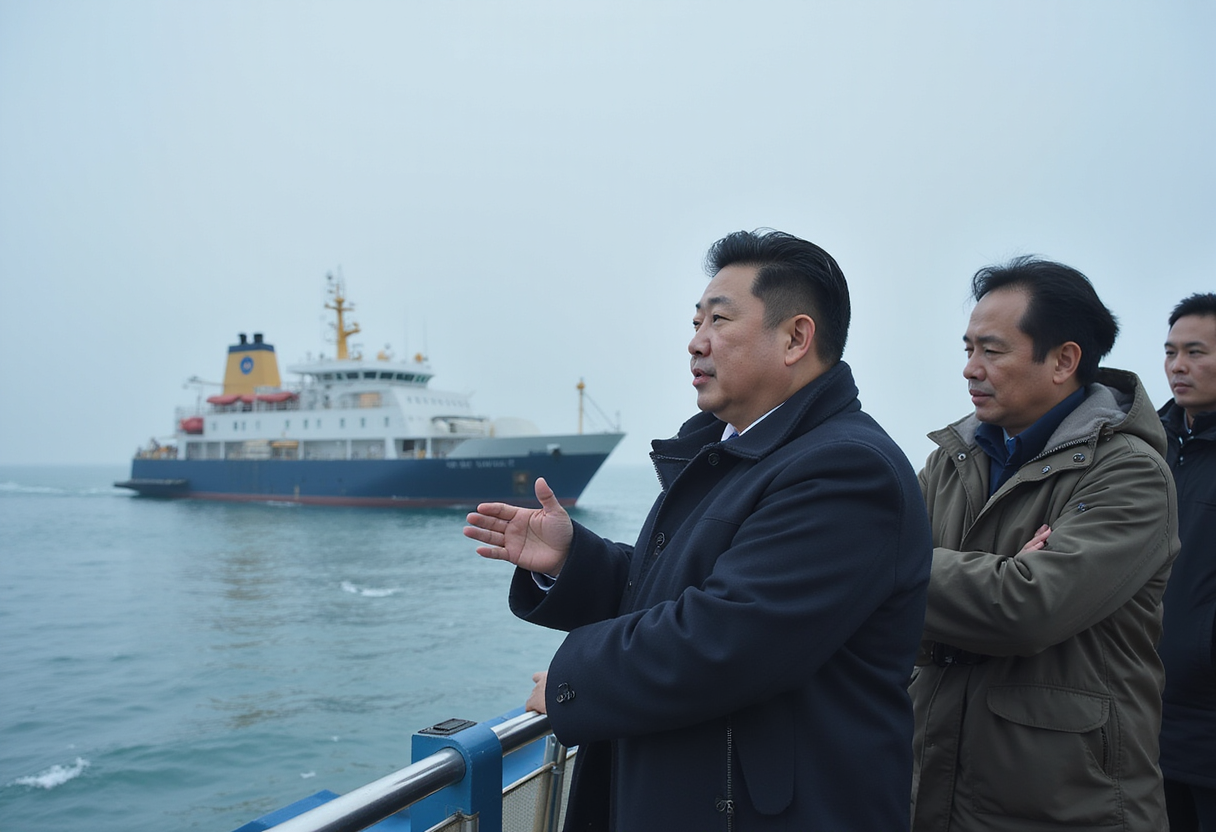
The 2,758-TEU PanStar Acro returned to Busan on Sunday, closing out a 50-day round trip that called at Felixstowe, Rotterdam and Gdansk via the Northern Sea Route. President Lee Jae Myung welcomed the crew on Tuesday and framed the trial as the start of something bigger: a backup lane for an economy that has learned what blockaded sea lanes cost.
"We have clearly learned how badly the Korean economy is shaken when existing sea lanes are blocked," Lee said at the ceremony, pointing to Middle East conflict disruptions. "The newly opening Arctic route can become another sea lane, another option…to rely on in a crisis."
For context on the speed claim: a comparable Busan–Europe sailing through Suez typically runs around 30 days. Shaving ten days off headhaul transit is real money for electronics and auto parts shippers, even before you count inventory carrying costs. That is the headline benefit, and it is genuine.
What does the cargo data actually show?
The commercial ledger is thinner. The ship departed with 737 TEU of export cargo — 43% below its 1,300-TEU target — and returned with 1,743 TEU of empty containers and zero imports, per figures cited by opposition lawmaker Kang Seung-kyoo.
Read that again: a round trip where the backhaul revenue was nothing. No container line builds a schedule on those numbers. Lee conceded the point himself, saying securing return cargo after unloading in Europe remains a challenge, while arguing that consolidation and operational experience could gradually cut costs and improve reliability.
South Korea's oceans minister has gone further, suggesting the route may not become economically viable until around 2040. That is a 15-year runway from launch to profit, by the government's own estimate.
Can Seoul run an Arctic lane through Russian waters?
Every sailing on the Northern Sea Route needs Russian authorization. Icebreaker escort, where required, can run through Rosatomflot — Russia's state-controlled nuclear icebreaker operator, which sits under Western sanctions.
Lee moved to pre-empt the obvious question. "We will strictly observe international norms and the international community's sanctions principles," he said, adding Seoul would talk with partner countries and "responsibly address concerns related to the voyage."
But he left the door to Moscow open, and in unusual terms. At a Cabinet meeting he called the Arctic route a national-interest priority and said diplomacy must continue even with adversaries. "There are no eternal enemies or allies," Lee said.
The backdrop is already testing that balancing act. The Guardian recently reported South Korea shipped more than 176,000 metric tons of petroleum products to Russia in July and August, including cargoes moved by sanctioned tankers. Seoul denies the exports breached its own controls and says it is investigating whether any laws were broken.
There is also a specialized flank to this story. Busan-based ship manager IOB has started operating four Arc4-class LNG carriers and plans to add three to six higher ice-class Arc7 vessels next year. Its business connects it to Russian gas producer Novatek and the Northern Sea Route — the corridor where Western sanctions have squeezed shipping for Russian LNG projects.
What happens next?
Seoul's roadmap: more trial voyages with container ships and automobile carriers in 2027, and regular services targeted for 2030. Lee highlighted that this summer's crew navigated Arctic waters without icebreaker assistance and handled floating ice — operational experience that compounds, slowly.
The crew also navigated a route with one paying direction. Until European exporters commit backhaul volumes, or Korean cargo owners consolidate enough to fill both legs, the economics stay inverted. The 2030 regular-service target now depends less on ice conditions than on whether shippers on both ends decide a faster lane is worth the paperwork.
Source: gCaptain
More from Amara Osei
Show full bio
Staff writer covering regulation, policy and their impact on Ocean and air freight, container shipping at Waybill Wire.
426 articles
Related05
PanStar Acro Completes Korea's First Commercial Arctic-Europe Round Trip
Arctic Boxship Returns to Korea as Polar Route Faces Reality Check
PanStar Acro Back in Busan: Arctic Box Trial Ends With Empty Return
South Korea Trials Arctic Container Sailing as Regular Service Looms
South Korea's Lee greets Arctic boxship as route's commercial test drags on