WW/PORTSTERMI
Port Botany takes two new ship-to-shore cranes
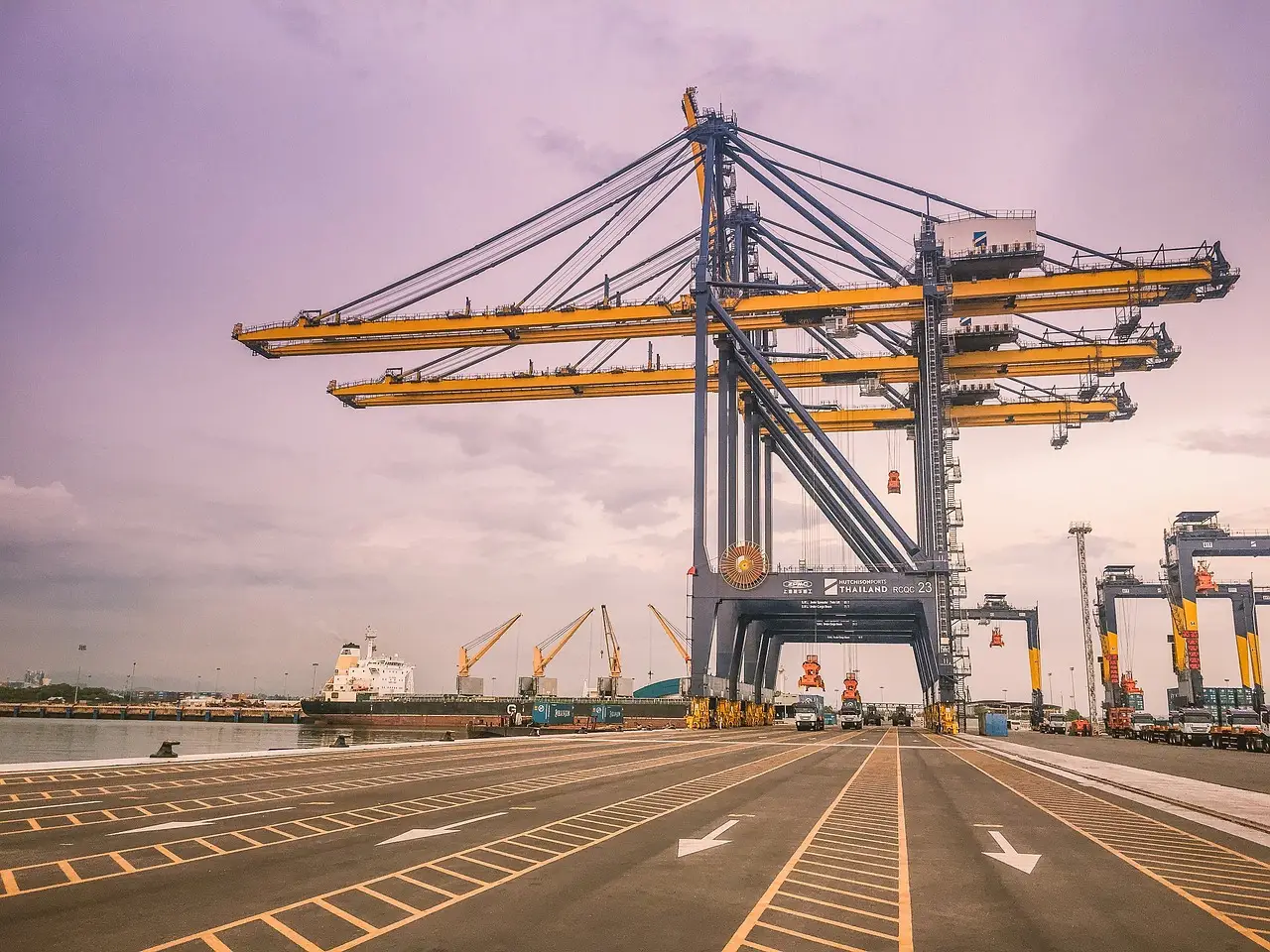
Two new ship-to-shore cranes at Hutchison's Port Botany terminal can serve ships over 15,000 TEU — 50% larger than the biggest vessels calling in Australia today.
- By
- Amara Osei
- Filed
- Length
- 526 words
- Read
- 3 min
Key points04
- Two new ship-to-shore cranes now operating at Hutchison Ports Sydney's Port Botany terminal
- Cranes serve vessels over 15,000 TEU, 50% larger than the ~9,000 TEU maximum currently calling in Australia
- Each crane reaches across ships up to 23 containers wide and stacks over nine high above deck
- NSW Ports CEO Marika Calfas and Hutchison Ports Australia CEO John Willy both framed the investment as future-proofing the state's supply chain
Port Botany can now work vessels of more than 15,000 TEU after Hutchison Ports Sydney brought two new ship-to-shore cranes into operation at its terminal. That is a meaningful jump for a port whose biggest current callers top out around 9,000 TEU — in plain terms, ships 50% larger than anything serving Australia today.
The hardware tells the story. Each crane can reach across hulls up to 23 containers wide and work boxes stacked more than nine high above deck. In other words, the terminal has bought itself headroom for the next generation of hulls, not just the current one.
The timing is no accident. Container ships keep growing, and Australian trade lanes — long served by mid-sized tonnage — are not immune. Ports that can't take the bigger units get quietly dropped from strings, or served at worse economics. Ports that can, get optionality.
What does this change for shippers and carriers?
For shipping lines, the answer is fleet flexibility. Carriers can now consider deploying larger, more efficient vessels on Australian routes and capture the economies of scale that come with them. That is precisely how Hutchison Ports Australia CEO John Willy framed it. The cranes, he said, extend the port's capability and help future-proof the state's supply chain infrastructure, "giving shipping lines more options to deploy larger, more efficient ships with greater economies of scale."
For shippers and forwarders, the payoff is less direct but real. Bigger ships mean lower per-slot costs, and a port that handles them without berth drama helps supply chains run on schedule. NSW Ports CEO Marika Calfas made the efficiency case explicitly. She welcomed the cranes as a significant investment in the future of the state's container port, saying the ability to service the largest vessels calling at Port Botany helps improve supply chain efficiency and keeps New South Wales well placed for growing global trade.
Note who said what, because the split matters. NSW Ports owns the port; Hutchison operates the terminal. The capital decision sits with the operator, and Hutchison has chosen to spend on steel before the 15,000 TEU ships actually appear at the berth. That is how terminal investments are supposed to work — ahead of the fleet, not behind it.
A gateway betting on growth
The two cranes reinforce Port Botany's position as a primary gateway for Australia's international trade. They also prepare the terminal for growth in containerised freight volumes that both operators clearly expect. Australia's import-export base keeps containerising, and the port that can absorb the tonnage wins the strings.
The catch, as ever, is that cranes are the easy part. Larger vessels concentrate arrivals into bigger, sharper peaks, and landside — trucking, rail, empty parks — will have to absorb them. The quay wall is ready. Whether the rest of the chain matches it is next year's question.
For now, Sydney has hardware rated for ships half again larger than any currently calling. If carriers exercise that option, expect the first 12,000-plus TEU arrivals to shift rate and capacity conversations on the Australia trade sooner rather than later.
Source: Container News
More from Amara Osei
Show full bio
Staff writer covering regulation, policy and their impact on Ocean and air freight, container shipping at Waybill Wire.
785 articles