WW/OCEANFREIG
Ocean Overcapacity Looms as 15.5m TEU Order Book Meets Collapsing Gulf Traffic
A 15.5m TEU order book — 45% of the global fleet — heads for delivery just as Gulf port traffic halves and US diesel hits records. Here's the 2027 outlook by mode.
- Desk
- Ocean Freight
- By
- Amara Osei
- Filed
- Length
- 823 words
- Read
- 4 min
Key points05
- Drewry forecasts unavoidable ocean overcapacity: order book of 15.5m TEU is 45% of the 34m TEU global fleet, with net nominal capacity up 9% in 2027
- US 3PL gross revenue hit $323.4bn in 2025, forecast $351bn in 2026 and $374.6bn in 2027, mostly on price not volume
- Persian Gulf container port traffic down ~50%; US diesel hit a record $6.53/gallon in late September
- 226 small trucking operators filed for bankruptcy last year; 20 carriers control 90% of US LTL volume
- SanMar signed a UPS extension into 2031, shipping over 100,000 parcels nightly
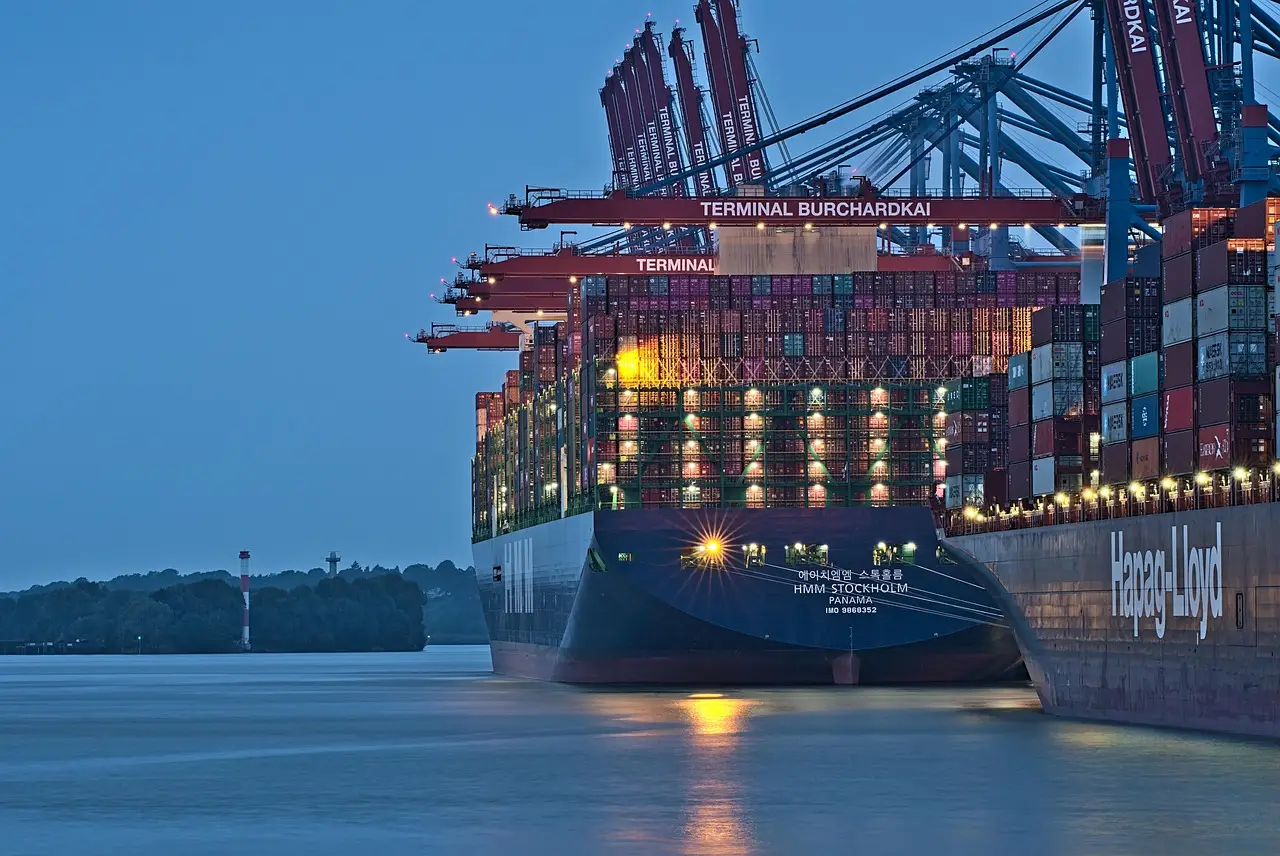
A 15.5 million TEU containership order book — 45% of the world's existing 34 million TEU fleet — starts hitting the water later next year, and Drewry says the overcapacity cycle it triggers is unavoidable. "We are really looking at an unavoidable overcapacity cycle coming straight at us in ocean shipping for the next year or two," said Philip Damas, managing director at Drewry Shipping Consultants. That forecast anchors a 2027 outlook built almost entirely on disruption, tightening truck capacity and cost inflation.
The numbers behind the gloom are stark. US 3PL gross revenue grew 5.0% in 2025 to $323.4 billion, with 2026 forecast at $351.0 billion and 2027 at $374.6 billion, up 6.7%. But Evan Armstrong, CEO of Armstrong & Associates, is blunt about what's driving it: "Much of that 2026 gain is in price," he said — record diesel prices and surcharges plus firmer truckload rates, not volume. Diesel hit an all-time US average high of $6.53 a gallon in late September.
The Iran War has rippled through every node. Persian Gulf port container traffic has fallen roughly 50% because ports in the Gulf have become unreachable, Damas said. Cargo once moving New York to Dubai now discharges at Fujairah or Khorfakkan, outside the Strait of Hormuz, then trucks across the desert. Saudi-bound boxes truck thousands of miles via the Red Sea. Cape of Good Hope diversions add 10 to 14 days of transit, and another 8% to 10% of global container capacity sits tied up in or near the Gulf. Schedule reliability? "It's one of the worst years I can remember," Damas said.
What does the trucking squeeze mean for shippers?
Small carriers keep exiting: 226 trucking operators, mostly fleets of 20 trucks or fewer, filed for bankruptcy last year, and thousands more have parked trucks. Capacity is tightening across both LTL and truckload. Geoff Muessig, CMO of Pitt Ohio, sees "a lot of pent-up demand from asset-based carriers to reinvest in their fleets and get to pricing levels that support a sustainable profit." Demand, in his words, is "strong but not incredibly robust, steady but not surging."
LTL's structure helps carriers hold the line. Twenty carriers handle 90% of US LTL volume, and pricing has grown teeth. "In the old days, it was, 'Hey, you got this discount; OK, we'll match it' and figure out later how to make money on it," Muessig recalled. "Those days are gone." Shippers feeling the pinch are asking Schneider about multimodal escapes — EVP of truckload Steve Wells reports strong interest in intermodal and, in some cases, dedicated, with customer conversations shifting from price toward reliability and agility.
Pallet demand tells a similar story. The pallet market is projected to reach $163.25 billion by 2034, a 6.43% CAGR, while InSightMint Tech sees North American pallet rental growing 7.5% annually from 2027 to 2035. Joe Dagnese, CEO of PECO Pallet, which runs tens of millions of rental pallets, calls pallets a leading economic indicator — and automation a tailwind, since AS/RS deployments demand near-zero failure rates as pallets move through robotic systems.
Shippers rewrite sourcing, ports hold ground
SanMar, which bets it was one of the only shippers with a container on a CMA CGM vessel struck by a Houthi missile, has diversified sourcing beyond Latin America into Jordan, Egypt, Bangladesh, Pakistan and India. VP of global logistics John Janson's contingency plans never contemplated missiles. SanMar also signed a UPS extension running into 2031, and drops over 100,000 parcels a night with the carrier across 10 US DCs. "In the B-to-B market, they are the winner," Janson said.
At the Port of New York & New Jersey, volumes are on track to match 2025's 7.5 million TEUs, and the port is first port of call on 75% of its services. Port director Bethann Rooney wants resilience but flags a worry: rail on-time service runs only about 35%, and the pending Union Pacific–Norfolk Southern merger could make it worse. "Our concern is [that] the level of service not deteriorate further," she said. Some 15% of the port's cargo moves by rail.
Warehouse space, squeezed by data centers
Prologis research head Melinda McLaughlin reports record-level logistics real estate demand, sharpest in facilities of 750,000 square feet or more. Data center competition took roughly 40 million square feet of industrial capacity in 2026, and developers outbid logistics tenants. Power access now tops site-selection checklists — one reason Prologis ranks among the top five US companies for onsite solar. "Power yields speed. If you are using automation, power yields reliability," she said.
For 2027, Drewry expects net nominal capacity growth of 9%, ahead of demand, then 11% in 2028 and 13% in 2029 — with 1.6 million TEUs of effective capacity also returning as Red Sea diversions unwind. Rates, in short, face gravity.
Original: 3plogistics.com
More from Amara Osei
Show full bio
Staff writer covering regulation, policy and their impact on Ocean and air freight, container shipping at Waybill Wire.
992 articles
Related05
Xeneta Forecasts 30% Spot Rate Drop for 2027 as Red Sea Return Floods Market
Diesel prices to stay elevated into spring 2027, fuel executives warn
Brent crude reaches $96.04 as Middle East conflict persists
US Diesel Hits $6.51 as Truckers Weigh October 1 Shutdown
Box fleet to swell 50% by 2030 — and scrapping can't stop it