WW/OCEANFREIG
Marsh ties port congestion to geopolitics and weather in marine briefing
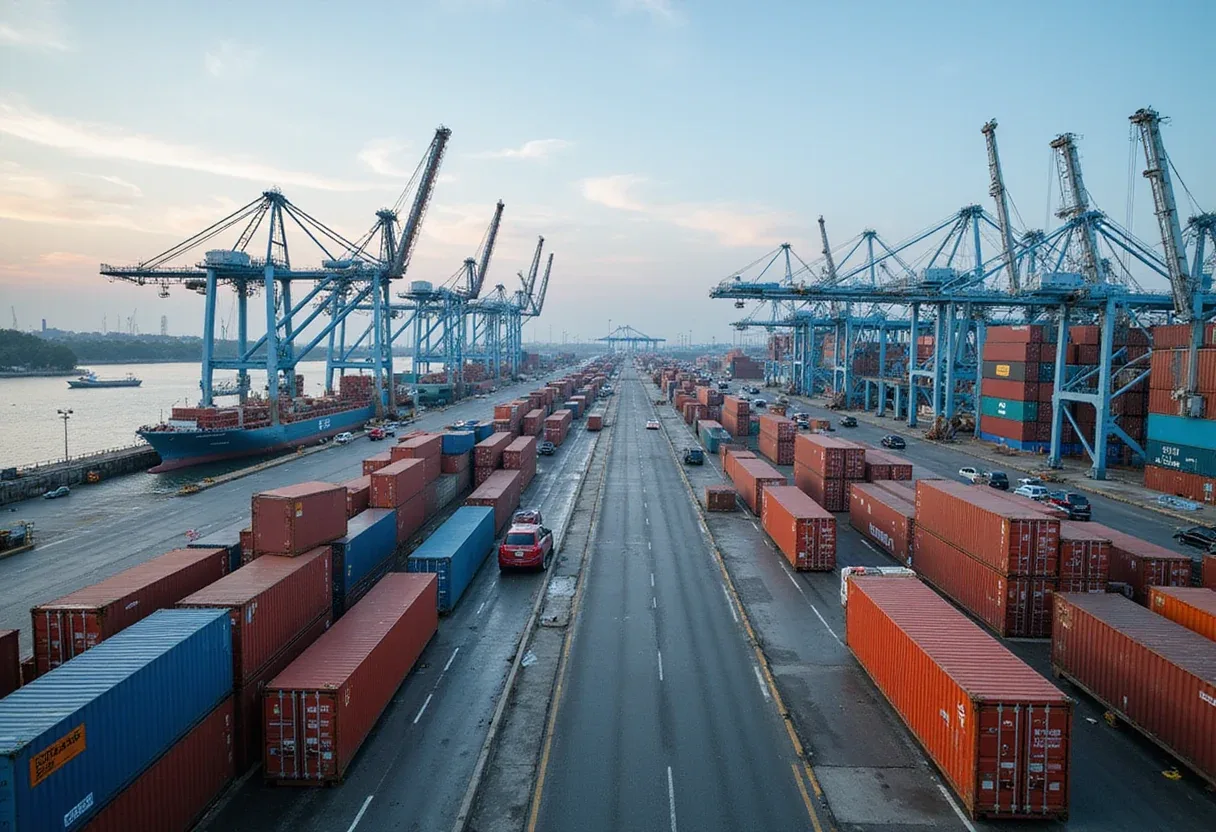
Marsh has published a new marine market briefing tying port congestion and shipping delays to a compound of geopolitical and weather risks, warning carriers and shippers that disruption will persist through the second half of 2025.
- Desk
- Ocean Freight
- By
- Tom Whitfield
- Filed
- Length
- 522 words
- Read
- 3 min
Key points05
- Marsh published a briefing titled "Port congestion and shipping delays: The impact of geopolitical risks and extreme weather on the marine market."
- The briefing frames congestion as a system-wide problem driven by two stacked risks rather than a single-port event.
- Marsh is one of the world's largest marine insurance brokers, reporting on its own tightening market through 2024 and into 2025.
- Atlantic hurricane and Pacific typhoon activity is forecast at above-average levels through autumn 2025.
- Underwriter premium shifts reach freight buyers' invoices within roughly one quarter, per Marsh's framing of marine cargo pricing.
Marsh, the insurance broker and risk consultancy, has published a fresh marine-market briefing that pins ongoing port congestion and shipping delays on a compound of geopolitical risk and extreme weather — and it tells carriers, shippers and forwarders to plan for more of the same through the rest of 2025.
The briefing, titled "Port congestion and shipping delays: The impact of geopolitical risks and extreme weather on the marine market," treats congestion as a system problem, not a single-porter glitch. That framing matters because the ocean freight market has spent three years trading one disruption for another — a pandemic-era yard logjam, a canal closure, a regional conflict, a hurricane season. Marsh's argument runs like this: those shocks no longer arrive one at a time.
What does it change for shippers?
Three things, in order of pain. Transit windows lengthen and demurrage bills pile up. Inland inventory buffers thin, because nobody trusts the published schedule. The insurance bill climbs. Marsh, sitting where it sits, focuses harder on that third item than a carrier-side bulletin would.
Marine cargo insurance is not glamorous. But it sets the price floor for moving boxes and bulk. When underwriters get nervous about geopolitical routing and weather exposure, premiums and deductibles shift — and those shifts reach the freight buyer's invoice inside a quarter.
Marsh is one of the world's largest marine brokers, reporting on its own market. That market has tightened through 2024 and into 2025.
Why link the two risks at all?
Because the effects stack. A ship already running a longer route because of sanctions or a conflict-zone diversion cannot absorb a three-day typhoon shelter the way it used to. Marsh's briefing pushes a specific frame: treat geopolitical and weather exposure as one integrated driver of delay, not two separate categories to price independently. If you budget for only one, you under-budget.
For freight buyers, the stack shows up in contract language. Fixed-day arrival guarantees, congestion surcharges and weather-delay clauses are now the levers carriers and BCOs push and pull on during annual talks.
The matching insurance items move alongside — war-risk premia, weather-delay extensions, and port-of-congestion extensions that pick up time spent outside the terminal gate. None of this is new. The Marsh analysis just says so out loud, in one document.
What's the forward view?
Cautious. The analyst view in Marsh's piece points to a second half of 2025 with no fast reset. Geopolitical fault lines that pulled ships off the shortest route in 2024 remain active. Forecasters put Atlantic hurricane and Pacific typhoon activity at above-average levels through autumn. Neither signal points to quiet port conditions.
The practical takeaway is short. Assume the schedule you book is the schedule you do not run. Build contracts, buffers, and insurance wordings around that assumption, not around the one on the carrier's website. Marsh has now put its name to the message — and when a broker of this size publishes a risk briefing at this scope, underwriter and bank counterparty audiences tend to read it the same morning.
Source: Google News: port congestion
More from Tom Whitfield
Show full bio
Market editor covering companies, deals and strategy in Ocean and air freight, container shipping at Waybill Wire.
500 articles
Related05
Marsh warns port congestion is now driven by politics, not just weather
Container Shipping Faces 'Massive' Uncertainty as Iran War Escalates
Freight Prices Ease, But Port Congestion and Black Sea Risks Linger
Global Port Congestion Passes Pandemic-Era Peak in "Perfect Storm"
Iran Conflict Fears Send Container Rates Soaring Worldwide