WW/OCEANFREIG
Maersk flags significant port congestion across Asia and the Mediterranean
Maersk reports significant port congestion in Asia and the Mediterranean, threatening Asia–Europe schedule reliability and tightening effective capacity.
- Desk
- Ocean Freight
- By
- Tom Whitfield
- Filed
- Length
- 584 words
- Read
- 3 min
Key points04
- Maersk has reported significant port congestion in Asia and the Mediterranean.
- The congestion affects the carrier's Asia–Europe network, where Mediterranean transshipment hubs sit directly on the trade lane.
- Congestion acts as effective capacity withdrawal, pressuring schedules and equipment availability.
- Reuters carried the story based on the carrier's customer advisory.
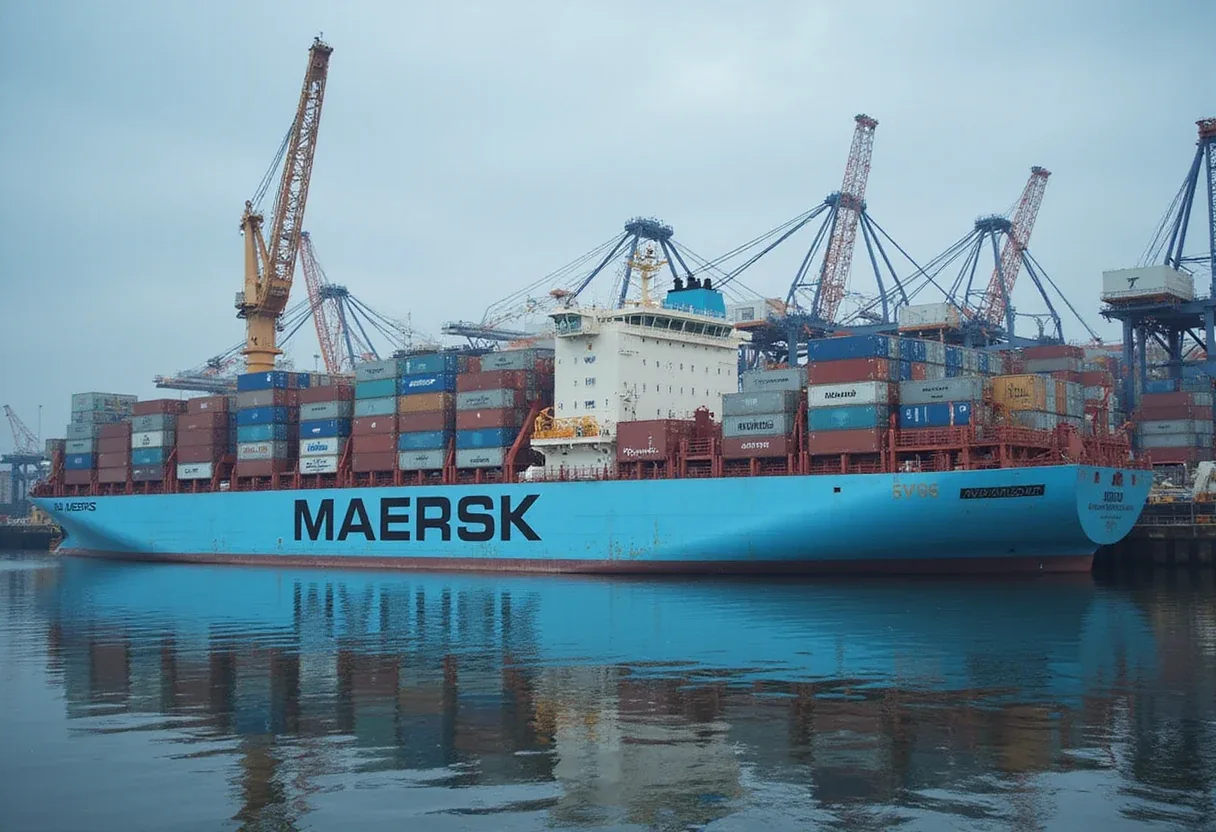
Maersk says it is facing significant port congestion in Asia and the Mediterranean, a two-front squeeze that puts schedule reliability and equipment availability back at the top of shippers' worry list.
The Danish carrier, the world's second-largest container line, reported the bottlenecks in a customer advisory picked up by Reuters. Congestion on this scale matters because it eats vessel capacity even when ships are technically still sailing. A boxship stuck at anchor is a ship not loading at the berth.
Why two regions at once is the problem
Single-region congestion is routine. Carriers rework rotations, drop a call, absorb the delay. Congestion in Asia and the Mediterranean simultaneously is harder to patch, because the Mediterranean sits directly on the Asia–Europe trade lane that Maersk depends on.
Think of the mechanism this way. A vessel departing Shanghai or Singapore for Europe already builds slack into its schedule. If Asian load ports are congested, the ship leaves late. If Mediterranean transshipment hubs — where Maersk moves cargo between services — are also congested, the delay compounds rather than resets. Connections get missed. Containers roll.
The carrier's own advisory framing — "significant" — is the signal to watch. Lines rarely use that word lightly in customer notices, because it invites claims conversations and rate scrutiny.
What does this change for shippers?
The practical question most cargo owners will ask: does this hit my bookings and my rates?
Congestion behaves like a capacity withdrawal. Vessels tied up in queues effectively leave the fleet, and effective capacity shrinks even if published capacity does not. When that happens, spot rates on affected lanes tend to firm, equipment repositioning gets harder, and rolled bookings become more frequent.
For shippers moving Asia–Europe cargo via Mediterranean transshipment, the exposure is direct. Expect longer door-to-door transit times, tighter cutoffs at origin, and a higher chance that carriers invoke congestion-related schedule adjustments.
Forwarders face a different headache. Bookings made weeks ago on assumed transit times may now miss delivery windows, which pushes renegotiation and contingency routing onto their desks.
What it means for Maersk and its rivals
For Maersk itself, congestion is a double-edged outcome. It raises costs — extra fuel catching up schedules, idle time at anchor, repositioning empty containers. But it also tightens supply on lanes where the carrier has pricing power, and tightening supply has supported the rate environment lines have enjoyed through recent disruptions.
Rival carriers serving the same regions face the same queues, since congestion is a port-level constraint that hits whoever calls there. That keeps the competitive playing field relatively level, and it removes some of the usual incentive for a single line to jump in with cheaper capacity.
Watch the recovery signals
The trajectory from here depends on how fast the bottlenecked ports clear their backlogs. Carriers typically respond in sequence: first they extend transit times in their published schedules, then they skip or merge port calls, and only if congestion persists do they add vessels to a loop.
Shippers with cargo in the affected corridors should track Maersk's schedule advisories closely over the coming weeks, check whether their routings pass through the congested Mediterranean hubs, and build extra buffer into delivery commitments made now.
If the queues clear quickly, this reads as a short-lived operational wobble. If they persist, the congestion could firm Asia–Europe rates and squeeze schedule reliability through the peak season — a scenario both carriers and BCOs will be watching port performance data to confirm.
Source: Google News: port congestion
More from Tom Whitfield
Show full bio
Market editor covering companies, deals and strategy in Ocean and air freight, container shipping at Waybill Wire.
500 articles