WW/OCEANFREIG
Container shipping schedules collapse in 2025, Seatrade reports
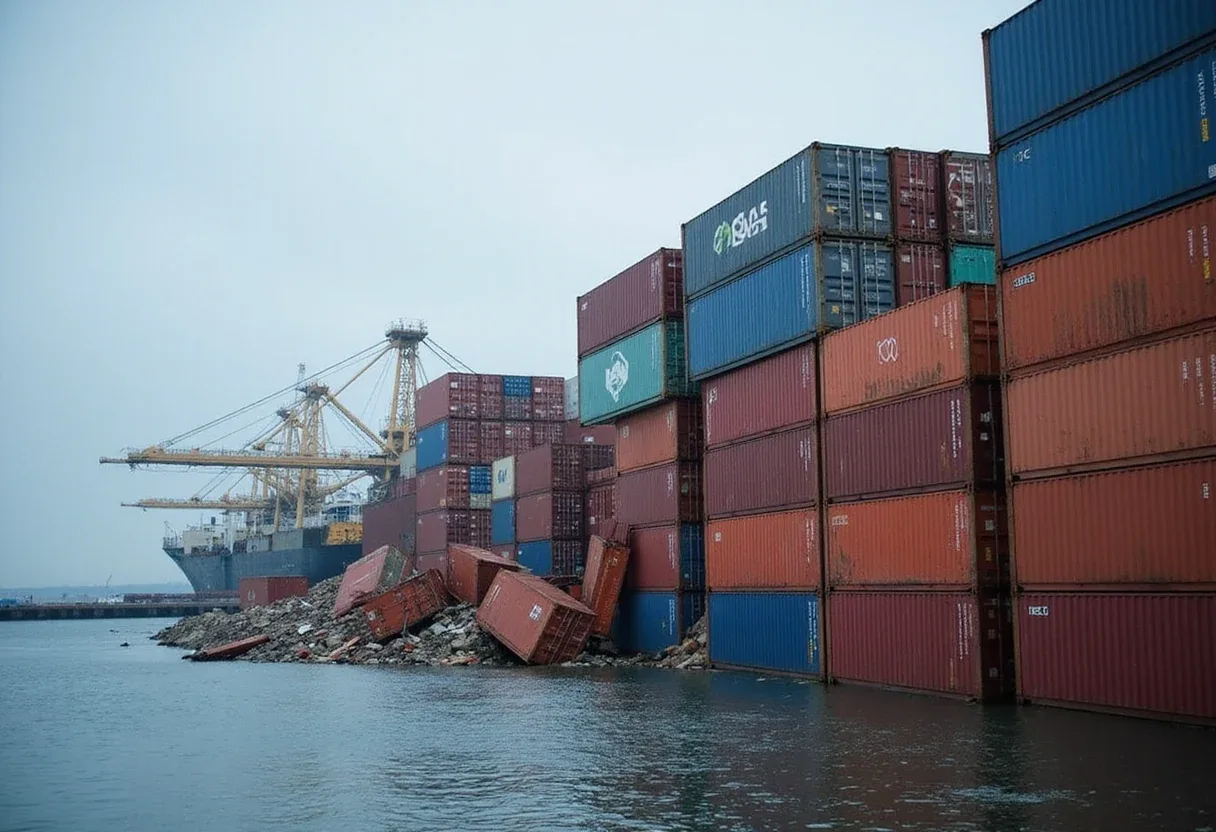
Seatrade Maritime News reports container shipping scheduling has collapsed in 2025, putting liner reliability back at the center of shipper procurement talks across east-west trades.
- Desk
- Ocean Freight
- By
- James Calloway
- Filed
- Length
- 523 words
- Read
- 3 min
Key points05
- Seatrade Maritime News reported container shipping scheduling has collapsed in 2025
- Source did not specify affected trade lane, carrier, alliance or TEU figure
- Reliability metric historically used by carriers to defend premium freight rates
- 2023-2024 capacity management included blank sailings, slow steaming and the Red Sea diversion
- Carriers likely to push 12-month contracts at the top of the rate range if collapse deepens
Container shipping scheduling has collapsed in 2025, Seatrade Maritime News reported — an alert that puts liner reliability back at the center of shipper procurement talks across the major east-west trades.
The Seatrade headline carries weight. Schedule integrity is the operating metric carriers use most often to defend premium freight rates. A collapse in published rotations typically cascades into rolled boxes, port congestion surcharges and contract renegotiations, all of which redraw the balance between ocean carriers, forwarders and beneficial cargo owners within weeks.
What does "schedule collapse" mean in practice?
It means carrier rotations no longer match published timetables. Vessels omit ports mid-string. Alliance partners swap loops. Carriers roll booked boxes to later sailings rather than load them on the advertised vessel. The cumulative effect shows up first in on-time-performance data from analysts such as Sea-Intelligence and project44, and shortly after in landside dwell and anchorage counts.
Seatrade has not yet published the trade-lane detail, the TEU figure or the alliance affected. The headline alert does not name Maersk, MSC, CMA CGM, Hapag-Lloyd, ONE, Evergreen or ZIM. Without that, shippers should treat the report as a directional warning, not yet a quantified event.
Why this matters now
Carriers spent 2023 and 2024 managing capacity through blank sailings, slow steaming and the Red Sea diversion that lengthened Asia-Europe round-trips. Those moves bought reliability on paper but eroded voyage-level predictability. Any 2025 collapse suggests the buffer is gone.
The commercial read for shippers:
- Expect more rolled bookings through Q2 and Q3
- Expect mid-cycle vessel omissions on the trans-Pacific and Asia-Europe trades
- Expect carriers to push 12-month service contracts at the top of the rate range
Forwarders with multi-carrier allocations gain leverage. Those single-sourced to one alliance or one vessel-sharing agreement lose it. NVOCCs and 3PLs with capacity on two or more carriers inside the same alliance can hedge; everyone else re-prices.
What happens at the port
Reliability collapses translate into bunched arrivals. Bunched arrivals translate into longer anchorage stays and landside dwell spikes. Those are the conditions that drove the 2021-2022 congestion episode and the demurrage and detention exposure shippers still argue about in collection calls.
For terminal operators, queue length drives gate turn-time, which drives drayage cost, which drives the chassis pool conversation nobody wants to fund. None of that changes because the schedule does.
What to watch next
The next 30 days decide whether this is a procurement story or a footnote. If Seatrade follows the headline with directional on-time-performance drops — even five to ten percentage points against a 2024 baseline — shippers should reopen contract language now. If the alert stands alone without trade-lane detail, reliability still belongs in the 2025 budget line, not the back office.
The Seatrade report lands as the IMO prepares its mid-year fuel-intensity review. Carriers running faster than compliance timelines allow will find their published rotations even harder to keep. Schedule collapse and emissions policy now point in the same direction: slower, fewer, later sailings across the container fleet.
By James Calloway, Waybill Wire.
Source: Google News: container shipping
More from James Calloway
Show full bio
Correspondent covering companies, deals and strategy in Ocean and air freight, container shipping at Waybill Wire.
507 articles