WW/PORTSTERMI
Port congestion stalls cargo at major global container gateways
Congestion at the world's largest container gateways is pushing vessel queues higher and stretching transit times on trans-Pacific and Asia-Europe trades, with delays rippling into shipper schedules.
- By
- Amara Osei
- Filed
- Length
- 577 words
- Read
- 3 min
Key points05
- Congestion reported across major global container gateways, per Fresh Plaza
- Singapore, Shanghai, Ningbo-Zhoushan, Shenzhen, and Busan anchor east-west transshipment flows
- Rotterdam, Antwerp-Bruges, and Hamburg handle the bulk of Asia-Europe import boxes into the European hinterland
- San Pedro Bay (Los Angeles/Long Beach) remains the dominant US Pacific gateway
- Effective capacity shrinks when boxes cannot return on schedule, which historically supports spot rate floors
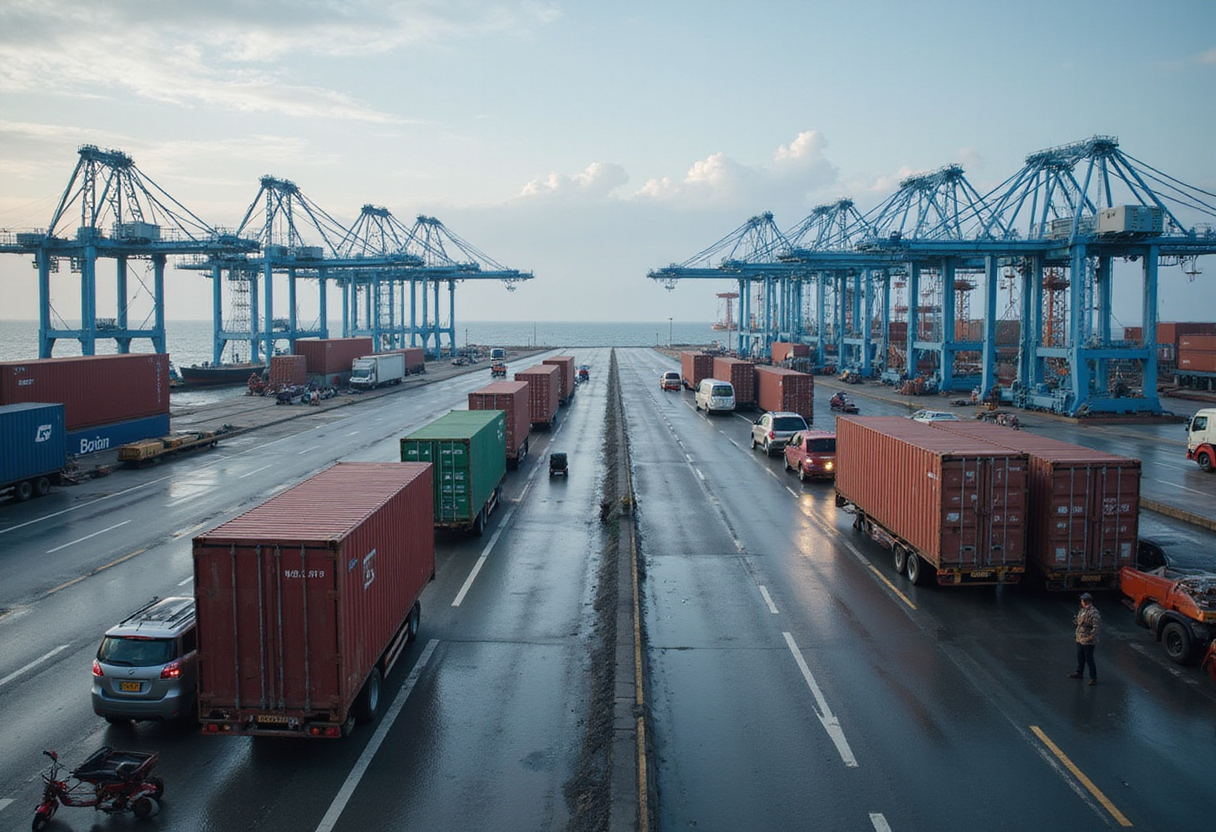
Port congestion is choking vessel and box turnaround at major global container gateways, with Fresh Plaza reporting delays spreading across the largest hubs that handle the bulk of trans-Pacific and Asia-Europe cargo.
The headline is simple, but the operational fallout runs deep. When mega-vessels queue outside Singapore, Shanghai, Ningbo-Zhoushan, Shenzhen, Busan, Rotterdam, Antwerp-Bruges, Hamburg, or the San Pedro Bay complex, every link in the chain feels it: feeder sailings slip, rail ramp windows close, and drayage slots evaporate.
Which gateways are driving the backlog?
Fresh Plaza did not isolate a single port in its alert, but congestion of this kind almost always clusters at the transshipment mega-hubs that anchor east-west liner services. Singapore and the Chinese coastal cluster — Shanghai, Ningbo-Zhoushan, Shenzhen, and Qingdao — together move a majority of global TEU throughput. When any one of them slows, the rest of the network absorbs the overflow.
In Europe, Rotterdam and Antwerp-Bruges handle the bulk of Asia-Europe import boxes that then disperse by barge, rail, and truck into the continent's hinterland. Hamburg, Le Havre, and Valencia play a similar feeder role for north and south Europe. On the US side, the San Pedro Bay complex of Los Angeles and Long Beach remains the dominant Pacific gateway, with Oakland, Seattle-Tacoma, and Vancouver taking overflow when conditions warrant.
What does the congestion mean for shippers?
Delays at the gate translate into three commercial hits. First, demurrage and detention: containers that should turn in three to five days sit for ten or more, and shippers pay daily charges per box. Second, schedule reliability: carriers' advertised weekly strings unravel, and importers lose the just-in-time predictability that modern retail and manufacturing demand. Third, rate support: when carriers cannot return boxes fast enough, effective capacity shrinks even if nominal capacity is unchanged, which historically supports spot rate floors on the affected trade.
For BCOs, this means earlier order placement, wider safety-stock buffers, and renewed conversations with procurement about routing alternatives. For NVOCCs and forwarders, it means rebooking boxes, paying congestion surcharges where filed, and explaining to mid-sized clients why a 35-day transit is stretching to 45.
How are carriers and forwarders adjusting?
Liner responses tend to follow a familiar playbook. Carriers add port omissions, blank sailings, or extra buffer days into schedules to recover rotation integrity. Terminal operators extend gate hours where labor allows. Forwarders shift volumes to less-congested gateways — Charleston over Norfolk, or Mediterranean hubs over north Europe during Rotterdam squeezes — accepting longer inland legs in exchange for a working berth window.
Transshipment hubs are the most exposed. A delay in Singapore cascades into every string that calls it, which is most of them. That dynamic explains why congestion news from a single chokepoint quickly becomes a global schedule problem within a rotation or two.
What's the near-term trajectory?
Port congestion of this scale typically resolves in one of two ways: an improvement in landside handling throughput (extended gates, more yard equipment, better truck turn-times), or a reduction in vessel calls as carriers cut capacity to match the slower terminal pace. Either path points to elevated freight rates and continued schedule slippage until the backlog clears.
Shippers with Q4 commitments should expect the next several weeks to deliver the same pattern: published rotations that hold on paper, real-world arrivals that slip by days, and spot markets on affected lanes that respond accordingly.
Source: Google News: port congestion
More from Amara Osei
Show full bio
Staff writer covering marketplaces and e-commerce at Waybill Wire.
306 articles
Related05
Shanghai Berth Turnover Back to Pre-Typhoon Levels; Congestion Shifts South
Asian Port Congestion Threatens Supply Chains Through 2027
Asia Port Congestion Deepens as Weather and Vessel Bunching Bite
Asian Box Port Congestion Could Take 10 Months to Unwind
Port Congestion Absorbs 12% of Global Container Capacity