WW/OCEANFREIG
Hapag-Lloyd Lifts Far East–Latin America Rates by $1,000 per Box
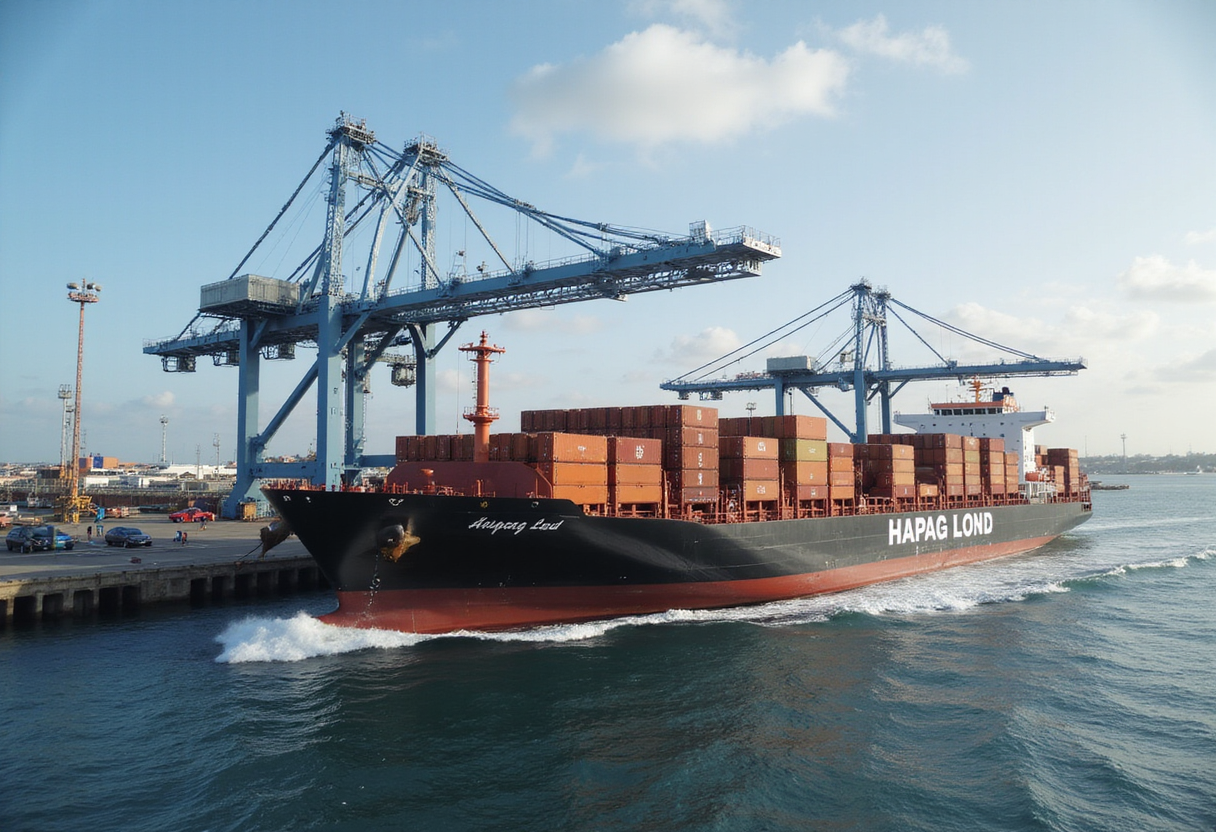
Hapag-Lloyd applies a flat $1,000 GRI from 15 October 2026 on Far East–Latin America trades, lifting Caribbean dry rates to $9,700 per container, with one NOR level unchanged.
- Desk
- Ocean Freight
- By
- Amara Osei
- Filed
- Length
- 773 words
- Read
- 4 min
Key points03
- Hapag-Lloyd raises Far East–Latin America rates by US$1,000 per container effective 15 October 2026, until further notice.
- Caribbean dry rates, including Panama, rise to US$9,700 per container — the highest new level in the tariff.
- The 40-foot NOR rate to the Caribbean, including Panama, stays unchanged at US$8,600 — the only rate not increased.
Hapag-Lloyd will raise container rates by US$1,000 per box across its Far East–Latin America services from 15 October 2026, pushing dry rates on the Caribbean trade, including Panama, to US$9,700 for both 20-foot and 40-foot equipment.
The General Rate Increase applies until further notice and covers 20-foot dry, 40-foot dry and 40-foot non-operating reefer (NOR) containers. All rates are quoted in US dollars per container. A single exception stands out: the 40-foot NOR rate from the Far East to the Caribbean, including Panama, holds at US$8,600, making it the only level untouched by the increase.
The numbers by trade lane
On the South America West Coast lane, 20-foot dry rates rise from US$5,000 to US$6,000, while 40-foot dry moves from US$5,200 to US$6,200. The 40-foot NOR rate climbs from US$3,700 to US$4,700 — the lowest new level on the network.
Mexico West Coast shipments see a similar step up. The 20-foot dry rate goes from US$4,900 to US$5,900, 40-foot dry from US$5,100 to US$6,100, and 40-foot NOR from US$3,800 to US$4,800.
The South America East Coast lane already carried the highest dry baselines outside the Caribbean. From 15 October, 20-foot dry containers will cost US$6,500, up from US$5,500. The 40-foot dry rate increases from US$5,700 to US$6,700, and the 40-foot NOR rate from US$4,400 to US$5,400 — the highest NOR level among the trades seeing an increase.
Central America West Coast shipments, including the Guatemalan port range (GTPRQ), face some of the steepest dollar-for-dollar adjustments given their starting points. 20-foot dry rates rise from US$5,900 to US$6,900, 40-foot dry from US$6,200 to US$7,200, and 40-foot NOR from US$5,900 to US$6,900.
The Caribbean range, including Panama, remains the premium lane. Both 20-foot and 40-foot dry containers shift from US$8,700 to US$9,700, the highest new rates in the tariff. The 40-foot NOR rate stays at US$8,600.
What it means for shippers and forwarders
For shippers moving Asian manufactured goods into Latin American gateways, the increase is uniform and material: a flat US$1,000 per container regardless of size or lane. That structure matters commercially. Because the GRI applies equally to 20-foot and 40-foot dry equipment, shippers paying the same increment for both box sizes face a proportionally heavier hit on the smaller unit — roughly a 20% increase on 20-foot dry to the South America West Coast versus about 19% on the 40-foot equivalent to the same range.
Forwarders booking Far East exports to the Caribbean should note the anomaly in the NOR tariff. With the dry rates jumping to US$9,700 while the 40-foot NOR holds at US$8,600, the gap between the two widens to US$1,100 — potentially sharpening demand for non-operating reefer equipment among cargo owners able to use it on that specific lane.
The unchanged Caribbean NOR rate also signals where Hapag-Lloyd sees no need to push yield: the carrier is holding that single level while lifting everything else on the trade by a thousand dollars.
Shippers with cargo in transit or contracts pending renewal now have a clear cutoff. The revised levels take effect 15 October 2026 and remain in force until further notice — standard GRI language that leaves the door open to further adjustment in either direction depending on how the market absorbs the increase.
The move also tightens the spread across Latin American destination ranges. Before the increase, the gap between the cheapest dry rate (Mexico West Coast, 20-foot, US$4,900) and the most expensive (Caribbean, US$8,700) was US$3,800. After 15 October, that spread stays identical in absolute terms but every lane in the network will command at least US$5,900 per container.
Whether the increase sticks will depend on demand strength on the Far East–Latin America trade and competing capacity from other carriers serving the same ranges. For now, shippers and BCOs have less than the window until mid-October to book at current levels before the flat US$1,000 increase reshapes cost calculations on every Hapag-Lloyd Far East–Latin America booking except one: the 40-foot NOR box bound for the Caribbean.
Source: Container News
More from Amara Osei
Show full bio
Staff writer covering marketplaces and e-commerce at Waybill Wire.
139 articles
Related05
Hapag-Lloyd Lifts Guidance Again as Demand and Rates Hold Firm
Hapag-Lloyd CEO: Market Is 'Fairly Tight' Despite Big Orderbook
Far East–U.S. Ocean Rates March Toward Record Highs
Maersk slaps $500 per box PSS on South America–Europe trades
Transpacific Container Rates Hold Near 2022 Highs as Blank Sailings Bite