WW/AIRCARGO
Ethiopian Airlines Books Ten Boeing 777 Freighters in Cargo Push
Ethiopian Airlines orders eight Boeing 777-8 freighters plus two 777Fs, a ten-aircraft commitment that deepens its position as Africa's largest cargo carrier.
- Desk
- Air Cargo
- By
- James Calloway
- Filed
- Length
- 576 words
- Read
- 3 min
Key points03
- Ethiopian Airlines ordered eight Boeing 777-8 freighters and two 777Fs
- The ten-aircraft commitment is a major cargo fleet expansion for Africa's largest cargo carrier
- Delivery schedules and financial terms were not disclosed
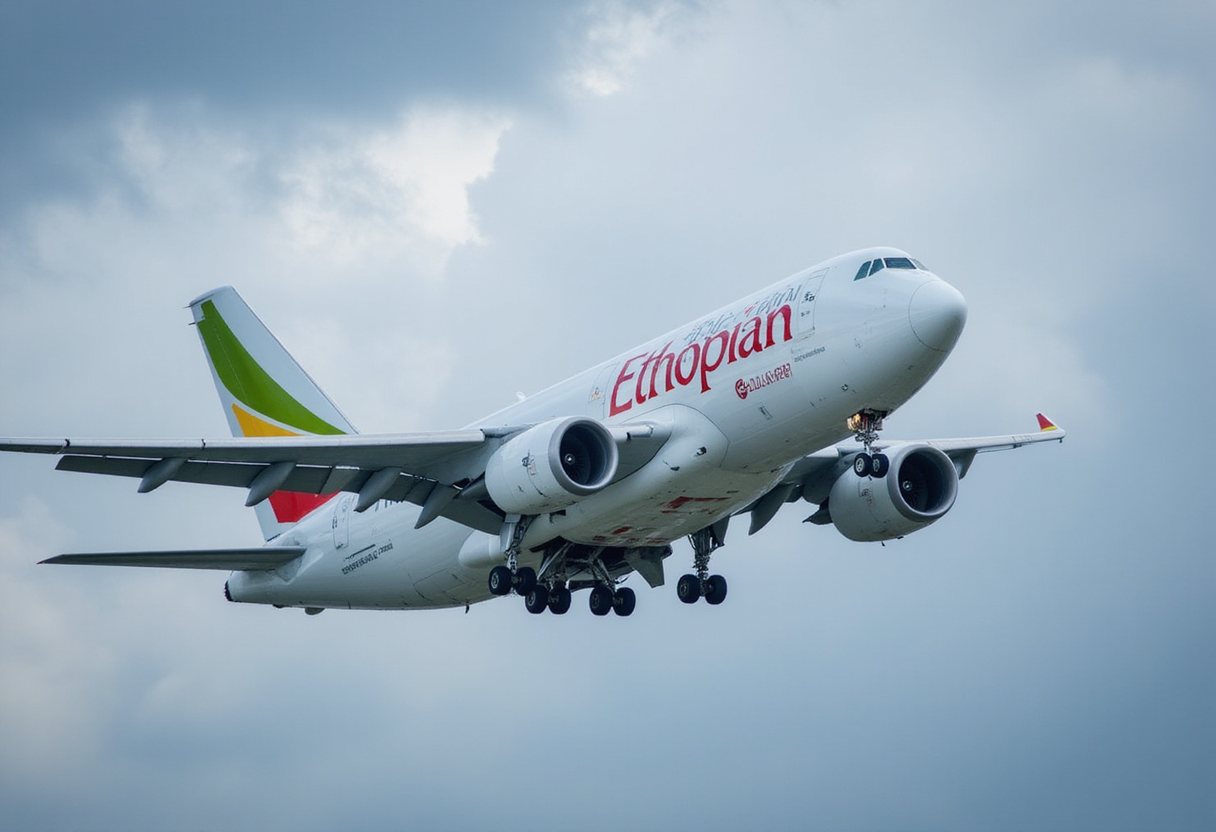
Ethiopian Airlines has placed an order for eight Boeing 777-8 freighters and two 777Fs, committing to ten widebody freighters in a single move that ranks among the most significant cargo fleet commitments by any African operator.
The order splits between the next-generation 777-8F, Boeing's largest twin-engine freighter program, and the current-production 777F, which has anchored Ethiopian's cargo operation for years. The mix signals a two-track strategy: the carrier wants incremental lift now from the in-production 777F while locking in future capacity with the 777-8F, which offers greater range and payload efficiency than the aircraft it replaces.
For Ethiopian, the stakes run well beyond fleet renewal. The Addis Ababa-based operator has built its reputation as Africa's largest cargo carrier, and its freight division has long served as a counterweight to the cyclicality of the continent's passenger market. Widebody freighters of this size class allow Ethiopian to move dense, heavy consignments — machinery, perishables, e-commerce volumes, and humanitarian relief — directly between its Addis Ababa hub and points in Asia, Europe, the Middle East, and the Americas without splitting loads across smaller aircraft.
The commercial logic for forwarders and shippers is straightforward. More owned freighter capacity at Ethiopian reduces reliance on chartered lift and on belly space that fluctuates with passenger schedules. Freight forwarders routing cargo through Africa, or using Addis Ababa as a transit point between Asia and Latin America or Europe, gain access to a carrier that controls its own main-deck capacity and can commit it to contract freight programs.
The order also strengthens Boeing's hand in the freighter segment. The 777F remains the backbone of many long-haul cargo fleets, and the 777-8F is positioned as the successor platform for carriers needing to replace older 747 and MD-11 freighters with more fuel-efficient twin-engine aircraft. An order of ten freighters from a single operator reinforces demand for both programs at a time when production rates and delivery slots remain a central concern for cargo operators planning fleet transitions.
For competitors, the move raises the bar. Other carriers serving African cargo lanes — including Gulf hub operators and European combination carriers — will face an Ethiopian cargo arm with a deeper, more modern freighter fleet and greater scheduling flexibility out of Addis Ababa. That could sharpen competition on trade lanes where belly capacity has already tightened as passenger networks recovered unevenly.
The timing matters as well. Cargo yields have normalized from the pandemic-era peaks, and carriers that invested in freighters during the boom are now deciding whether to hold, expand, or trim main-deck capacity. Ethiopian's order suggests the airline reads long-term structural demand — driven by African export growth, e-commerce penetration, and supply chain diversification away from traditional sourcing regions — as sufficient to justify a decade-long commitment to dedicated freighter capacity.
Delivery schedules and financial terms were not disclosed in the announcement. Ethiopian has historically phased freighter arrivals alongside hub and ground-handling investments at Addis Ababa Bole International Airport, its cargo terminal complex, and its network of African cargo hubs, suggesting the ten aircraft will arrive progressively rather than as a single block.
Watch for Ethiopian to detail delivery timelines and intended route deployments as the first aircraft move through production — decisions that will shape main-deck capacity availability on Africa-connected trade lanes and influence freighter competition across the continent for years to come.
Source: Google News: air cargo
More from James Calloway
Show full bio
Correspondent covering consumer brands and retail at Waybill Wire.
130 articles
Related05
Ethiopian Airlines Orders 10 Boeing 777 Freighters in African First
Ethiopian Airlines Orders Eight 777-8 Freighters, Two 777Fs
Ethiopian Airlines Orders Ten Boeing Freighters in Cargo Push
Ethiopian Airlines Orders 10 Boeing 777 Freighters in Widebody Cargo Push
Flydubai Cargo takes first freighters as belly capacity runs short