WW/OCEANFREIG
Flydubai Cargo takes first freighters as belly capacity runs short
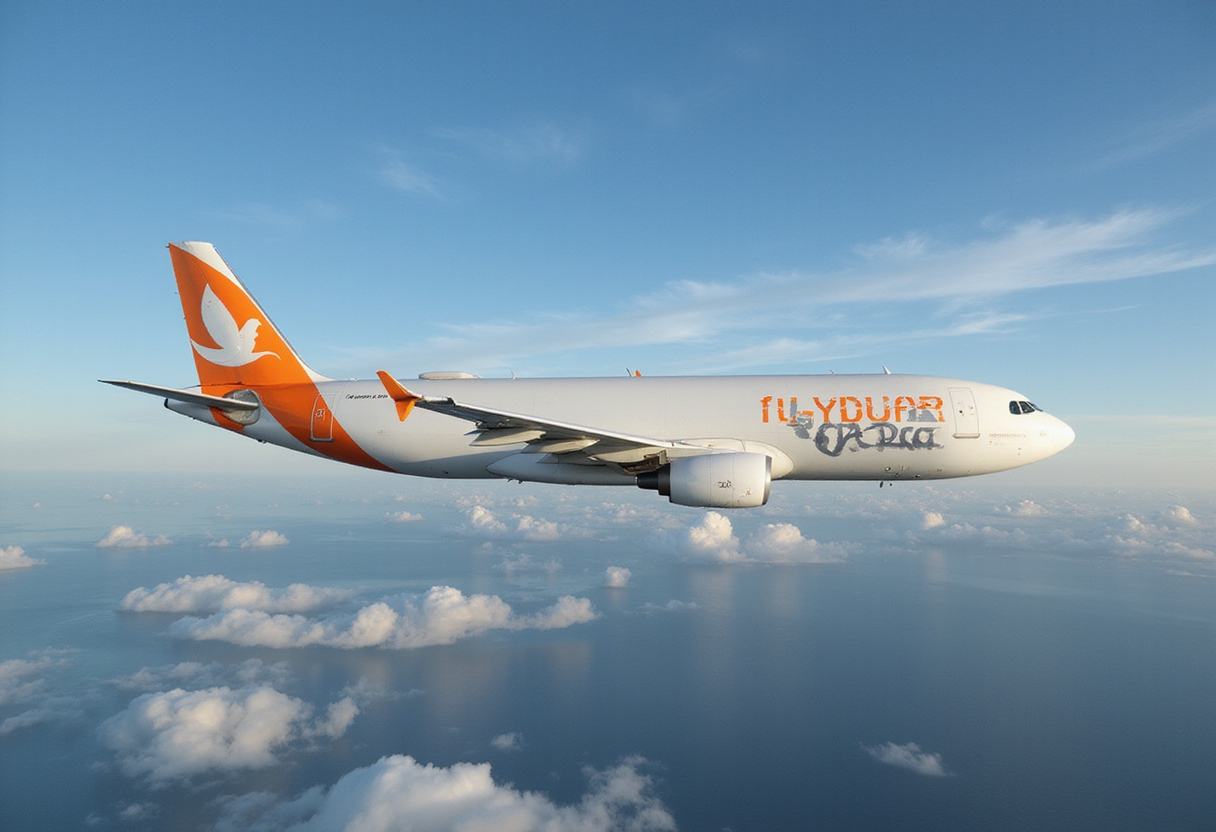
Flydubai has launched flydubai Cargo with three B737-800 freighters, each carrying 23 tonnes, adding first-ever scheduled main-deck capacity to its regional network.
- Desk
- Ocean Freight
- By
- Marcus Bennett
- Filed
- Length
- 520 words
- Read
- 3 min
Key points03
- Flydubai introduced three Boeing 737-800 freighters, giving flydubai Cargo its own scheduled capacity for the first time
- Each B737-800F carries 23 tonnes of payload, for a combined 69 tonnes of freighter capacity
- The network targets ecommerce, specialised shipments and regional trade ill-served by flydubai's narrowbody belly capacity
Flydubai has put three Boeing 737-800 freighters into service, giving its cargo arm scheduled dedicated capacity for the first time and targeting demand the airline says its narrowbody belly hold cannot serve.
Each converted 737-800F lifts 23 tonnes of payload, and the aircraft entered service this week as the Dubai-based operator formally launched flydubai Cargo as a freighter operation. Until now, the airline's cargo business has relied entirely on the belly space of its passenger fleet — a single-aisle operation whose hold capacity is structurally limited compared with the widebody fleets of Emirates and other Gulf rivals.
The carrier is positioning the freighters against three demand pools: fast-growing ecommerce flows into and out of the Gulf region, specialised shipments that need main-deck loading, and regional trade lanes where narrowbody belly capacity is thin or absent.
The launch gives flydubai a physical product in a segment where it has previously had none. For a carrier whose network spans short- and medium-haul destinations across the Middle East, Africa, Central Asia and the Indian subcontinent, the addition of 69 tonnes of combined freighter capacity across the three aircraft — roughly the payload of a single widebody freighter rotation, but spread across flexible regional missions — marks a step change in its cargo ambitions.
For shippers and forwarders in Dubai and the surrounding region, the practical consequence is access to main-deck capacity on lanes where options have been limited to integrator networks, trucking to wider Gulf hubs, or scarce widebody belly space. Ecommerce consignors in particular have pushed carriers across the Gulf to add freighter capacity as volumes have outgrown passenger-hold allocations; flydubai's move follows that pattern at the narrowbody scale.
The choice of the 737-800F sets clear commercial parameters. A 23-tonne payload suits dense regional lanes rather than intercontinental flows, which suggests the freighters will feed and distribute cargo within flydubai's existing short- and medium-haul footprint rather than compete head-on with the long-haul freighter operations based at Dubai World Central and Dubai International. That positioning leaves Emirates Sky Cargo's widebody fleet to handle the heavy trunk routes while flydubai Cargo works the regional and specialised end of the market.
For competitors — regional carriers, integrators and road feeder services moving Gulf-origin cargo — the entry of a scheduled narrowbody freighter operator adds a new bid for ecommerce and specialised tonnage that has grown faster than the belly capacity available to carry it. Forwarders gain a direct main-deck option out of Dubai on lanes that previously required consolidation or transshipment.
The launch came in a turbulent week for the airline, which also saw disruption on a Tel Aviv flight — an incident that drew most of the headlines. The freighter debut, by contrast, signals the quieter, structural shift: a passenger operator converting regional cargo demand into a dedicated freighter network for the first time.
Whether flydubai Cargo grows beyond three aircraft will depend on how quickly ecommerce and specialised demand fills the new capacity on its regional lanes — the same demand signals that prompted the investment in the first place.
Original: bbc.co.uk
More from Marcus Bennett
Show full bio
Senior reporter covering marketplaces and e-commerce at Waybill Wire.
145 articles
Related05
Alaska Airlines doubles freighter fleet to four 737-700Fs
Lufthansa Cargo suspends Mumbai all-cargo flights on congestion
Ethiopian Airlines Orders 10 Boeing 777 Freighters in Widebody Cargo Push
Ethiopian Airlines Orders Eight 777-8 Freighters, Two 777Fs
Ethiopian Airlines Orders 10 Boeing 777 Freighters in African First