WW/AIRCARGO
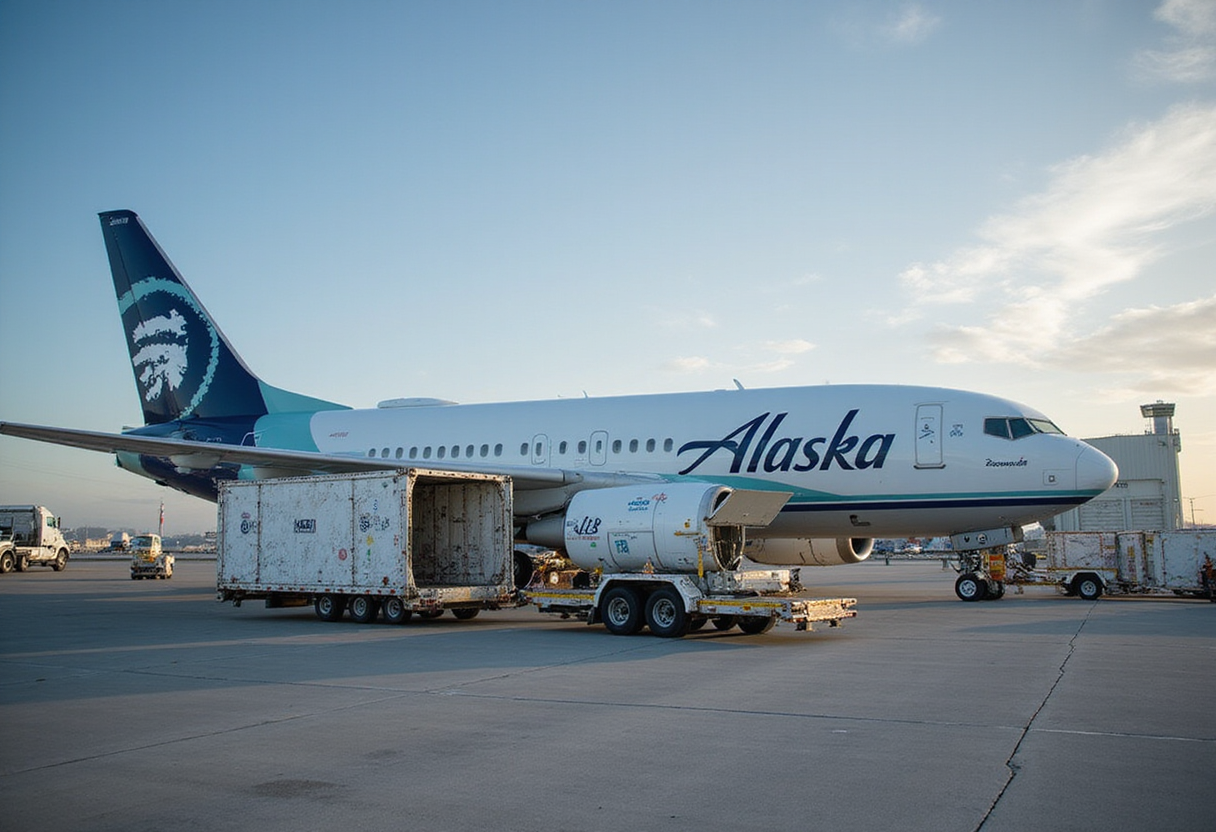
Alaska Airlines doubles freighter fleet to four 737-700Fs
Alaska Airlines doubles dedicated cargo capacity with four freighters, giving shippers and forwarders predictable lift in the Pacific Northwest and Alaska trades.
- Desk
- Air Cargo
- By
- Amara Osei
- Filed
- Length
- 527 words
- Read
- 3 min
Key points03
- Alaska Airlines has doubled cargo capacity with a four-freighter fleet
- Dedicated freighters insulate cargo from passenger belly-capacity volatility
- Expansion strengthens lift for Alaska seafood exports and Pacific Northwest e-commerce flows
Alaska Airlines has doubled its dedicated cargo capacity, adding freighters that bring its all-freighter fleet to four aircraft as the Seattle-based carrier pushes deeper into the air freight market.
The expansion gives Alaska Airlines Cargo a substantially larger dedicated freighter operation to complement the belly capacity it already flies across its passenger network. For a carrier whose cargo business has historically relied on belly hold space in narrowbody 737s and regional jets, a four-unit freighter fleet marks a structural shift toward freighter-led revenue.
The move carries direct commercial weight for shippers and forwarders in Alaska's home markets. The Pacific Northwest and Alaska trades depend heavily on narrowbody belly capacity, which fluctuates with passenger demand and seasonal schedules. Dedicated freighters insulate cargo flows from passenger-network volatility, giving freight forwarders more predictable lift for seafood exports out of Alaska, e-commerce volumes into Seattle, and industrial shipments across the western United States.
For competitors, the doubling signals that Alaska intends to defend and grow its share in markets where it already holds structural advantages — particularly the Seattle hub, where it is the dominant carrier, and intra-Alaska routes where belly capacity alone cannot absorb seasonal cargo surges.
The timing aligns with strong structural demand for domestic US air freight. E-commerce fulfillment networks continue to shift volume from ground to air to meet delivery-time promises, and freighter capacity in the narrowbody segment remains scarce relative to widebody freighter capacity on international lanes. Narrowbody freighters like Alaska's serve a distinct niche: shorter sectors, faster turnaround, and access to airports where widebody freighter economics do not work.
For shippers, more dedicated freighter capacity in a single operator's fleet typically translates into more fixed, schedulable lift rather than ad hoc charter availability. That reliability matters most in Alaska itself, where communities and industries depend on air cargo for time-sensitive and perishable goods, and where seafood exporters face hard windows to move product to market fresh.
The four-freighter fleet also strengthens Alaska's hand against integrators and all-cargo operators serving the region. Forwarders booking Alaska-origin freight now have a carrier with deeper committed capacity, which can pressure pricing on lanes where lift was previously tight and give shippers alternatives to charter quotes during peak seasons.
Alaska Airlines has not disclosed the full commercial terms of the additional freighter placements, but the doubling of dedicated capacity represents a measurable bet: that cargo revenue can grow faster as a standalone business line than as a byproduct of passenger scheduling. The carrier's cargo arm has long been a differentiator in its network — Alaska's unique geography makes it one of the few US carriers where cargo plays a core operational role rather than a marginal one.
Watch for Alaska to leverage the expanded freighter fleet into scheduled cargo services and potentially new origin points as it integrates the aircraft into operations. With e-commerce air freight demand holding and belly capacity across US domestic networks still recovering to pre-pandemic patterns, freighter economics remain favorable — and Alaska's four-unit fleet positions it to capture share while narrowbody freighter capacity stays tight.
Source: Google News: air cargo
More from Amara Osei
Show full bio
Staff writer covering marketplaces and e-commerce at Waybill Wire.
139 articles
Related05
Hawaii Carriers Add Cargo Capacity as Air Merger Network Hits 115 Destinations
IATA Data Shows Air Cargo Demand Up 4.4% in August
Flydubai Cargo takes first freighters as belly capacity runs short
Air Cargo Demand Climbs 4.0% in April as Middle East Routes Absorb Shock
Northern Air Cargo settles leadership question with permanent CEO appointment