WW/OCEANFREIG
Container Ship Sinks in Strait of Hormuz, IRGC Navy Confirms
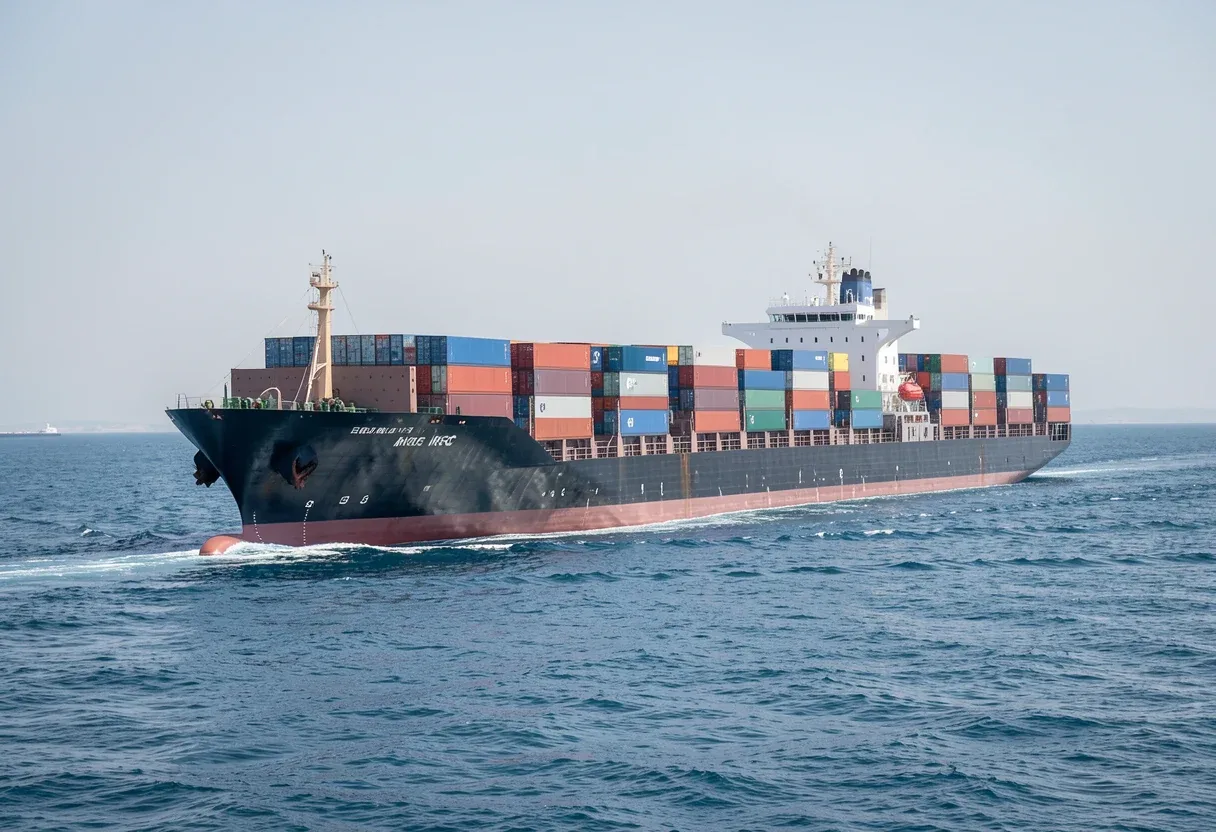
Container ship sank in the Strait of Hormuz, IRGC Navy confirms via Tasnim. No name, operator or cause disclosed. The 21-mile chokepoint moves about a fifth of global oil and Asia-Europe feeder cargo.
- Desk
- Ocean Freight
- By
- Elena Vasquez
- Filed
- Length
- 559 words
- Read
- 3 min
Key points05
- A container ship sank in the Strait of Hormuz per IRGC Navy reporting carried by Iran's Tasnim News Agency
- The 21-mile-wide strait carries roughly 21% of global petroleum liquids and about 30% of seaborne crude, per the U.S. Energy Information Administration
- No vessel name, operator, flag state, crew count or cargo detail had been published at the time of writing
- War-risk premium adjustments on Hormuz transits typically add several hundred dollars per container
- Rerouting Asia-Europe services via the Cape of Good Hope adds 10 to 14 days per round trip
A container ship sank in the Strait of Hormuz, the Islamic Revolutionary Guard Corps Navy confirmed through Iran's Tasnim News Agency. No vessel name, operator, flag state, crew count or cargo detail had emerged at the time of writing, leaving shippers, carriers and underwriters without a starting point to size the exposure.
The 21-mile-wide channel between Iran and Oman funnels roughly 21% of global petroleum liquids and about 30% of seaborne crude oil every day, according to the U.S. Energy Information Administration. On the container side, the same waterway carries feeder boxes bound for Jebel Ali in Dubai and Dammam in Saudi Arabia, the two Gulf hubs that anchor liner services between Asia and Europe.
What the IRGC Navy is reporting
Tasnim, an Iranian state-affiliated outlet, named the IRGC Navy as the source of the sinking confirmation and pointed to a position inside the central traffic separation scheme that channels commercial traffic through Iranian and Omani waters. The agency gave no cause — no attack, mechanical failure, collision or weather event. AIS gaps visible on commercial tracking platforms will eventually identify the vessel; until then, no operator or charterer can be tied to the casualty publicly.
How a single sinking ripples through freight markets
A single-ship casualty rarely moves container spot rates on its own. The reaction comes through insurance. War-risk underwriters at Lloyd's typically respond by raising area premiums, a move that can add several hundred dollars per container or per transit on a single invoice. Carriers, in turn, weigh whether to reroute Asia-Europe services via the Cape of Good Hope — a detour that adds 10 to 14 days per round trip and consumes bunker fuel at a higher daily burn rate.
For forwarders, the immediate task is checking whether any booked boxes sat on the affected vessel. For oil traders, Hormuz incidents historically lift front-month Brent on the same trading session, though the response depends on whether traffic is blocked or only a single ship is affected.
What's still unconfirmed
Several operational details remained unresolved:
- The vessel's name, IMO number and flag state
- The line that operated or chartered the ship
- The TEU capacity and the cargo on the manifest
- The number of crew and any rescue or casualty figures
- Whether the IRGC Navy participated in the recovery or only reported the sinking
Until the operator publishes a statement, exposure on board cannot be estimated.
Carriers with skin in the strait
Maersk, MSC, CMA CGM, Hapag-Lloyd, ONE, Evergreen and HMM all deploy tonnage on services that call Jebel Ali or Dammam. Each rotation typically carries between 8,000 and 24,000 TEU of capacity, and a single casualty inside Hormuz removes a percentage of that capacity for the affected sailing window. For shippers with Gulf-bound cargo, the more pressing question is whether insurers issue a routing advisory out of Bahrain or Fujairah in the next 24 hours.
What to watch next
The IRGC Navy typically publishes follow-up detail through Tasnim within a day of a maritime incident. The London market will be the next signal: any premium adjustment, additional war-risk declaration or formal routing advisory will set the commercial tone for the rest of the week and feed directly into the spot quotes shippers will see on the next Asia-Europe tender.
Source: Google News: container shipping
More from Elena Vasquez
Show full bio
News editor covering people, launches and day-to-day practice in Ocean and air freight, container shipping at Waybill Wire.
481 articles
Related05
Container ship sinks in Strait of Hormuz as Iran widens attacks
Container ship sinks near Strait of Hormuz, details pending
Container ship sunk in Hormuz after naval mine strike: IRGC
Container ship sinks in Strait of Hormuz, Iran says
2,500-TEU Boxship Sinks in Strait of Hormuz Mine Strike, IRGC Claims