WW/PORTSTERMI
Congestion at Deendayal Port Triggers Rice-Loading Plan
Congestion at Deendayal Port has prompted a rice-loading plan and a waterfront expansion proposal, as Kandla's cargo demand outruns its berths.
- By
- Amara Osei
- Filed
- Length
- 490 words
- Read
- 2 min
Key points04
- Congestion at Deendayal Port (Kandla, India) prompted a dedicated rice-loading plan.
- A waterfront expansion proposal has been put forward in response to the bottleneck.
- The port is a major western-coast gateway for agricultural commodities including rice.
- The expansion remains at proposal stage; the loading plan is the near-term operational fix.
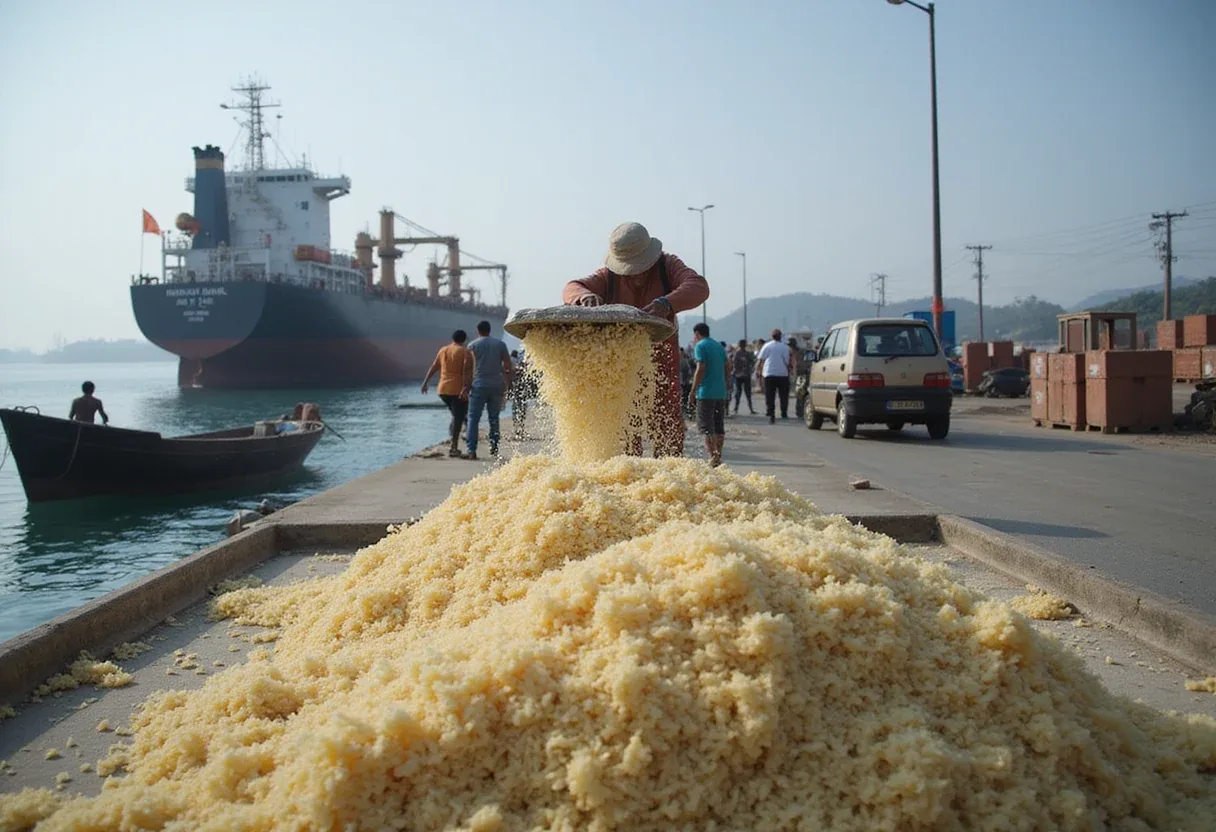
Congestion at Deendayal Port has pushed authorities toward a rice-loading plan and a proposal to expand the waterfront, according to Maritime Gateway. That pairing tells you most of what you need to know: the short-term fix is operational, and the long-term fix is concrete and capital.
Deendayal Port, on India's western coast at Kandla in Gujarat, is one of the country's major public ports and a significant gateway for agricultural commodities, rice among them. When berth queues build there, the pain travels fast. Grain exporters face waiting time, demurrage exposure and rolling shipment windows. Vessel operators lose schedule integrity. Forwarders get the unenviable job of explaining both to shippers.
The reported response comes in two parts. First, a rice-loading plan — a procedural workaround intended to keep grain moving through the congested port rather than stalled behind it. Second, a waterfront expansion proposal, which signals that planners see the current constraint as structural rather than seasonal.
What does this change for shippers?
In the near term, a dedicated rice-loading arrangement at a choked port is mostly good news for agri exporters. It creates a predictable channel for a commodity that cannot wait indefinitely — rice is a perishable-cargo-adjacent business in commercial terms, with contract windows and letter-of-credit deadlines that punish delay.
For carriers and vessel operators, any measure that smoothes cargo flow reduces anchorage time. That matters directly to voyage economics. A ship waiting on the hook burns money; a ship loading earns it.
For forwarders, the practical question is simpler: can they promise dates out of Kandla with confidence? A loading plan helps. A waterfront expansion, when and if it's sanctioned and built, helps much more — but that's a multi-year proposition, not this quarter's fix.
The expansion question
Indian major ports have been under sustained pressure to add capacity as cargo volumes grow, and Deendayal has historically ranked among the busiest by tonnage handled. A waterfront expansion proposal fits that trajectory. It also fits a familiar pattern: capacity decisions made after congestion becomes visible are always late. Ports, like highways, get widened after the traffic, not before it.
The proposal's stage isn't detailed in the reporting — "proposal" is the operative word, and Indian port infrastructure projects pass through tariff, environmental and administrative gates before steel goes in the water. Shippers should treat the expansion as direction, not delivery.
The verdict
Two things are true at once. The rice-loading plan is a pragmatic, immediately useful response to a real bottleneck. And the fact that it's needed at all is evidence that demand at Deendayal has outrun its infrastructure.
Watch for sanctioning progress on the waterfront proposal and for whether the loading plan actually clears the queue. If congestion eases without the expansion being approved, expect the proposal to quietly age on a shelf. If it doesn't ease, the expansion stops being optional.
Source: Google News: port congestion
More from Amara Osei
Show full bio
Staff writer covering regulation, policy and their impact on Ocean and air freight, container shipping at Waybill Wire.
518 articles