WW/PORTSTERMI
Container port congestion eases after initial Iran shock
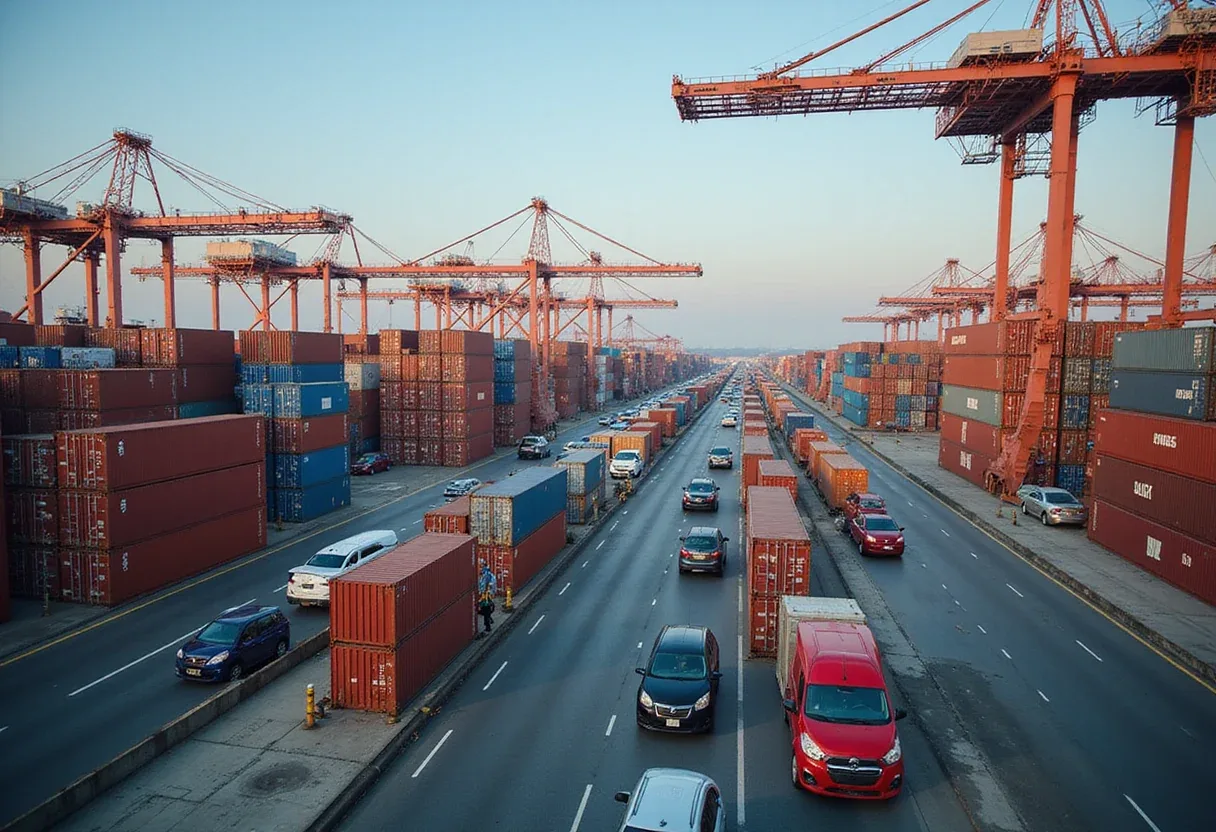
Container port congestion is easing after the initial shock from the Iran escalation, Seatrade Maritime News reports, as held vessels resume schedules and bunched arrivals drain through the system.
- By
- Tom Whitfield
- Filed
- Length
- 752 words
- Read
- 4 min
Key points05
- Container port congestion has eased following the initial shock from the Iran escalation, Seatrade Maritime News reports.
- The spike was driven by vessels holding back and bunched arrivals as operators reacted to the security risk.
- Congestion is now draining as carriers release tonnage and resume published schedules.
- Schedule reliability typically lags the congestion data by several sailing cycles.
- The easing is conditional: the underlying Iran situation remains unresolved and could re-trigger queues.
Container port congestion has eased, according to Seatrade Maritime News, after an initial spike triggered by the shock escalation surrounding Iran. That is the headline fact, and for anyone routing boxes through the region it matters more than the diplomatic noise around it. The queues grew fast. They have now come back down.
What actually happened is simple mechanics, not mystery. When the Iran situation flared, carriers and shippers reacted the way they always do: vessels held back, schedules slipped, and cargo that would normally flow evenly arrived in lumps. Ports absorbed those lumps unevenly. Some berths jammed. Waiting times climbed. Then, as the immediate threat perception faded and operations steadied, the backlog worked itself through the system and congestion eased.
Why congestion spikes and then drains
Think of a port as a funnel. Normal operations keep the flow matched to the neck of that funnel. A geopolitical shock widens the pour — delayed arrivals bunch together, diversion adds steaming time, and uncertainty makes operators hold vessels outside rather than commit to a berth window. The funnel backs up. That is the congestion spike.
The drain is less dramatic but just as mechanical. Once carriers judge the risk has stabilised, they release held tonnage, resume published schedules, and the bunched arrivals spread back out. Congestion figures fall. That appears to be what Seatrade Maritime News is now reporting across container ports after the initial Iran shock.
The pattern is familiar to anyone who watched the Red Sea crisis play out. Shock, spike, partial normalisation — then a new baseline that is often slightly worse than the old one, because operators keep some buffer in the system.
What does this change for shippers?
The practical question is what a shippers' decision desk should do differently this week compared with last week. Three things stand out.
- Don't over-order buffer stock. The congestion that justified expedited routings and safety inventory two weeks ago is easing. Paying premium freight into a decongesting network is money burned.
- Expect schedule integrity to lag the congestion data. Berth queues clear before proforma schedules fully recover. Vessel reliability typically trails the headline congestion number by several sailing cycles.
- Watch the Gulf-adjacent trades specifically. An easing trend at ports broadly does not guarantee uniform conditions at every terminal tied to Iran-exposed routes. Check with your carrier and terminal operator at the specific call, not the aggregate picture.
Forwarders sit in the middle of this. Their margins live in the gap between panic pricing and rational pricing, and that gap is narrowing again as congestion eases. Shippers who locked in surcharge-laden bookings during the spike may find their forwarders already quoting softer numbers for the same lanes. Renegotiate. The leverage has shifted back, somewhat.
Carriers got a reminder, not a rerating
For carriers, the episode is a reminder that capacity discipline and geopolitical hedging are now permanently entangled. The initial Iran shock produced a burst of congestion that, in previous cycles, would have supported spot rate bumps on affected lanes. An easing trend caps how long any such bump lasts. Carriers that pushed risk surcharges will face shipper pushback as the congestion data improves.
The mechanism cuts both ways, and quickly. Congestion is one of the few levers that genuinely tightens effective supply — idled tonnage waiting at anchor is tonnage not earning revenue elsewhere but also tonnage not adding to available capacity. When the queues shrink, that phantom scarcity disappears and rates tend to follow it down unless underlying demand holds them up.
The tail risk hasn't left
One easing report is not a clean bill of health. The underlying condition that produced the shock — the Iran situation itself — has not been resolved by calmer waters at container terminals. Congestion is a symptom. The cause remains in place, which means the recovery now under way is conditional rather than structural.
Shippers and carriers planning beyond the next few weeks should price in the possibility of a repeat. Networks that eased once can jam again if the security picture deteriorates. The sensible posture is a middle one: normal operations, normal bookings, but contingency routings mapped and ready rather than discovered in a hurry.
For now, the data says the funnel is running. Seatrade Maritime News reports container port congestion easing after the initial shock, and if the security situation holds, operators can expect the improvement to continue through coming sailing cycles — with the caveat that any renewed escalation near the Strait of Hormuz would put the queues right back.
Source: Google News: port congestion
More from Tom Whitfield
Show full bio
Market editor covering companies, deals and strategy in Ocean and air freight, container shipping at Waybill Wire.
500 articles
Related05
War in Iran Reshapes Gulf Containership Schedules and Rates
Iran Conflict Sends Ocean Freight Rates Higher on Fuel Cost Spike
Middle East Ocean Freight Rates Soar as Iran Conflict Rattles Hormuz
Marsh warns port congestion is now driven by politics, not just weather
Global Port Congestion Passes Pandemic-Era Peak in "Perfect Storm"