WW/WAREHOUSIN
CEVA, Zalando put AI dual-arm robots live on fashion returns
Dual-arm AI robots are live at CEVA sites in Greven and Świebodzin, handling Zalando fashion returns — the first phase of a European rollout under a Robotics-as-a-Service model.
- By
- Tom Whitfield
- Filed
- Length
- 599 words
- Read
- 3 min
Key points05
- Dual-arm AI robots are operational at CEVA sites in Greven, Germany, and Świebodzin, Poland
- Robots run Sereact's Cortex Physical AI platform and handle items they have never seen before, without SKU-specific training
- Deployment uses a Robotics-as-a-Service model rather than equipment ownership
- Zalando joined Sereact's Series B funding round as a strategic investor in July 2026
- Robot counts and productivity figures have not been disclosed; European expansion is planned
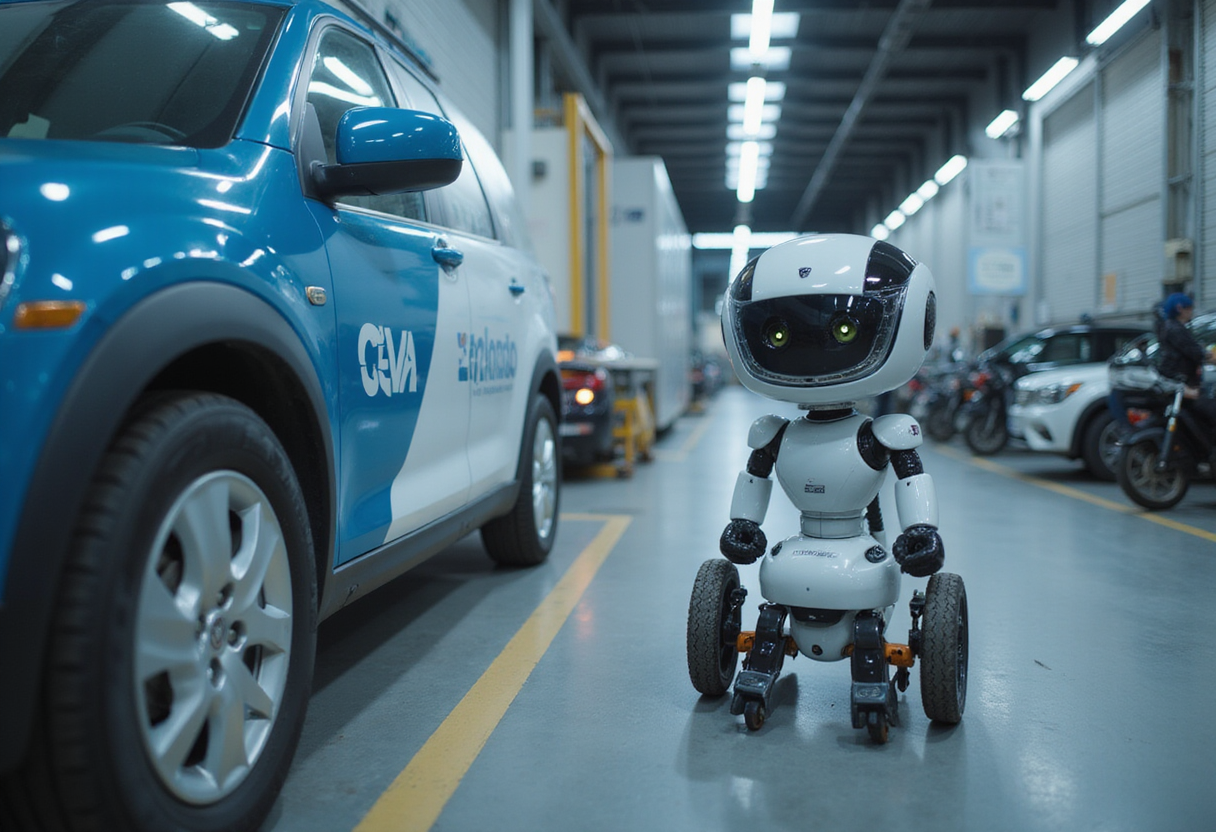
Dual-arm robots running Sereact's Physical AI platform are now live in CEVA Logistics facilities in Greven, Germany, and Świebodzin, Poland, sorting returned fashion items for Zalando — the first operational phase of a partnership the three companies plan to extend across Europe.
The deployment attacks one of the costliest corners of e-commerce fulfilment. Returns processing combines unpredictable volumes, manual quality checks, seasonality and value decay into what CEVA calls a disproportionately high cost per unit.
"One of the toughest challenges is returns handling, due to its extreme operational nature and scale, unpredictable volumes, manual quality checks, seasonality, value decay, and a disproportionately high cost per unit," said Chris Walton, SVP Contract Logistics at CEVA Logistics.
What makes these robots different?
The systems run on Cortex, Sereact's Physical AI platform. Unlike conventional robotic cells, the machines can identify and grasp items they have never seen before. They need no per-product training and no fixed stock-keeping unit profiles.
That capability matters because fashion returns arrive in wildly varying conditions — irregular packaging, unpredictable handling requirements, no standardised presentation. Traditional automation struggles to process such items without human intervention, which is why returns floors have remained heavily manual even as outbound e-commerce sorting has automated.
The robots are designed to cut repetitive manual tasks rather than replace headcount outright. CEVA positions warehouse staff for more specialised work: quality control, station supervision, and handling exceptions that require human judgement.
Why Robotics-as-a-Service?
CEVA is deploying the machines through a Robotics-as-a-Service (RaaS) model, buying robotic capability as a service instead of owning the equipment outright. For a 3PL running seasonal, volatile returns flows, that shifts capex into an operational cost line that can scale with volume — a commercially significant choice given how sharply returns throughput swings around peak trading and post-Christmas periods.
The commercial logic cuts three ways:
- CEVA gains an automation answer to a loss-prone contract logistics segment and a template it can replicate across other e-commerce clients.
- Zalando gets faster, cheaper returns processing, which shortens the window between a returned item re-entering stock and reselling at full value — critical in fashion, where value decays quickly.
- Sereact converts its AI manipulation technology from demonstration to live, paying warehouse operations, with a strategic customer-investor behind it.
The capital relationship runs deeper than a vendor contract. In July 2026, Zalando joined Sereact's Series B funding round as a strategic investor, aligning the retailer financially with the robotics vendor whose platform now runs in its returns chain.
Can returns automation scale across Europe?
Sereact argues that handling unfamiliar products is the gating capability for automating returns at all. "Returns are the hardest manipulation problem in fashion logistics. If a system only works on articles it has seen before, it does not work in a returns operation at all," said Dr. Ralf Gulde, CEO and Co-Founder of Sereact.
The companies have not disclosed robot counts or specific productivity gains from the initial sites, so hard ROI figures remain unavailable. But the launch moves Physical AI from pilot demonstrations into production warehouse operations — a threshold many warehouse robotics ventures have failed to cross.
The three partners are now working to expand the technology across their shared European logistics network, signalling that Greven and Świebodzin are reference sites rather than endpoints.
For shippers and forwarders watching from the sidelines, the deployment signals where contract logistics margins are heading: 3PLs that automate high-cost, high-variability flows like returns will price more aggressively for e-commerce business than those still staffing them manually.
Source: Container News
More from Tom Whitfield
Show full bio
Market editor covering consumer brands and retail at Waybill Wire.
239 articles
Related05
AI robots go live on fashion returns at CEVA sites in Germany, Poland
Logistics Robots Hit 117,500 Units as Sector Takes 47% of Sales
Maersk takes over Puma's 2.3m sq ft US DCs, opens them to third parties
Kesko bets on automation for Finnish foodservice distribution hub
AI reshaping logistics, but people remain central