WW/WAREHOUSIN
CEVA deploys robotic returns system at Zalando sites in Germany and Poland
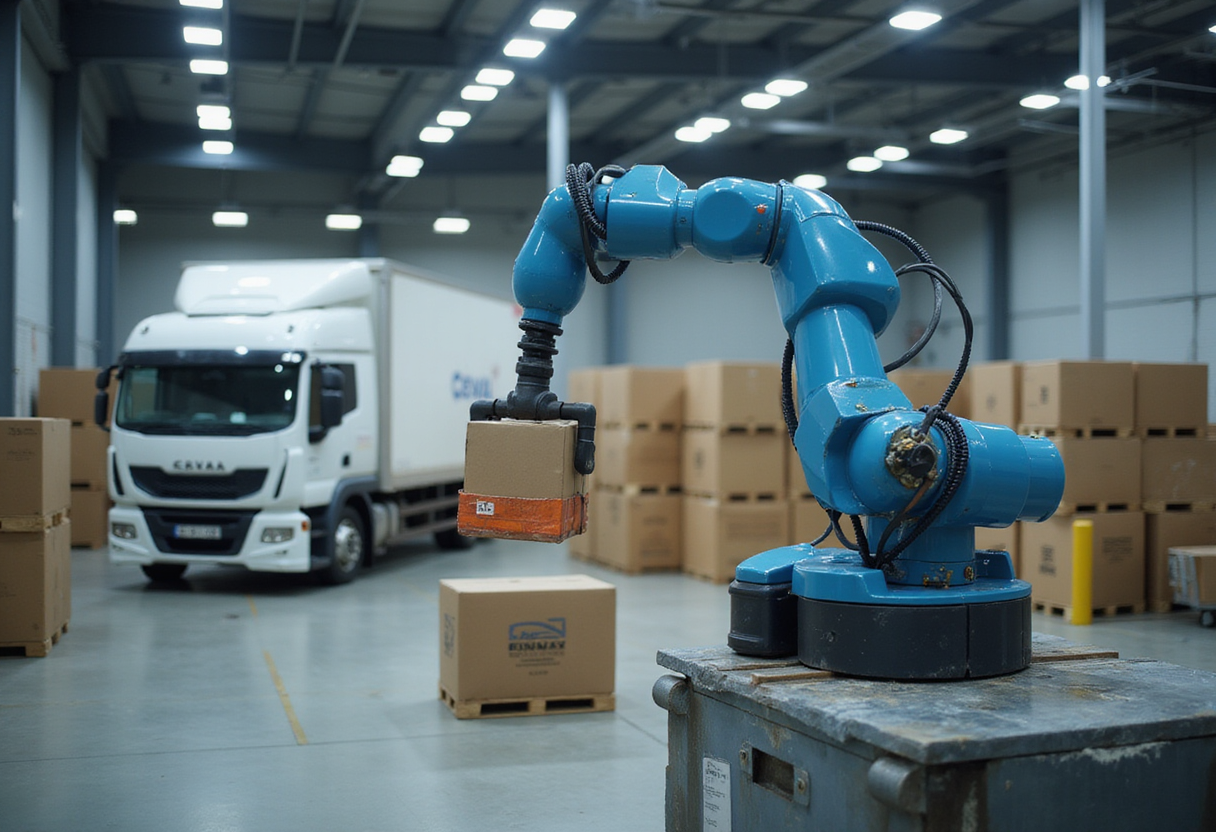
CEVA Logistics deployed dual-arm robotic systems running Sereact's Cortex physical AI platform at Zalando returns facilities in Greven, Germany, and Świebodzin, Poland, in a European e-commerce first.
- By
- James Calloway
- Filed
- Length
- 556 words
- Read
- 3 min
Key points05
- CEVA deployed dual-arm robots running Sereact's Cortex physical AI at Zalando returns sites in Greven, Germany, and Świebodzin, Poland.
- Zalando joined Sereact's $116 million Series B round as a strategic investor in July, with the CEVA deployment as the first operational milestone from that investment.
- Robots operate under a Robotics-as-a-Service model that shifts capex off CEVA's balance sheet.
- Chris Walton, SVP Contract Logistics at CEVA, called returns handling 'one of the toughest challenges' in fashion e-commerce logistics.
- CEVA has signaled broader European roll-out but has not disclosed additional sites, timetable, throughput, or unit-cost targets.
CEVA Logistics has deployed dual-arm robotic systems running Sereact's "Cortex" physical AI platform at Zalando returns facilities in Greven, Germany, and Świebodzin, Poland — the first live operations of AI-driven returns automation at this scale in European e-commerce logistics.
The rollout places CEVA among the first major third-party logistics providers to operate autonomous dual-arm robots in a live fashion-returns environment, a category long considered the hardest test case for warehouse automation.
What's actually running on the warehouse floor?
The robots autonomously grasp, identify, and sort fashion items returned by Zalando customers without per-item training or pre-loaded SKU profiles. CEVA says they handle varied apparel states — wrinkled, compressed, or partially packaged — that defeat conventional robotic programming built around fixed product dimensions and barcode-driven workflows.
The Cortex platform comes from Stuttgart-based Sereact, a robotics vendor focused on physical AI for unstructured warehouse tasks.
Why is fashion returns so hard to automate?
Returns in fashion e-commerce arrive in unpredictable volumes, packed inconsistently, and deteriorate in resale value the longer they sit. Quality checks still rely heavily on human judgment for stain assessment, fabric integrity, and completeness.
"One of the toughest challenges is returns handling, due to its extreme operational nature and scale, unpredictable volumes, manual quality checks, seasonality, value decay, and a disproportionately high cost per unit," Chris Walton, SVP Contract Logistics at CEVA Logistics, said in a release.
Where is the system live?
Two facilities handle Zalando inventory under the new system:
- Greven, Germany
- Świebodzin, Poland
CEVA and Sereact describe the deployment as the opening phase of a broader European returns-automation roll-out.
What's the commercial model?
The robots run under a Robotics-as-a-Service (RaaS) agreement that shifts capital expenditure off CEVA's balance sheet and onto a per-unit operating cost. CEVA says warehouse staff move from manual sorting toward station supervision, exception handling, and quality control.
"Our Robotics-as-a-Service model classifies items faster, reduces manual touchpoints, and delivers consistent, predictable quality on a large scale. For our customers, this transforms returns from a cost driver into a controlled, high-performance service," Walton said.
How deep is the Zalando-Sereact link?
Zalando joined Sereact's $116 million Series B financing round as a strategic investor in July. The CEVA deployment is the first operational milestone tied to that investment, according to both companies.
That vertical alignment of investor, retailer, 3PL, and technology vendor sets a template other fashion e-commerce operators may try to replicate.
What shippers and forwarders should watch
CEVA has not disclosed additional sites, a roll-out timetable, throughput per cell, or cost-per-return benchmarks. Indicators to track in the coming quarters:
- Items processed per robotic cell per hour against manual sort rates
- Mis-sort or defect rates measured against traditional handling
- Whether RaaS pricing undercuts fully loaded labor cost during peak January and late-summer returns windows
- Expansion beyond Zalando to other CEVA contract logistics accounts in fashion, beauty, or consumer electronics
The wider question for contract logistics buyers is whether physical-AI returns cells compress unit economics enough to make automation standard in mid-tier fulfillment, not just flagship accounts.
The trajectory now hinges on demonstrated throughput, achieved unit-cost reduction, and whether CEVA extends the system to customers beyond Zalando in 2026.
Original: cevalogistics.com
More from James Calloway
Show full bio
Correspondent covering consumer brands and retail at Waybill Wire.
272 articles
Related05
AI robots go live on fashion returns at CEVA sites in Germany, Poland
CEVA, Zalando put AI dual-arm robots live on fashion returns
Logistics Robots Hit 117,500 Units as Sector Takes 47% of Sales
AI reshaping logistics, but people remain central
Maersk takes over Puma's 2.3m sq ft US DCs, opens them to third parties