WW/WAREHOUSIN
ASICS finds misplaced inventory nearly 60% faster with drones
ASICS says autonomous drones at its Byhalia, Mississippi, distribution center find misplaced goods nearly 60% faster, save 200 labor hours monthly and support full-price sales.
- By
- Amara Osei
- Filed
- Length
- 698 words
- Read
- 3 min
Key points05
- ASICS reports nearly 60% faster recovery of misplaced products at its Byhalia, Mississippi, distribution center.
- Drone counting raises inventory-counting frequency sixfold from the former twice-yearly baseline.
- The system saves about 200 counting-labor hours per month and supports monthly reconciliation.
- One three-month period produced discoveries of 26 misplaced cases containing more than 200 pairs of shoes.
- The Byhalia facility holds close to 3 million units across roughly 44,000 stock-keeping units.
By Amara Osei
ASICS is recovering misplaced products nearly 60% faster at its Byhalia, Mississippi, distribution center after nightly autonomous-drone flights began in two high-risk storage areas. The program has shifted inventory control from a twice-yearly physical-count cycle to a monthly operating rhythm.
The sportswear company now counts at six times its former frequency, under a policy that previously relied on two physical counts a year. Corvus Robotics supplies the drones, while ASICS manages the records through a Manhattan Associates warehouse management system.
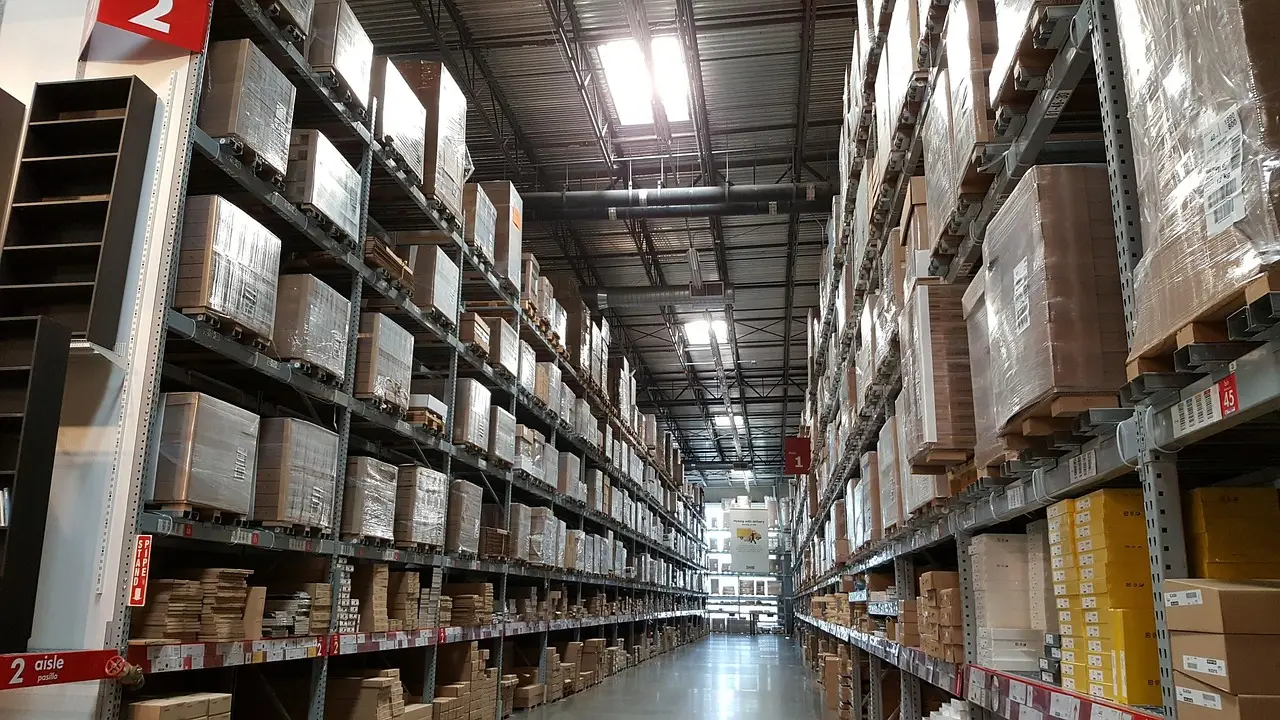
For a facility holding close to 3 million units, that cadence matters. The site stores 2.3 million pairs of footwear and 700,000 pieces of apparel and accessories across roughly 44,000 stock-keeping units, serving e-commerce, wholesale, full-price stores and outlets.
What does this change for ASICS?
It changes ASICS's inventory control from a twice-yearly check to monthly reconciliation. Nightly drone data is aggregated and analyzed monthly, helping orders ship on time and at full price, the companies said Tuesday.
The drones concentrate on the singles area, where returned and single-pair products are stored and picked, and on case reserve. Both zones previously fell under a twice-yearly cycle-count policy, despite their greater exposure to discrepancies.
In one three-month stretch, the drones surfaced 26 misplaced cases containing more than 200 pairs of shoes. Without the scans, those units could have remained unavailable to customers until the next scheduled physical count.
Kyle Koestler, senior director of distribution and transportation at ASICS America Corp., said: “If a unit went missing, we might not find it for six months. That could be the last pair in the building for an order we’ve already taken, and then the customer gets a cancellation.”
He added: “With Corvus One, we’re cycle counting on a monthly basis so we can surface any errors sooner and ensure customer orders are delivered on time.” For ASICS, the commercial gain is fewer cancellations and less time spent waiting for the next physical sweep.
The system saves about 200 hours of counting labor each month. ASICS redirects that time into inventory research and exception management, including reconciliation in the packing operation, root-cause research and special projects for the wholesale business.
The operating routine is compact but demanding. ASICS schedules seven flights each night, starting around 7 p.m., through aisles less than six feet wide.
The Corvus One uses onboard computer vision and spatial reasoning and needs no additional infrastructure inside the building. Each morning, an inventory associate reviews every flight and resolves most discrepancies from a desk using video and images captured at every location.
Each flight does two jobs in the same pass: the drone reads every Universal Product Code and counts the boxes at each location. In the singles area, returns can place the same SKU several times in one location, so a UPC scan alone may attach to the wrong box.
Physical counting gives ASICS a check on those scans. If the drone counts 10 boxes, it should produce 10 UPC reads, according to Corvus, which turns the visual inventory into a defensible count.
Accuracy also carries a price tag. ASICS publishes availability feeds to online marketplaces, and before the drone program its team withheld 12 to 15 units from every 100 to protect promised deliveries.
Product at the bottom of the lot did not appear on those marketplace feeds, leaving ASICS to liquidate the goods at a steep discount. With nightly visibility, the company now publishes the full feed and sells that product at full price, according to the announcement.
ASICS also reports lower energy use because employees operate lift equipment through the aisles less often. The arithmetic is simple: fewer physical checks mean fewer powered passes through the stock lanes.
Corvus is based in Mountain View, California. Gather AI and Verity also offer warehouse inventory drones, giving buyers more than one route into the same counting task.
The technology earns its keep in inventory accuracy. Going forward, ASICS's monthly-count policy sets the benchmark: fewer withheld units, faster recovery and fewer cancellations as the Byhalia team puts the reclaimed 200 hours to work.
Source: FreightWaves
More from Amara Osei
Show full bio
Staff writer covering regulation, policy and their impact on Ocean and air freight, container shipping at Waybill Wire.
950 articles
Related05
Asics recovers misplaced stock 60% faster with warehouse drones
Stord Buys AMS Fulfillment in Nine-Figure Deal, Its Largest Yet
GXO Scales Agility Humanoids to Two More DCs After 100,000-Tote Trial
AI robots go live on fashion returns at CEVA sites in Germany, Poland
Stord buys AMS Fulfillment in 12th acquisition after $400M credit line