WW/AIRCARGO
Alaska Airlines to retire 737-700 fleet by next year
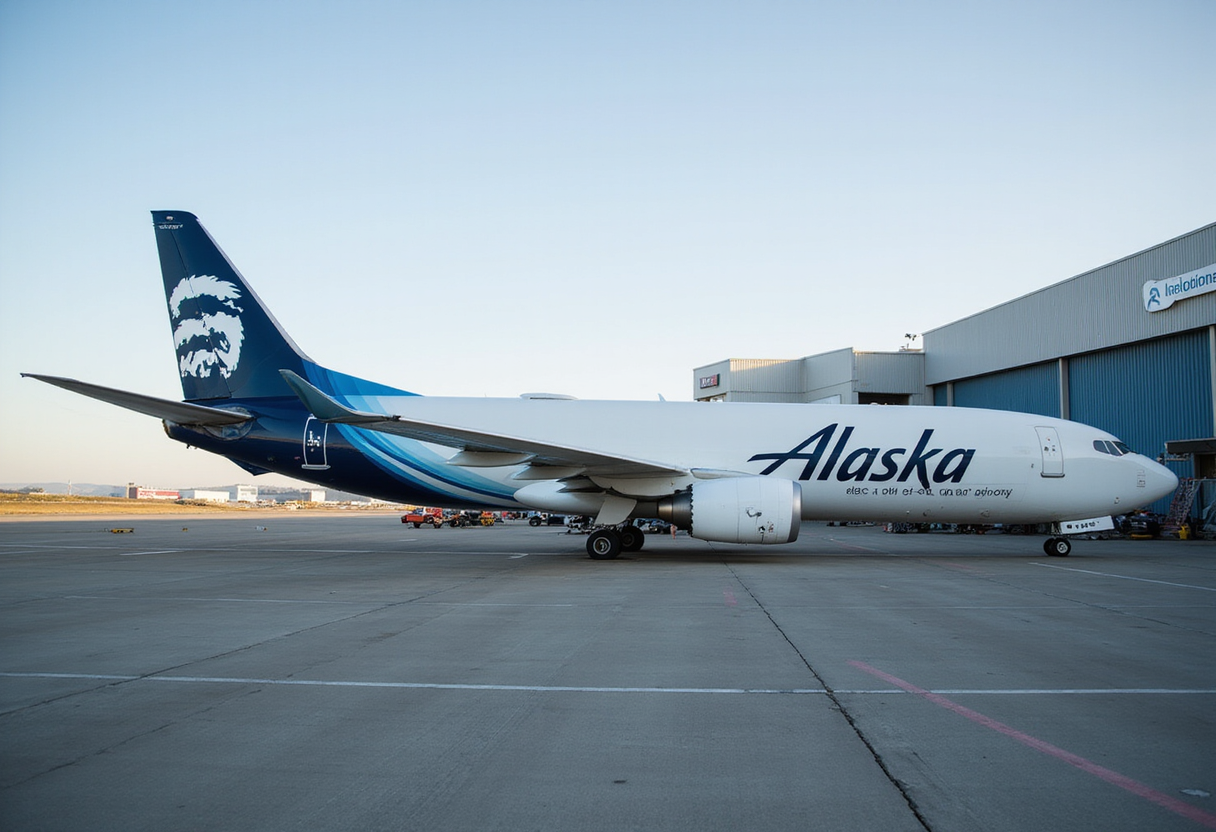
Alaska Airlines will retire its Boeing 737-700 fleet by next year, opening additional bellyhold cargo capacity on its domestic passenger network as newer 737-800s and 737 MAX airframes take over existing sectors.
- Desk
- Air Cargo
- By
- James Calloway
- Filed
- Length
- 517 words
- Read
- 3 min
Key points05
- Alaska Airlines will retire its Boeing 737-700 fleet by next year.
- The 737-700 is the shortest variant in the 737 Next Generation family, with the smallest lower-hold volume.
- Each retiring 737-700 will be replaced by a 737-800 or a newly delivered 737 MAX on the same sector, with no net aircraft change.
- The phase-out follows Alaska's earlier retirement of its MD-80 fleet.
- Cargo impact will concentrate at Alaska's Seattle hub and across its intra-Alaska network.
Alaska Airlines will retire its Boeing 737-700 fleet by next year, a transition that will release additional cargo capacity across the carrier's domestic passenger network, according to aviation outlet Simple Flying.
The retirement closes out the oldest narrowbody type in Alaska's 737 lineup. The 737-700, the shortest member of the 737 Next Generation family, has long served the Seattle-based carrier's lower-density routes, where its modest under-floor volume has constrained freight payloads on intra-state and Pacific Northwest operations.
For Alaska Airlines Cargo, the move reshapes the per-flight volumetric ceiling available to shippers. The airline is not adding net aircraft to its schedule. Instead, each retiring 737-700 gives way to a larger 737-800 or a newly delivered 737 MAX airframe on the same sector, raising usable lower-hold space on every flight already operating.
What changes for cargo customers?
Bellyhold capacity on a passenger narrowbody hinges on lower-hold geometry, cargo door dimensions and the operator's container policy. Replacing the 737-700 with newer 737 variants opens a wider cargo envelope, taller holds and updated loading systems that translate into higher per-flight revenue potential for the cargo division.
Forwarders and shippers will see incremental gains in reliable uplift on existing slot times rather than new city-pair launches. E-commerce parcels, mail consolidations and time-sensitive general cargo moving across the airline's West Coast and transcontinental lanes will benefit first as the older frames exit service.
How does this fit Alaska's wider fleet plan?
Alaska has been working toward a single-type 737 fleet for several years, completing the retirement of its MD-80s earlier in the decade and steadily drawing down the smallest 737NG variants. The 737-700 phase-out continues that consolidation, simplifying pilot training, parts inventory and route planning.
The retirement also aligns with the carrier's continued intake of 737 MAX deliveries, allowing it to slot incoming airframes against the -700s leaving the schedule without trimming overall capacity. For shippers, that means volumetric allowances on Alaska Cargo will climb gradually through the next twelve months as each replacement enters revenue service.
What does it mean for the U.S. air cargo market?
The decision tracks a wider U.S. airline trend of retiring the oldest, smallest narrowbodies in favor of 737 MAX and A320neo-family equipment — types that typically offer higher per-flight cargo allowances alongside their fuel-burn advantage.
For Alaska specifically, the cargo impact will concentrate at its Seattle hub and across the intra-Alaska network, where the airline operates many of the only scheduled commercial lift options for freight. Time-definite service into smaller Alaskan communities will see the most material volumetric upgrades once the older frames clear out.
Shippers using Alaska bellyhold allocations on dense lanes should expect to negotiate against a slightly improved capacity profile, while forwarders running annual e-commerce contracts should monitor slot availability through the transition. The retirement should complete by next year, with cargo customers seeing the full uplift effect across the carrier's domestic schedule over the following quarters.
Source: Google News: air cargo
More from James Calloway
Show full bio
Correspondent covering consumer brands and retail at Waybill Wire.
295 articles
Related05
Alaska Airlines doubles freighter fleet to four 737-700Fs
My Freighter expands fleet with another Boeing 767 freighter
Flydubai Cargo takes first freighters as belly capacity runs short
Alaska Air targets $750m cargo revenue by 2030
Hawaii Carriers Add Cargo Capacity as Air Merger Network Hits 115 Destinations