WW/OCEANFREIG
World's First Ammonia Bunkering Vessel Delivers 1,000 Tonnes in China
Shenghang Yongle, the world's first dedicated ammonia bunkering vessel, has delivered 1,000 tonnes of green ammonia to CMB.Tech's ammonia-powered Newcastlemax at Zhoushan.
- Desk
- Ocean Freight
- By
- Tom Whitfield
- Filed
- Length
- 552 words
- Read
- 3 min
Key points04
- Shenghang Yongle delivered a 1,000-tonne green ammonia stem at Zhoushan anchorage, China
- Recipient Mineral Europa is a 210,000 dwt Newcastlemax, the world's first ammonia-powered bulker
- Trial bunkering at Port Hedland, Australia, completed in two hours with CMB.Tech, Pilbara Ports and Fortescue
- The bunkering vessel was converted from an FKAB-designed LGC, with cargo-handling work by Gloryholder
A 1,000-tonne green ammonia bunker stem has been delivered ship-to-ship in China by what is understood to be the world's first dedicated ammonia bunkering vessel — a first that moves green ammonia from boardroom slide to bunker hose.
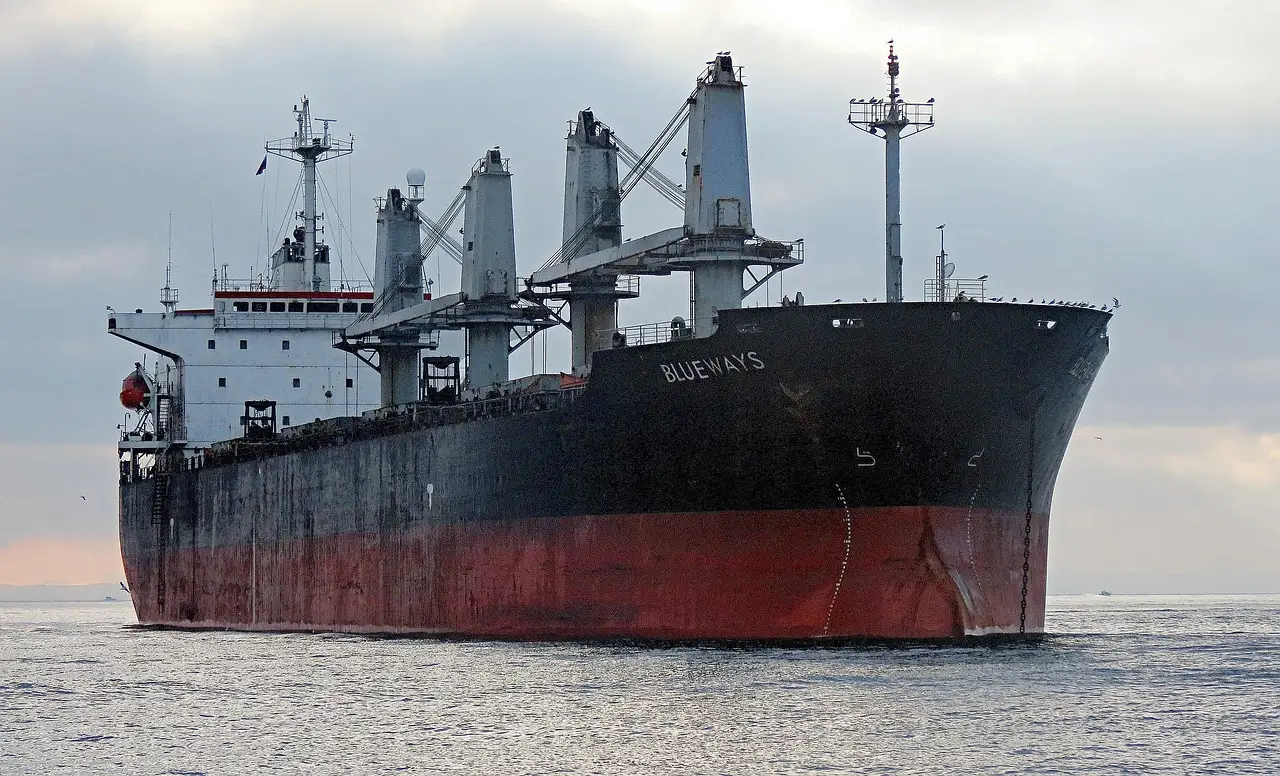
The bunker vessel Shenghang Yongle transferred the fuel to the Newcastlemax bulk carrier Mineral Europa, owned by CMB.Tech, at the Zhoushan anchorage in Zhejiang Province. Jiangsu Andefu Energy Development carried out the operation. The 210,000 dwt bulker is itself a pioneer: the world's first ammonia-powered bulk carrier, running a WinGD dual-fuel main engine.
That pairing matters. A ship that burns ammonia and a vessel built to supply it, working in the same anchorage, is the full fuel chain in one frame.
How the bunkering vessel came to be
The Shenghang Yongle did not start life as a bunkering ship. Swedish consultancy FKAB Ship Design originally drew her as a flexible semi-refrigerated, semi-pressurised liquefied gas carrier. She was later selected for conversion into an ammonia bunkering vessel, with FKAB working alongside cargo-handling specialist Gloryholder on the project.
So the hardware exists, it floats, and it has now completed a commercial-scale transfer. That is the mechanism shippers and carriers have been waiting to see proven.
What happened at Port Hedland?
The Chinese operation was not the only milestone. Last week, Mineral Europa — also referred to in the source as Mineral Europe — received trial green ammonia bunkering at Port Hedland in Australia, where she loaded an iron ore cargo bound for China.
That transfer took two hours. It required close cooperation between CMB.Tech, Pilbara Ports and iron ore giant Fortescue.
Two hours for a trial stem at one of the world's largest bulk export ports is a number worth holding onto. Bunkering speed determines berth windows, anchorage scheduling and, ultimately, whether alternative fuels fit real operating patterns rather than demonstration itineraries.
What does this change for carriers?
Green ammonia has carried a chicken-and-egg problem: owners hesitated to order ammonia-fuelled tonnage without bunkering infrastructure, and infrastructure investors hesitated without demand. This pairing starts to break the loop.
Mineral Europa demonstrates the demand side — a 210,000 dwt Newcastlemax with a dual-fuel main engine carrying iron ore on a real trade lane between Australia and China. Shenghang Yongle demonstrates the supply side — a dedicated bunkering vessel, converted by FKAB and Gloryholder, delivering a 1,000-tonne stem at a major Chinese anchorage.
Add the Port Hedland trial, with Fortescue and Pilbara Ports at the table, and both ends of the voyage now have ammonia handling on record.
For operators weighing dual-fuel newbuilds, the significance is practical rather than promotional. A fuel that can be bunkered at Zhoushan and trialled at Port Hedland, inside a functioning iron ore loop, is a fuel you can schedule around.
The caveat stays on the page: green ammonia production volumes, price and availability at scale remain the binding constraints. One successful stem and one two-hour trial do not build a bunker network.
But the direction is set. With CMB.Tech, Fortescue, Pilbara Ports, Jiangsu Andefu and FKAB-linked hardware all now proven in live operations, expect the next tranche of ammonia-fuelled bulkers and converted bunkering vessels to follow this Australia–China template.
Source: seatrade-maritime.com
More from Tom Whitfield
Show full bio
Market editor covering companies, deals and strategy in Ocean and air freight, container shipping at Waybill Wire.
800 articles
Related05
China Completes First Commercial Green Ammonia Ship-to-Ship Bunkering
Australia's First Green Ammonia Bunkering Fuels Bulk Carrier at Port Hedland
First ammonia-powered bulker hits the water — 20 more coming
Star Bulk completes first phase of Kamsarmax newbuild programme
Benelux Overseas adds two more 48,000 cbm gas carriers at Huangpu Wenchong