WW/TRUCKINGRA
Western Star’s 49X logging video backs Daimler’s 35% share goal
Western Star’s second “On the Job” episode follows a 49X configured for 98,000 pounds as Daimler Truck North America targets 35% vocational share by 2030, up from 24% in 2024.
- Desk
- Trucking & Rail
- By
- James Calloway
- Filed
- Length
- 956 words
- Read
- 5 min
Key points05
- Daimler Truck North America held 24% of the heavy vocational market in 2024 and targets 35% by 2030.
- Eligible five-axle loggers may run at 98,000 pounds on Wisconsin’s frozen state roads, up from 80,000 pounds.
- Tessmer’s six-axle 49X carried close to 60,000 pounds of timber and had logged 118,000 miles.
- Kodiak delivered two driverless 49Xs in September and plans 65 Western Stars toward Atlas’s 100-truck order.
- DTNA targets 2029 operations for its largest planned U.S. truck plant.
Daimler Truck North America held 24% of the heavy vocational truck market in 2024 and is aiming for 35% by 2030, according to the company and Transport Topics.
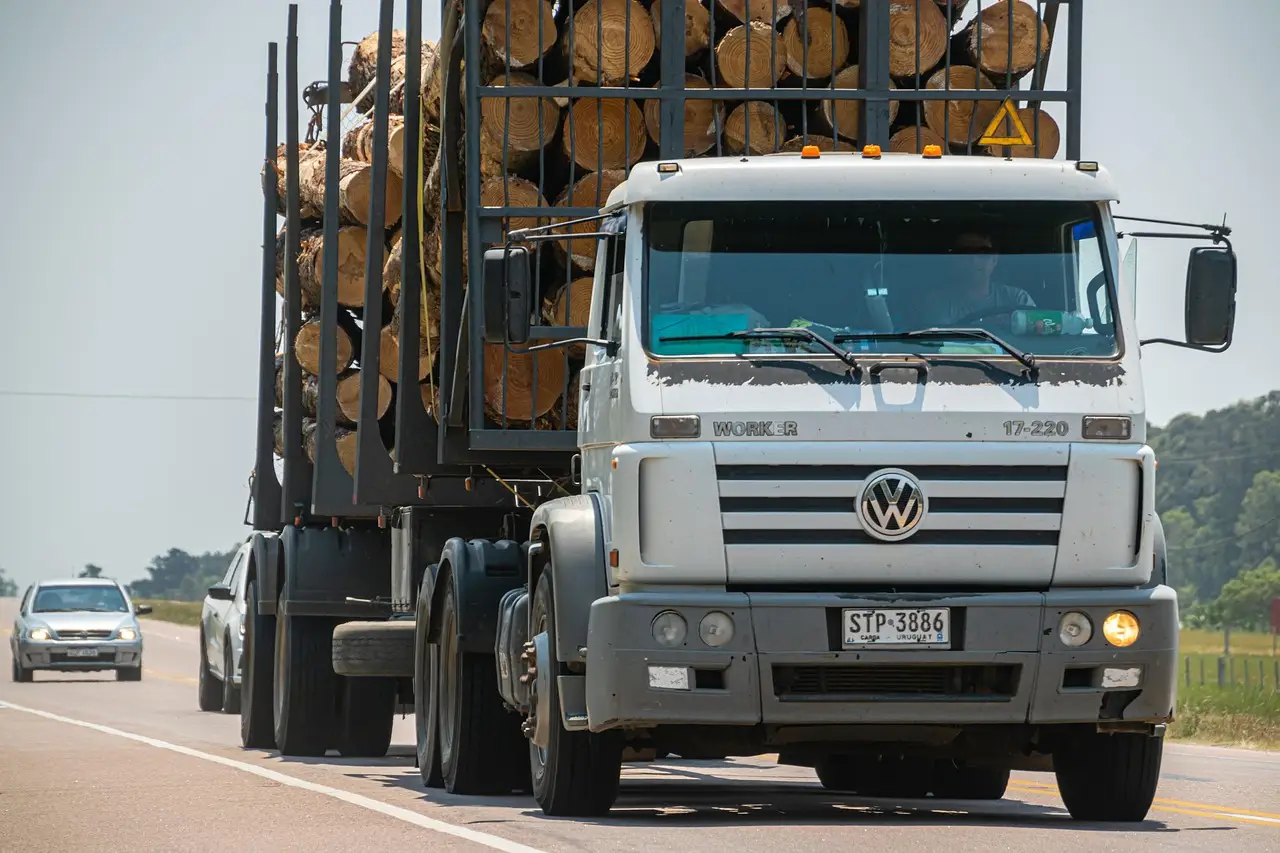
Western Star put that strategy on display Nov. 12, 2026, with the second episode of “On the Job,” filmed with Nate Tessmer, owner-operator of Tessmer Trucking in Antigo, Wisconsin. The six-axle 49X was designed with input from timber, quarry and oilfield workers.
Western Star brand manager Alex Martin-Banzer said the series would give vocational customers a platform to show the skill and experience behind demanding work and help people understand what those jobs require.
Winter brings some of northern Wisconsin’s busiest logging months of the year. Frozen ground lets loaded trucks reach deeper into the woods and haul timber miles off-road to the mill.
What changes when Wisconsin roads freeze?
Tessmer moves from the highway to remote logging roads, positions the truck for loading, manages its weight and hauls timber to mills according to wood species and destination. His 49X is configured for a gross vehicle weight of up to 98,000 pounds; on filming day, it carried close to 60,000 pounds of timber.
“You want to get as much as you can on that payload, because that’s how you get paid,” Tessmer said. “You want to be right up to the legal limit.”
That makes weight management central to the truck’s economics: the operator must place as much legal timber on the vehicle as the route and axle configuration allow. Frozen-road eligibility raises the allowable gross weight, while county and local restrictions can reduce the usable capacity.
The Wisconsin Department of Transportation can declare frozen roads once the ground freezes at least 18 inches deep. Log trucks with at least five axles may then run at up to 98,000 pounds gross, compared with the normal 80,000-pound limit.
No special permit is required, but the vehicle must be licensed at 80,000 pounds. The increased allowance does not apply on county or local roads unless the local agency authorizes it. WisDOT normally keeps the declaration in place from December through late February or early March.
Spring thaw restrictions on weaker state roads typically begin in early March and continue into May. For carriers, that calendar sets the practical boundary between higher allowable payloads in winter and route planning around thawing roads in spring.
Tessmer’s truck uses an 18-speed manual transmission and will switch to a Detroit DT12-V automated manual. Detroit introduced the DT12 vocational transmission alongside the 49X in 2020, with an Off-Road Mode designed for terrain such as logging roads.
Tessmer said the truck had performed well after more than one year and 118,000 miles, adding that it was built for the woods. That puts a year-plus of off-highway use behind Western Star’s product demonstration.
How does the 47X fit the strategy?
Western Star introduced the 47X in 2021. It shares the 49X chassis and electrical architecture but measures 10 inches shorter from bumper to back of cab, making it suitable for jobs such as drywall delivery that require a shorter truck.
Episode one featured Dealers Supply Co., a fourth-generation family-owned roofing distributor in Portland, Oregon. Its 47X boom truck carries a 40-foot body and a truck-mounted crane for deliveries to tight city jobsites.
The brand’s on-highway tractor is gone. Transport Topics reported in March that Daimler Truck North America retired the Western Star 57X. The company said the 47X and 49X reception had exceeded expectations.
Why does vocational share matter?
At Daimler Truck’s 2025 Capital Markets Day, DTNA president and CEO John O’Leary said: “The combination of the vocational market’s lower cyclicality and the growth of our service business will further enhance our resilience, long-term growth and overall profitability.”
The commercial logic is diversification. More stable vocational demand can turn share gains into higher orders and more predictable revenue than a Class 8 on-highway mix exposed to freight-market cycles. For carriers, that points toward more job-specific equipment; for shippers, toward more trucks tailored to timber, roofing and other delivery work.
DTNA also plans to build its largest U.S. truck plant for vocational and on-highway models, with operations targeted for 2029. The project puts production capacity behind both sides of the portfolio, rather than treating the vocational strategy as a retreat from on-highway trucks.
Where do driverless trucks fit?
Kodiak AI delivered two driverless Western Star 49Xs to Atlas Energy Solutions in September. Kodiak calls them the first driverless day cabs in commercial service.
Kodiak plans to deliver 65 Western Stars against Atlas’s initial order for 100 driverless trucks. Atlas expects its driverless fleet to reach 100 trucks by mid-2027, extending the 49X beyond timber work into a larger driverless vocational deployment.
What does the sales data leave unanswered?
Daimler Truck does not report Western Star or vocational sales separately. Its third-quarter report and Nov. 6 earnings call did not update the 24% market-share figure, leaving the path from 2024’s 24% to 2030’s 35% without a new sales benchmark.
Western Star said future episodes will cover more vocational applications across North America. Martin-Banzer said the company wants customers to demonstrate the knowledge and experience they bring to the job, the daily challenges they face and how their Western Star helps them keep moving.
The next markers will be Western Star’s progress toward 35%, delivery of Atlas’s 100-truck driverless fleet by mid-2027 and the 2029 plant opening, which will test whether the vocational push can add durable truck and service growth.
Original: getfreightdata.com
More from James Calloway
Show full bio
Correspondent covering companies, deals and strategy in Ocean and air freight, container shipping at Waybill Wire.
930 articles
Related05
Axle and engine shortages stall Daimler's North American truck ramp-up
Daimler Truck to run driver-out trucks on public roads by year-end
Daimler Truck Defence targets €1bn as armies rush to rearm
Daimler Chiefs Map Diesel's Long Tail And The Driverless Truck Road Ahead
Daimler Truck CEO Torsten Schmidt sets out India plans in ET Auto interview