WW/OCEANFREIG
VLCC struck off UAE as tanker war spreads beyond Hormuz
A fully laden 302,000-dwt VLCC was struck off the UAE as Iran widened its tanker campaign beyond Hormuz, with US forces also disabling a bulker off Oman.
- Desk
- Ocean Freight
- By
- Marcus Bennett
- Filed
- Length
- 614 words
- Read
- 3 min
Key points05
- Panama-flagged 302,000-dwt VLCC Gem No.2 struck by unidentified projectile ~13 nm west of Al Jazeera, UAE, on Friday; fire extinguished and all 22 Indian seafarers safe.
- Iran's Revolutionary Guards warned they will pursue ships on unauthorised routes anywhere in the region, not only inside Hormuz.
- UKMTO reported an unidentified outbound tanker struck on its port side within Hormuz on Saturday; crew reported safe.
- US forces disabled propulsion of Panama-flagged bulker Ocean Molica (Arika Sun) in the Gulf of Oman after alleged warning violations under the blockade of Iranian ports.
- Iran claimed a supertanker hit a naval mine and an attack on Vietnamese LPG carrier NV Sunshine; both claims unverified.
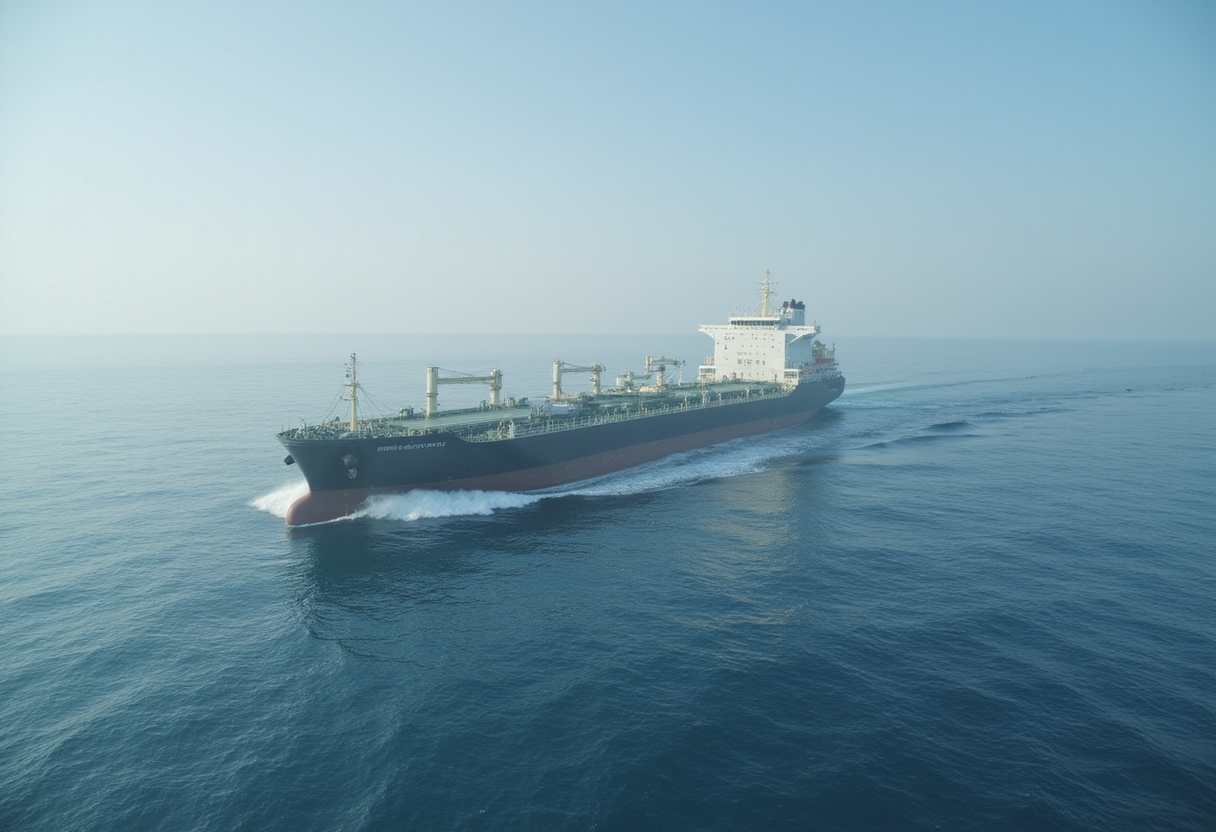
A fully laden VLCC was struck by an unidentified projectile off the UAE on Friday, the most significant signal yet that Iran's tanker campaign has spread beyond the Strait of Hormuz and deeper into the Gulf.
The Panama-flagged, 302,000-dwt Gem No.2 was hit around 13 nautical miles west of Al Jazeera, UAE, sparking a fire that was subsequently extinguished. Maritime security firm Vanguard identified the vessel, which is managed in Taiwan and linked to U-Ming Marine Transport.
India's minister for ports, shipping and waterways, Sarbananda Sonowal, said the tanker had come under drone attack at Sharjah Anchorage and confirmed that all 22 Indian seafarers aboard were safe. The extent of damage to the vessel remains unclear.
How wide has the attack zone become?
The strike on Gem No.2 followed another tanker hit off Qatar. It came as Iran's Revolutionary Guards warned they would pursue ships taking what Tehran considers unauthorised routes anywhere in the region — not just inside Hormuz, the chokepoint that carries roughly a fifth of global seaborne oil.
The Guards also claimed to have struck the Vietnamese LPG carrier NV Sunshine. Independent confirmation of that attack remains elusive.
For operators of crude, products and gas tonnage, the implication is direct: risk exposure is no longer confined to the strait's transit corridor. Anchorage positions off Sharjah and approaches to Qatari loading terminals — previously treated as relatively routine Gulf call areas — now sit inside the contested zone.
The violence continued on Saturday. UK Maritime Trade Operations reported that an unidentified outbound tanker was struck on its port side by a projectile within Hormuz, triggering another fire. The crew was reported safe.
Iran separately claimed a supertanker had exploded after hitting a naval mine while exiting the strait through what Tehran called an unauthorised route. The vessel was not named and the account remains unverified.
What happened in the Gulf of Oman?
The escalation is not one-sided. In the Gulf of Oman, US forces struck the stern of the Panama-flagged bulker Ocean Molica, also known as Arika Sun, disabling its propulsion after it allegedly ignored warnings under Washington's blockade of Iranian ports. No crew injuries were reported.
The incident shows the blockade enforcement layering a second risk on top of Iran's campaign: vessels perceived as serving Iranian ports now face military interdiction by US forces, while vessels perceived as taking unauthorised routes face Iranian pursuit claims.
What does this mean for tonnage and routing?
The weekend's events concentrate commercial consequences in three areas:
- War-risk exposure. A 302,000-dwt VLCC on full cargo struck at anchorage, plus a second tanker hit inside Hormuz and a disabled bulker, give underwriters fresh loss evidence across crude, LPG and dry segments.
- Wider geographic risk. The Revolutionary Guards' stated intent to pursue ships anywhere in the region, rather than only in Hormuz, extends the high-risk area across Gulf anchorages and terminal approaches.
- Crew safety posture. All 22 Indian seafarers on Gem No.2 were safe and crews on the other struck vessels were reported uninjured, but repeated fires aboard laden tankers will sharpen manning and retention concerns.
Operators managing tonnage in the region now face a decision matrix with no clean options: Hormuz transits carry projectile risk, Gulf anchorages have proven vulnerable, and routes deemed unauthorised by either Tehran or Washington carry direct military consequences.
The pattern of the weekend — a laden VLCC, an LPG carrier claim, a Hormuz strike and a blockade enforcement action — suggests further widening rather than containment, with both Iranian pursuit operations and US port-blockade enforcement set to shape routing and insurance costs across Gulf trade lanes.
Source: Splash247
More from Marcus Bennett
Show full bio
Senior reporter covering marketplaces and e-commerce at Waybill Wire.
328 articles
Related05
Panama-Flagged Supertanker GEM NO.2 Struck Off UAE; Hormuz Risk Widens
Tanker hit with casualties 51 nm off Qatar as Gulf war zone widens
IRGC Strikes Seven Tankers in Hormuz Over Five Days as US–Iran Talks Stall
Hormuz Tanker Attacks Hit 12 in a Week, Highest Since Iran War Began
Second KOTC VLCC struck in Hormuz as Yanbu hit again