WW/TRUCKINGRA
USDOT Puts $200 Million Behind Truck Parking Shortage
USDOT has awarded $200 million to expand truck parking, targeting a shortage that constrains driver hours, carrier productivity and delivery reliability.
- Desk
- Trucking & Rail
- By
- Elena Vasquez
- Filed
- Length
- 422 words
- Read
- 2 min
Key points04
- USDOT awarded $200 million for truck parking expansion.
- Transport Topics reported the award as a major federal boost to the sector.
- Parking scarcity forces drivers to stop early or park illegally, cutting usable driving hours.
- The funding follows years of industry pressure for dedicated rest infrastructure.
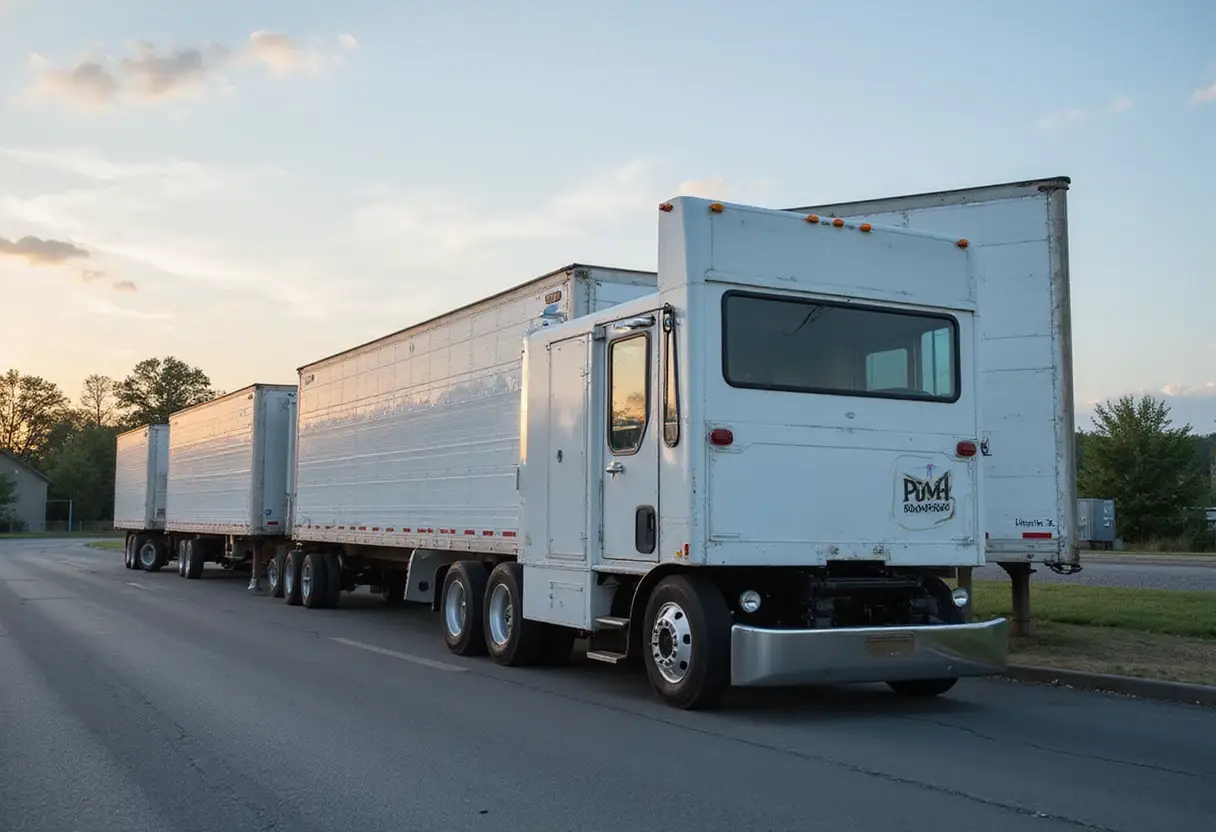
The U.S. Department of Transportation has awarded $200 million to expand truck parking, directing new federal money at a shortage that drivers and fleet operators have flagged for years as a daily operational constraint. Transport Topics reported the award, which stands among the larger single commitments Washington has made to the issue.
The figure matters for the freight market because parking scarcity is not a comfort problem — it is a productivity and safety variable. Drivers bound by hours-of-service rules must stop when their clocks run out, and when legal spaces run short, they park on highway shoulders and ramps, or they cut driving time early to secure a spot.
For carriers, that behavior translates directly into lost miles. For shippers, it shows up as schedule variability on lanes where evening arrivals matter. Federal data has long counted far more trucks than available spaces along major corridors, and the $200 million program is designed to close part of that gap.
What could the money change?
The award funds the construction and expansion of parking capacity, the practical bottleneck behind driver retention and detention disputes. Industry surveys consistently rank parking among the top daily frustrations for over-the-road drivers, which links the program to a labor question: fleets competing for drivers in a tight market can point to improved rest infrastructure as a retention tool.
The commercial implications fall unevenly across the sector:
- Carriers gain route-planning flexibility where new spaces open along dense freight corridors.
- Drivers get reduced end-of-shift search time, the minutes that currently erode usable hours.
- Shippers and receivers may see fewer late arrivals caused by forced early stops.
- Forwarders benefit indirectly through more predictable linehaul execution.
Why now?
The timing follows sustained industry pressure. Trucking associations and driver advocacy groups have pushed for dedicated parking funding for years, arguing that safety regulators mandate rest without supplying the infrastructure to take it. A $200 million federal commitment answers that argument with capital rather than guidance.
How far the money stretches depends on project selection. Parking construction costs vary widely by state and site, so the same dollar figure buys more spaces in some markets than others. USDOT has not yet detailed in the reporting how the awards break down by state or corridor.
What comes next is implementation: the funded projects will move through construction timelines measured in years, meaning drivers will feel the difference gradually. If the program proves out, it could anchor a larger recurring funding stream for rest infrastructure alongside highway spending.
Source: Google News: trucking industry
More from Elena Vasquez
Show full bio
News editor covering people, launches and day-to-day practice in Ocean and air freight, container shipping at Waybill Wire.
493 articles
Related05
DOT doles out $200M for truck parking across 12 states
Trucker Path adds 5,750 reserved parking stalls to network
Trucker Path adds 5,750 reserved parking spaces to driver network
DOT Puts $217 Million Behind Trucking Safety and Driver Pipeline
Trucking lobby heads to Capitol Hill before the midterm reset