WW/TRUCKINGRA
Trucking lobby heads to Capitol Hill before the midterm reset
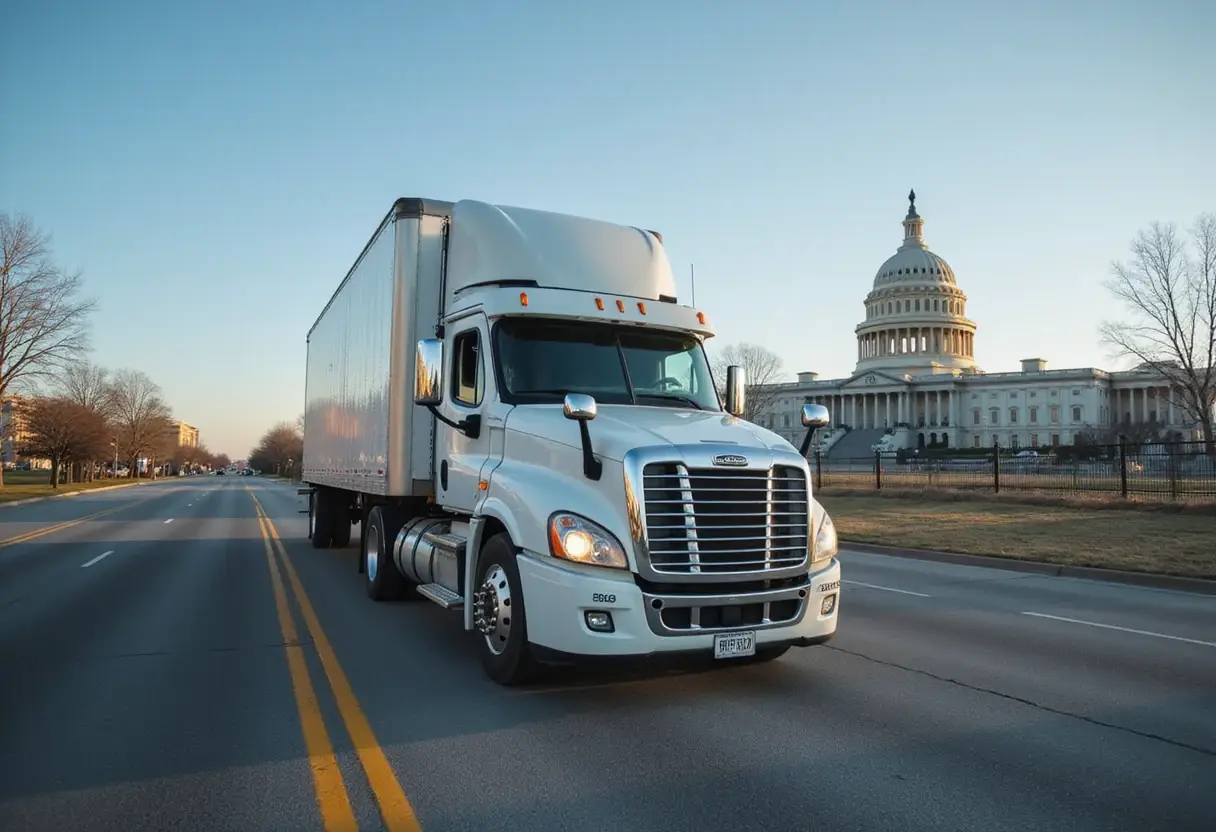
US trucking trade groups are sprinting through Congress to clear a policy wish list before midterm elections rewrite committee leadership and send pending freight bills back to square one.
- Desk
- Trucking & Rail
- By
- Amara Osei
- Filed
- Length
- 533 words
- Read
- 3 min
Key points05
- Trucking trade groups are lobbying Congress ahead of the November 3, 2026 US midterm elections.
- Bills that don't clear a floor vote in the coming weeks effectively die on the calendar and need fresh sponsorship in January.
- The US trucking industry operates a fleet of roughly 3.5 million Class 8 trucks.
- Truckload spot rates have hovered near or below operating cost for many small fleets through most of the year.
- Standard lobbying priorities include hours-of-service flexibility, truck parking capacity, ELD rulemaking and insurance minimums.
Trucking's trade associations are making the Capitol rounds, and they're doing it against a clock.
With U.S. midterm elections scheduled for November 3, 2026, industry groups want Congress to clear a stack of policy asks before committee seats and chamber leadership get reshuffled at the ballot box. Transport Topics reported the lobbying sprint this week; the specific menu has not been publicly tallied, but the timing tells most of the story.
The midterms are the forcing function. Any bill that doesn't clear a floor vote in the next few weeks effectively dies on the calendar. Even perennial issues need a fresh sponsor come January, and trucking's standing wish list is, by industry standards, long.
What does the trucking lobby usually ask for?
The headline doesn't enumerate, but the trade's recurring stack is well-rehearsed. Hours-of-service flexibility sits near the top, as it has for a decade. Truck parking capacity — a chronic shortage that costs drivers paid time and DOTs goodwill — is a near-permanent ask. ELD rulemaking, the federal excise tax on heavy-duty trucks, and the long-running debate over minimum insurance levels all live in the standard rotation.
Whether this sprint adds new items or simply accelerates the standing ones is the open question. A lobbyist's job, in fairness, is to walk into a room already knowing the answer. The trick is making sure the people holding the gavel remember it.
What does this change for carriers and brokers?
In the next sixty days, almost nothing visible at the dispatch desk. Any rule that does land will filter down through scheduling, compliance and driver-coaching teams months later. But the conversation in Washington sets the boundary for what state regulators, shippers and brokers can plan around. That signal is worth more than the rule itself, often.
For an industry running on a roughly 3.5-million Class 8 fleet, even a small rule shift moves cost. Carriers want predictability, and they get a few weeks of it every election cycle before the waiting game resets.
What's the freight market doing while all this happens?
Truckload spot rates have spent most of this year hovering near or below operating cost for many small fleets. Dry van and reefer are flat to soft. The spot-to-contract spread has not widened enough to rescue a margin. Capacity remains elevated after the post-2021 build-out, and import volumes through the major container gateways have cooled from the highs of two years ago.
Policy certainty is the one thing a lobbying sprint can actually deliver. Market prices, regrettably, statute cannot move.
The read
Trucking's lobby is betting that a lame-duck window beats a cold start in January. The bet pays or doesn't depending on how many committee chairs want to leave a legacy file behind, and how many want to clear the decks for whoever comes next.
For shippers and forwarders, the practical advice is the same one a veteran dispatcher would give: read the committee markups, watch the floor calendar, and don't assume any provision survives a recess. The freight will keep moving either way. The rules might.
Source: Google News: trucking industry
More from Amara Osei
Show full bio
Staff writer covering regulation, policy and their impact on Ocean and air freight, container shipping at Waybill Wire.
534 articles
Related05
Trump launches veteran trucking recruitment drive as freight capacity tightens
ATA Perspective: Keeping the Road to Opportunity Open
Trump's 'Big Beautiful Bill' Wins Trucking. Who Hauls in More?
Congress Moves on Trucker Appreciation Week Bill
Trucker Path adds 5,750 reserved parking spaces to driver network